
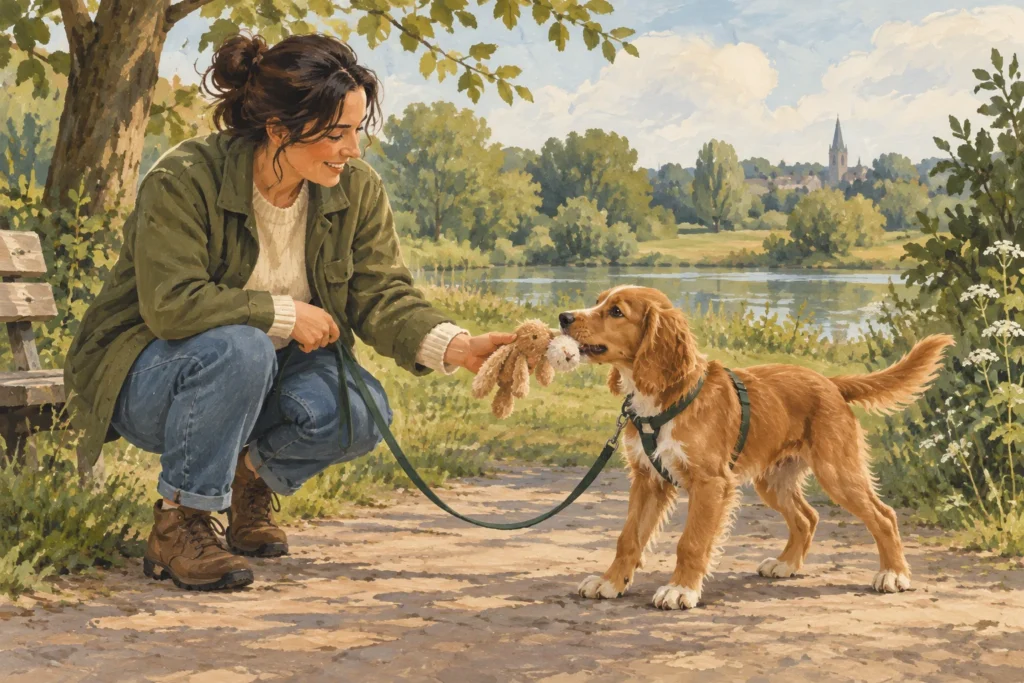
Why dogs bite the lead on walks and what can help
Understand when your dog bites the lead, make walks easier and practise useful alternatives. Avoid a tugging struggle and know when to seek support.
Understand when your dog bites the lead, make walks easier and practise useful alternatives. Avoid a tugging struggle and know when to seek support.
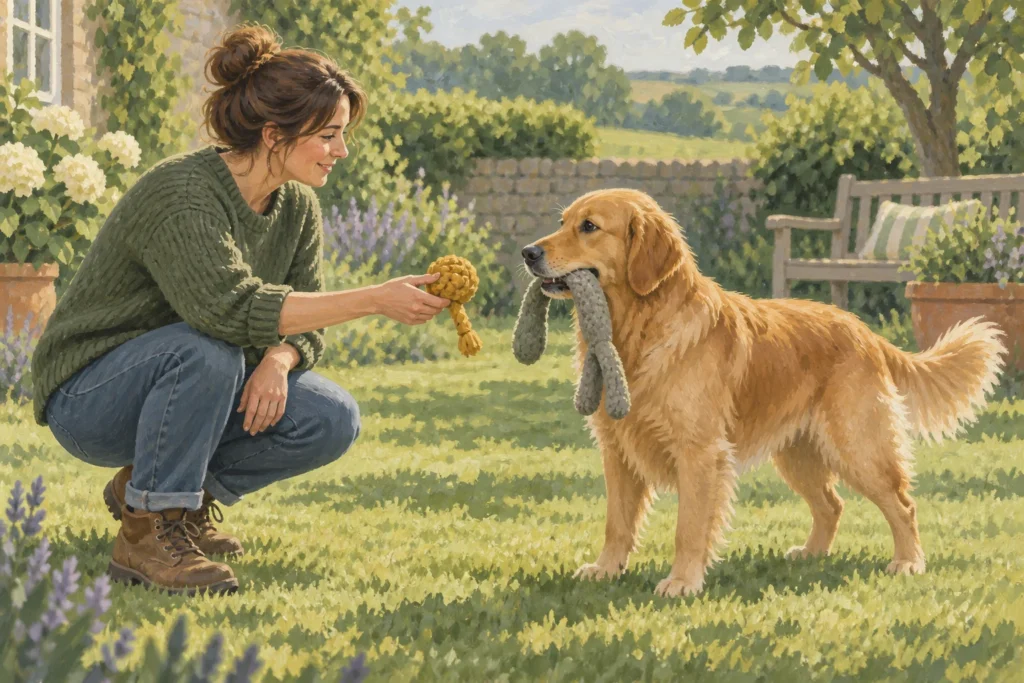
Teach drop it through a calm exchange game. Learn when to add the cue, how to reward release and why guarding or dangerous objects need a different response.
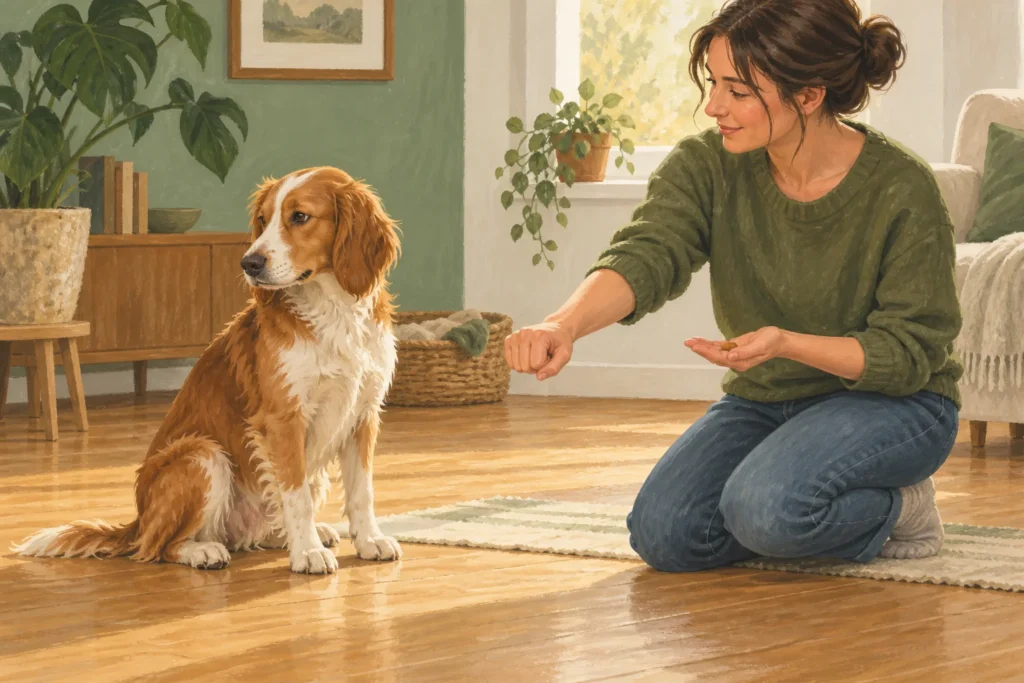
Teaching leave it means rewarding your dog for turning away from something before picking it up. Begin with a safe, uninteresting object and a better reward, then build the skill gradually. The cue supports good management; it is not permission to leave dangerous items accessible or test the dog with real hazards.
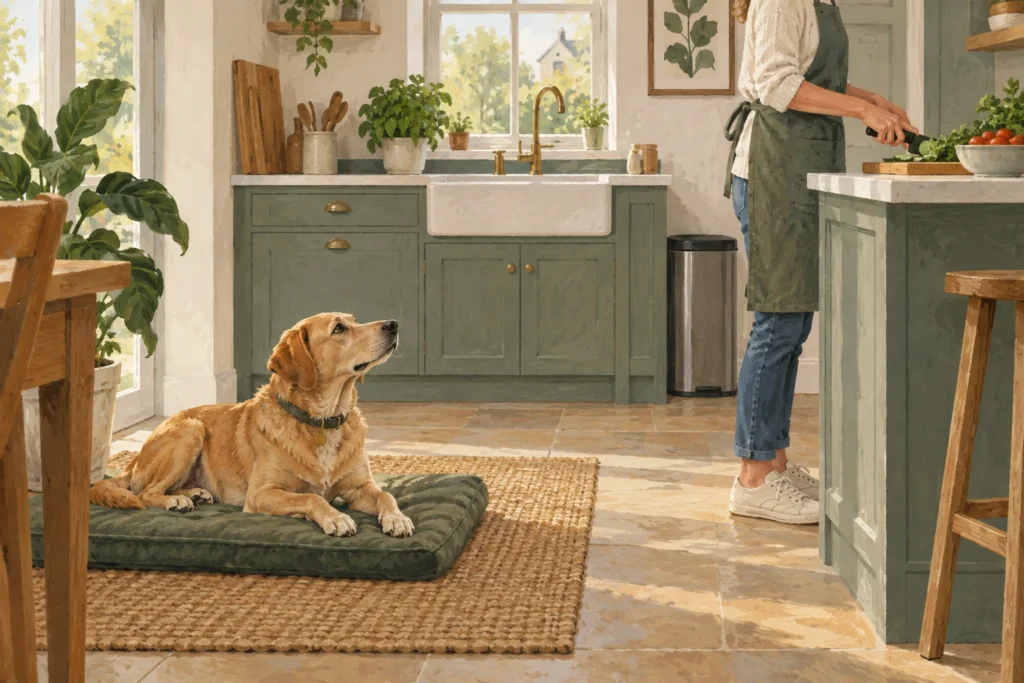
To stop counter surfing, make kitchen surfaces reliably unrewarding and give your dog a useful alternative during food preparation. Clear reachable food, control access when you cannot supervise and reward calm behaviour away from the worktop. A dog that occasionally finds a sandwich has a good reason to keep checking.
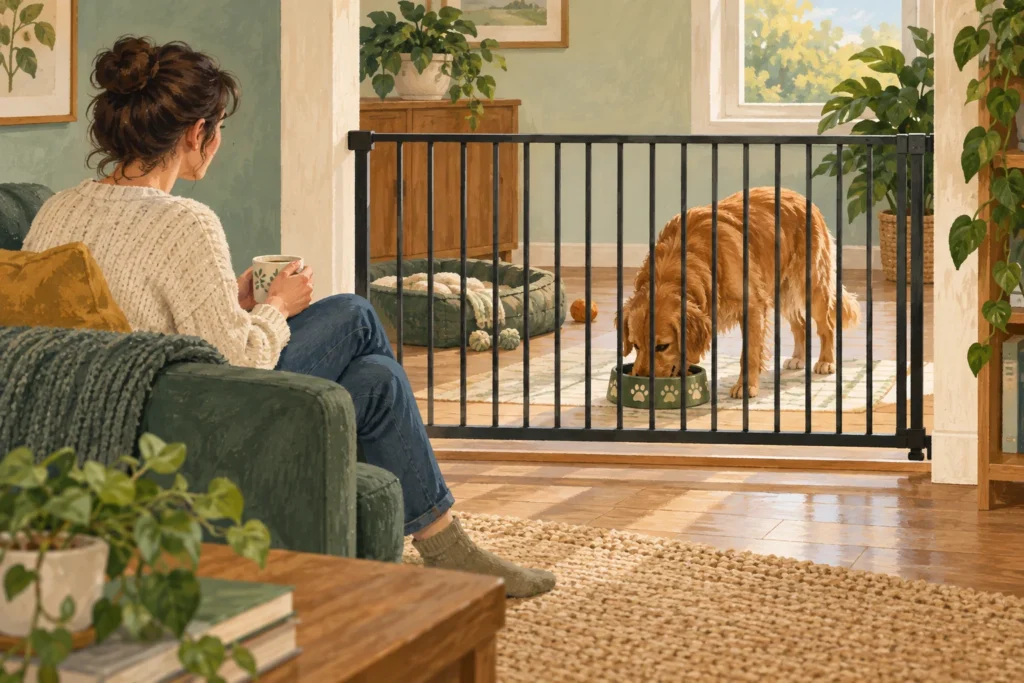
Resource guarding in dogs needs a safety-first response: stop competing over the item, create space and arrange appropriate professional help. Food, toys, stolen objects and resting places can all be involved. Do not test how close you can get or repeatedly take things away to prove that you are in charge.
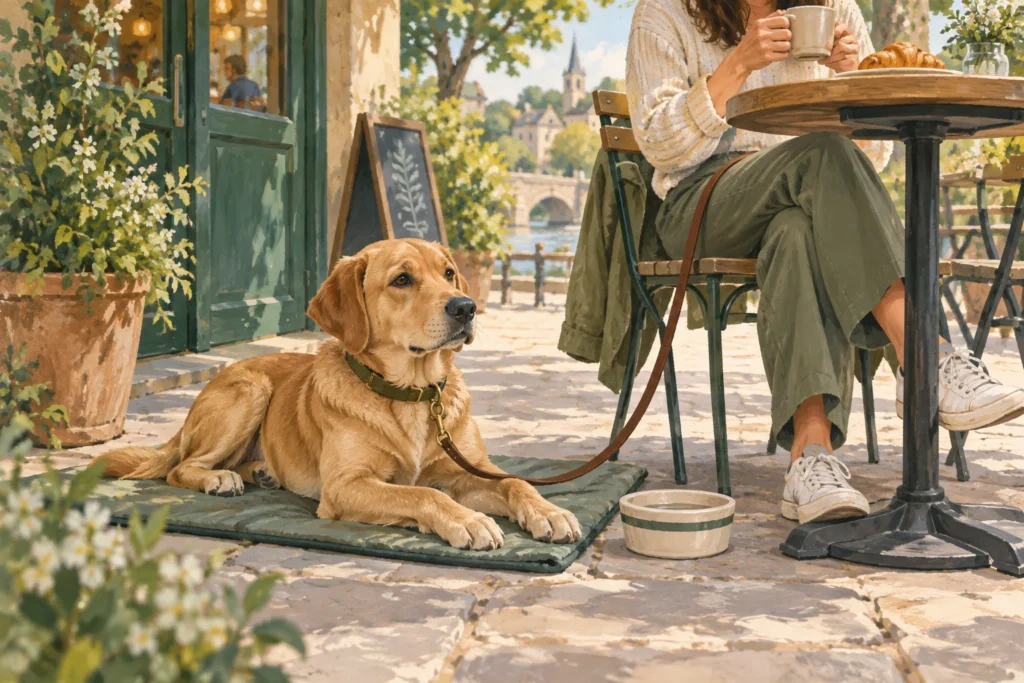
The best dog training mat gives your dog enough room to rest comfortably and stays manageable wherever you practise. For indoor settling, a familiar washable blanket may be enough. For regular outings, a mat with a suitable underside and compact carry shape can be worth buying. The mat supports training; it does not create calm by itself.