
Last updated: 9 September 2026
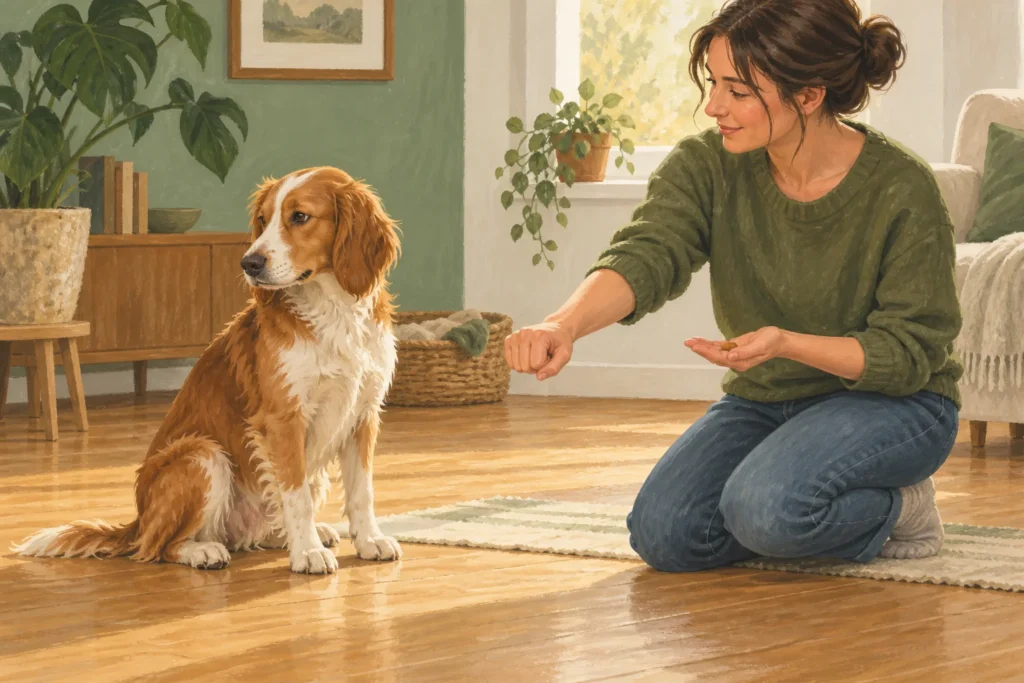
Teaching leave it means rewarding your dog for turning away from something before picking it up. Begin with a safe, uninteresting object and a better reward, then build the skill gradually. The cue supports good management; it is not permission to leave dangerous items accessible or test the dog with real hazards.
This article contains Amazon affiliate links. As an Amazon Associate, we earn from qualifying purchases.
Table of Contents
Separate leave it from drop
Leave it asks the dog to disengage before taking an item. Drop or swap concerns something already in the mouth. Keeping those jobs clear helps you choose the right exercise and avoid repeating a cue the dog has not learned for that situation.
If your dog guards objects, becomes tense when approached or has a bite history, seek qualified advice before practising exchanges. Do not use this guide as a treatment plan for guarding.
Choose a quiet starting setup
Practise in a familiar room with little distraction. Have a safe, low-interest item and a reward the dog likes. Keep the item under your control and avoid anything that could be swallowed, break or injure the dog.
Use part of the normal food allowance where suitable. You need only a few easy repetitions, not a large pile of treats or a long session.
Reward the first small turn away
Present the low-interest item without pushing it towards the dog’s face. Allow a brief investigation. When the dog looks or moves away, mark that moment with a familiar word or click and give the reward from your other hand.
If the dog becomes increasingly determined to grab the item, make the setup easier. Use a less interesting object, create more distance or pause. Waiting through prolonged pawing and frustration is not necessary.
Dogs Trust’s leave-it guidance builds from voluntary looking away before attaching the cue. Keep the reward separate from the item you are asking the dog to leave.
Add the words once the response is predictable
When the dog readily turns away in the easy setup, say “leave it” as you present the situation, then mark and reward the response. Use the same short wording each time.
Avoid saying the cue repeatedly while the dog continues investigating. That usually signals that the exercise is too hard or the meaning is not yet clear. Return to an easier version and reward the response you want.
Change one part of the exercise at a time
| Progression | Keep easy |
|---|---|
| A different safe object | Same quiet room and short distance. |
| Object nearer the floor | Low interest and controlled access. |
| Another room | Familiar object and generous rewards. |
| A mild outdoor distraction | Plenty of distance and suitable lead management. |
| A more interesting item | No competing increase in movement or noise. |
Success in the kitchen does not automatically transfer to a busy pavement. Start easier in each new place and reward promptly. Do not drop food within reach as a surprise test before the skill is ready.
Use ordinary walks as supported practice
Notice mild distractions early, give the cue at a manageable distance and reward turning back towards you. Continue moving to a suitable place rather than keeping the dog beside the tempting object while the lead tightens.
A secure pouch can keep rewards accessible; Find dog training treat pouches on Amazon UK. Equipment only makes timing more convenient. Our clicker guide explains markers, and our recall guide covers returning from a distance as a separate skill.
If the dog already has something
Use a calmly taught swap where it is safe and appropriate. Avoid chasing, cornering or forcing the mouth open. If the dog protects the object or you cannot approach safely, create space and get professional advice.
For suspected harmful ingestion, contact the vet promptly. Training cannot determine whether something swallowed is safe, and waiting for a successful response should not delay medical advice.
Keep progress useful rather than theatrical
The practical aim is a dog who can disengage from everyday distractions with your support. Keep dangerous substances stored securely, supervise scavenging and reward the behaviour often enough that it remains worthwhile. Reliable habits grow from manageable repetitions, not increasingly risky demonstrations.