
Last updated: 9 September 2026
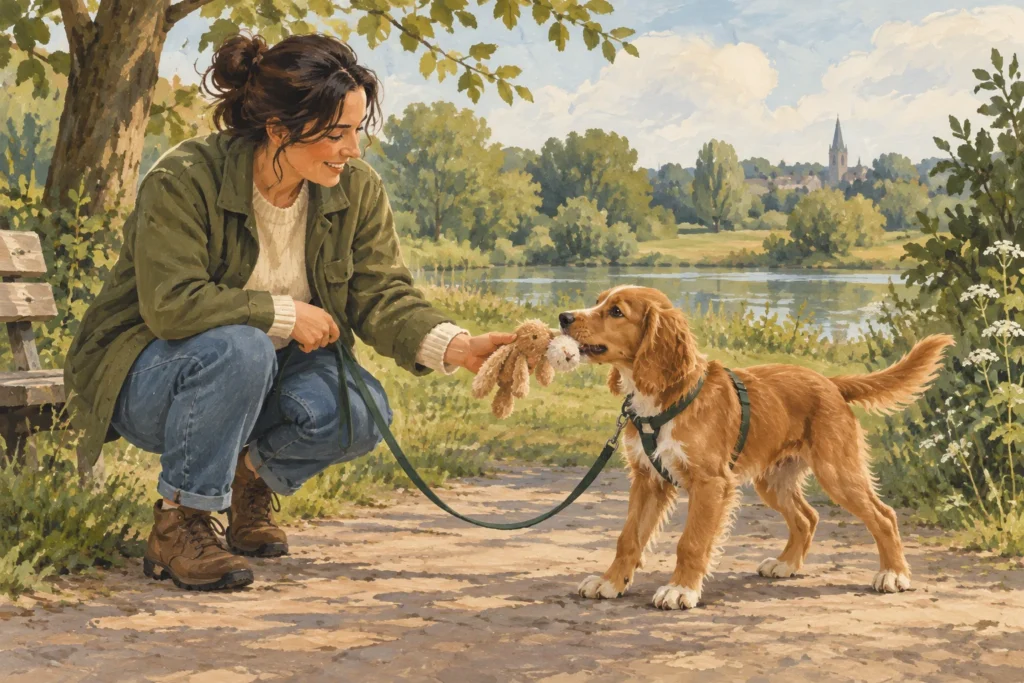
If your dog bites the lead on walks, start by noticing when it happens and make that part of the walk easier. Repeatedly pulling the lead from their mouth can turn the moment into an escalating struggle. A quieter route, a break from a difficult situation and a practised alternative may be more useful than buying a harder lead.
Lead biting can happen during excitement or frustration, but the behaviour alone does not tell you the cause. Sudden changes, signs of discomfort or biting directed towards people warrant professional attention rather than trial-and-error equipment changes.
Table of Contents
Find the pattern around the biting
Record the location, what happened immediately before and how long the walk had lasted. Does the dog grab the lead as you leave home, when another dog passes, when you turn towards home or after a busy section of pavement? Include what you do next, because the resulting game or confrontation may become part of the pattern.
Dogs Trust explains that frustration can lead dogs to mouth their lead, clothing or people, and that pain or illness may contribute to new or increased biting. Arrange a veterinary check if the behaviour is new, more intense or accompanied by other changes. Do not assume an energetic-looking dog cannot be uncomfortable.
A short description helps more than a label such as “naughty”. For example: “After ten minutes on the busy road, he jumps and grabs the lead when we wait at the crossing.” That gives you a specific situation to change.
Reduce the demand before the usual trigger
Choose a quieter departure time or route if crowds and traffic precede the behaviour. Add opportunities to sniff in suitable places. A shorter, manageable outing may be more productive than completing the planned distance while the dog repeatedly struggles.
If turning for home triggers biting, try changing the route pattern and rewarding calm check-ins before that point. If it happens at the front door, practise easy lead-on moments indoors when no walk follows. Make one change at a time so you can judge whether it helped.
These are experiments in arranging a more comfortable walk, not a diagnosis or guaranteed cure. If the behaviour escalates, use the observations to obtain tailored support.
What to do during a lead-grabbing moment
Keep the dog safely attached and move away from roads or other immediate hazards when you can do so calmly. Avoid jerking the lead, shouting or trying to pry the mouth open. Protect your hands; do not wrap the lead around them or reach close to teeth during an intense episode.
If the dog knows a simple, well-rewarded cue and is able to respond, use it to move towards an easier activity or quieter space. Do not repeatedly demand cues while they are unable to engage. A pre-taught release and a calm exchange can be useful; practise these separately at home first.
Where biting is directed at you, you feel unsafe or the dog cannot disengage, seek help from your vet and a qualified reward-based behaviour professional. They can plan management appropriate to the risks, rather than expecting you to improvise in a busy street.
Teach alternatives in an easier setting
| Useful skill | Where to begin | How it helps later |
|---|---|---|
| Checking in with you | A quiet room with rewards ready | Creates an easy behaviour to reinforce before difficulty builds |
| Walking a few relaxed steps | A low-distraction space | Makes calm lead movement familiar |
| Releasing a toy | A gentle game with a fair exchange | Avoids relying on taking things by force |
| Settling after activity | A comfortable familiar resting spot | Practises switching from activity to a pause |
Keep sessions brief enough to remain enjoyable. Our loose-lead walking guide covers building the walking skill itself. Lead biting needs the additional work of understanding the particular moment in which that skill becomes difficult.
Equipment can support the plan
Inspect the lead for tooth damage, especially near the clip and stitching. Replace a compromised lead before another walk. Check the harness or collar for rubbing, twisting and awkward attachment points. A chain lead or punitive device does not explain why the dog is struggling.
This article contains Amazon affiliate links. As an Amazon Associate, we earn from qualifying purchases.
Easy access to rewards can help you reinforce calm behaviour early. Find washable dog treat pouches on Amazon UK if rummaging through pockets means you keep missing those moments. Fill it with rewards appropriate to your dog’s diet, and organise it before leaving home. It supports your timing; it is not the solution by itself.
Look for a gradual reduction in frequency and intensity, with more comfortable walking between episodes. If that is not happening, professional input is a sensible next step. The aim is a dog who can cope with the walk and communicate without an argument over the lead.