
Last updated: 9 September 2026
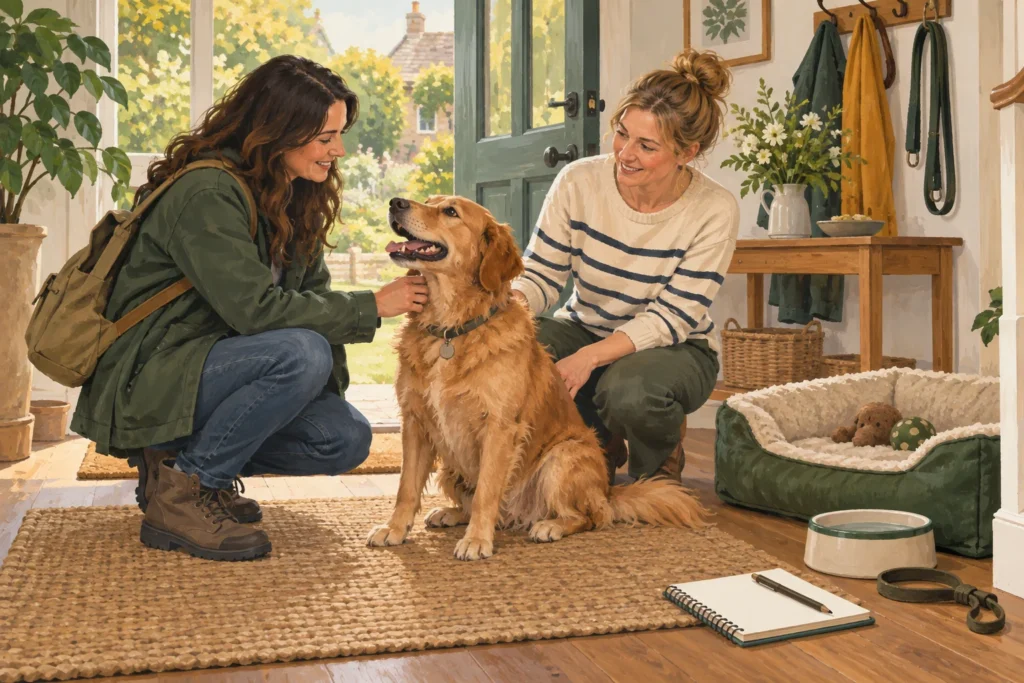
Choose dog holiday care by the setting and supervision your dog can comfortably manage, then check the provider’s arrangements and relevant licence. Kennels, home boarding and a sitter in your own home are different services. A friendly profile or attractive room photograph does not tell you how the dog will spend an ordinary day.
This article contains Amazon affiliate links. As an Amazon Associate, we earn from qualifying purchases.
Table of Contents
Compare the actual care setting
| Option | Potential advantage | Question to resolve |
|---|---|---|
| Boarding kennels | A dedicated facility with defined care routines. | How are noise, exercise, rest and individual needs managed? |
| Home boarding | Care within the provider’s domestic home. | Which resident and visiting animals will be present? |
| Sitter in your home | The dog remains in familiar surroundings. | Exactly when is the sitter present, and what cover exists? |
No format suits every dog. A sociable dog may still find a busy shared home tiring, while a dog familiar with a well-run kennel may cope better there than with an unfamiliar person in the house.
Check licensing for the service and location
In England, commercial dog kennel boarding and home boarding fall within the animal-activities licensing system, subject to the official scope and business criteria. Ask for the licence holder’s name, number, issuing council and the premises covered, then verify them with the council where needed.
England’s home-boarding guidance explicitly distinguishes a sitter caring for the dog in its normal home from home boarding at another person’s property. Do not assume a sitter should hold the same boarding licence, or that being listed on an app removes a boarder’s obligations.
The cited licensing guidance applies to England. For Wales, Scotland or Northern Ireland, check the provider’s local authority requirements rather than treating the English scheme as UK-wide. If a provider says their activity is exempt, ask the council to clarify the relevant scope.
Visit and ask about an ordinary day
Ask where the dog sleeps, toilets and rests, who handles them and how much time they spend without company. Clarify what exercise means: a walk, a secure run or group play are different activities.
For home boarding, ask about resident dogs, other bookings, children and visitors. For kennels, ask about quiet accommodation and how staff notice an individual dog becoming uncomfortable. For a sitter, specify overnight presence and daytime absences instead of relying on the phrase house sitting.
Explain your dog’s needs accurately
Share health conditions, medication instructions, dietary restrictions, escape attempts, guarding and difficulties with other dogs or being alone. The provider needs this information to decide whether they can offer suitable care.
Ask how they would respond if the dog stops eating, becomes distressed or cannot join a planned group activity. A useful answer describes a practical alternative and a route to veterinary or behavioural help.
Arrange preparation and a proportionate trial
Meet the person who will actually care for the dog and discuss an introductory visit or short trial where appropriate. A comfortable brief meeting does not guarantee a week-long stay, but it can reveal questions before departure.
Confirm vaccination and preventive-care requirements well in advance with both provider and vet. Do not leave required paperwork or veterinary appointments until collection day.
Put the agreement in writing
Record dates, handover and collection times, the total charge, cancellation terms and any extra services. Clarify transport, walking permissions, emergency contacts and who may authorise veterinary treatment if you cannot be reached.
Ask what happens if the carer becomes ill or your return is delayed. With an in-home sitter, agree key handling, access and any other household visitors. These details prevent avoidable confusion while you are away.
Prepare a clear care handover
Give concise written feeding and medication instructions, relevant records and your vet’s details. Label supplies and provide familiar bedding or suitable toys only as agreed with the provider.
A washable organiser can keep the approved equipment together; Find dog travel kit organisers on Amazon UK. Keep prescribed medication in its labelled packaging and follow storage instructions. More luggage is not a substitute for a clear care note.
Choose the provider who can explain their limits
A responsible provider may decline a booking that does not fit their facilities or skills. That is useful information. Choose a workable match with a clear contingency plan and communication arrangement, rather than the person who promises every dog will immediately feel at home.