
Last updated: 9 September 2026
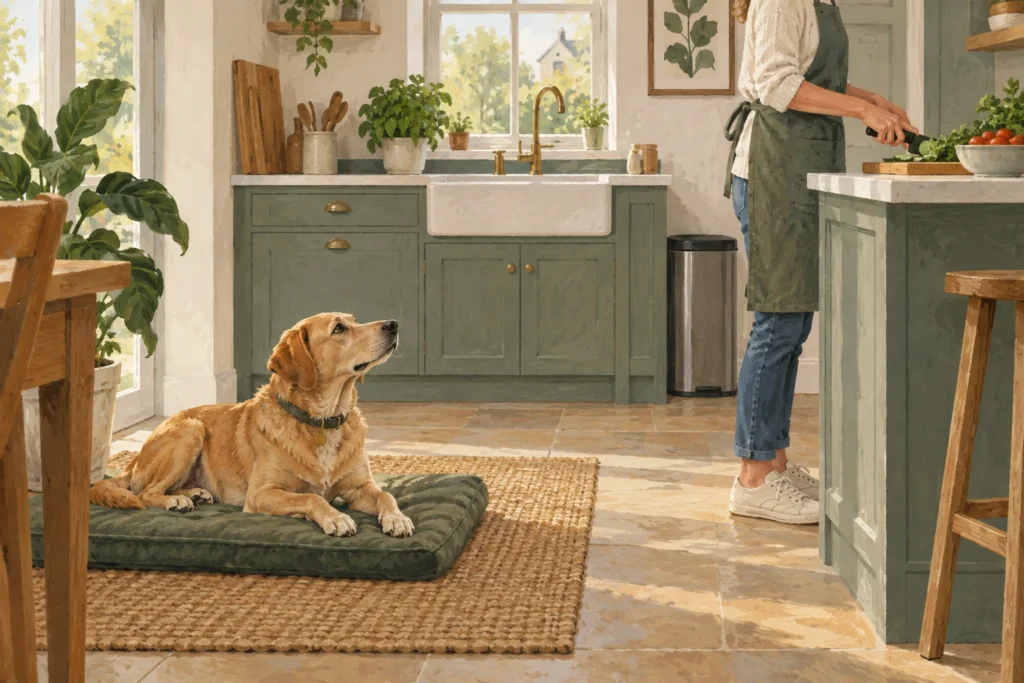
To stop counter surfing, make kitchen surfaces reliably unrewarding and give your dog a useful alternative during food preparation. Clear reachable food, control access when you cannot supervise and reward calm behaviour away from the worktop. A dog that occasionally finds a sandwich has a good reason to keep checking.
This article contains Amazon affiliate links. As an Amazon Associate, we earn from qualifying purchases.
Table of Contents
Audit the kitchen from the dog’s level
Look beyond the front edge of the counter. A chair, open dishwasher or low shelf can provide access. Shopping bags, cooling trays, bins and lunchboxes may be easier targets than the worktop itself.
Choose proper storage locations before cooking begins. Moving food a little farther back is only useful if it is genuinely unreachable. Be especially careful with medicines, dangerous foods, hot pans, packaging and sharp items.
| Usual opportunity | Practical change |
|---|---|
| Food cooling after cooking | Use an inaccessible safe location. |
| Shopping unpacked in stages | Separate the dog before bags arrive. |
| Children leave snacks on low surfaces | Agree an adult-managed eating and clearing routine. |
| Dog searches when everyone leaves | Secure the kitchen and bins before departure. |
| Chairs act as steps | Change access rather than only moving the plate. |
Manage the busiest moments
Cooking and serving dinner are poor times to improvise a training session. Use a comfortable separate area or a suitable barrier if your dog is happy with that arrangement. Prepare it before carrying hot food through the room.
Find dog gates for kitchen doorways on Amazon UK. Fit it correctly and check that the dog cannot jump, squeeze through or dislodge it. A gate does not solve distress about separation, so seek help if the dog cannot remain comfortable on the other side.
Teach an alternative away from food
Begin when the kitchen is quiet. Choose a bed or mat outside the working path and reward the dog for approaching or resting there. Keep the early task easy and release them before they become frustrated.
Gradually include harmless kitchen actions, such as opening an empty drawer, while continuing to reward comfortable behaviour on the mat. Add duration and distractions separately. Do not jump directly from a quiet practice to a roast dinner being carved.
If you use a marker, our clicker guide explains its role. The reward and the timing matter more than owning a particular device.
Reward before the jump
Notice the dog standing calmly nearby, looking away from the counter or choosing the resting place. Reinforce those moments before they need to investigate the worktop.
If every jump is followed by a request to get down and a treat, you may inadvertently create a repeatable sequence. Reset the situation calmly, improve management and look for opportunities to reward the alternative earlier.
Respond safely when something is stolen
Do not turn retrieval into chasing or cornering the dog. Dogs Trust explains that attention and games can maintain stealing behaviour. A relaxed exchange can be useful for dogs already comfortable with swaps, but a tense dog or valuable object requires more caution.
If the dog freezes, growls or protects the item, create space and seek professional advice rather than practising take-and-return exercises. Keep children away. Contact your vet promptly if the dog may have swallowed something harmful; do not delay while trying a training solution.
Avoid booby traps and punishment
Startling devices, painful equipment and deliberately tempting traps add risk around a place already full of hot and sharp objects. They do not teach a dependable alternative resting behaviour.
A consistent household arrangement is more useful. Everyone who uses the kitchen needs to know where food goes and when the barrier is used. One unattended plate can undermine a week of otherwise careful management.
Review the pattern, not just the last incident
Record when searching happens: before meals, during busy family periods or after the dog has been left with access. Use that information to adjust routine, suitable enrichment and food security.
Discuss unusual hunger or a sudden behaviour change with the vet. Persistent stealing, guarding or conflict warrants support from a suitably qualified reward-based practitioner. The practical goal is a kitchen in which the dog has fewer opportunities to rehearse stealing and a well-rewarded place to be instead.