
Last updated: 9 September 2026
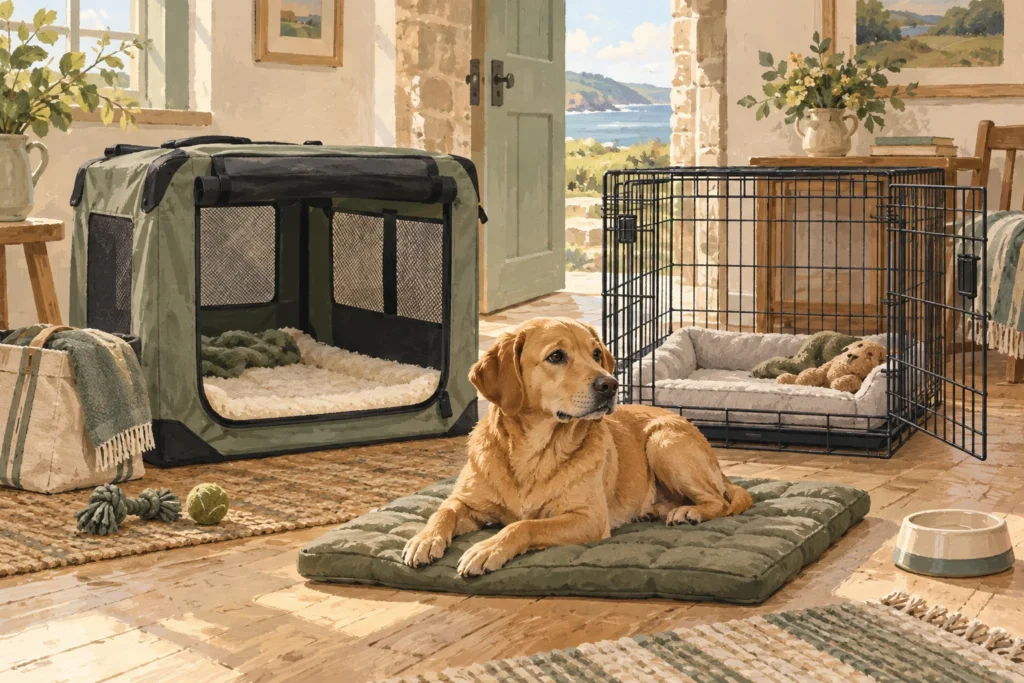
A soft dog crate is worth considering for a dog that already rests comfortably in a crate and needs a portable bed space at your destination. A metal crate usually offers a more open view and a different style of door and frame. Neither material alone establishes escape resistance or crash protection. Choose the crate for its intended job, then assess the actual construction.
For holidays, separate two decisions: how your dog travels in the vehicle, and where they rest after you arrive. A lightweight fabric crate that works in a cottage bedroom is not automatically appropriate as a car restraint.
Table of Contents
The practical differences
| Question | Soft-sided crate | Metal wire crate |
|---|---|---|
| How does it close? | Usually zipped fabric or mesh panels | Usually hinged wire doors with latches |
| What is exposed to chewing? | Fabric, mesh, zips and seams | Bars, tray edges and any bedding |
| What needs cleaning? | Fabric shell, frame and removable mat | Tray, bars, corners and bedding |
| What matters for packing? | Folded dimensions and whether poles dismantle | Folded thickness, weight and carrying arrangement |
These are design tendencies, not a ranking. Some fabric crates are bulky when folded; some metal crates are awkward to carry despite a handle. Look for measured packed dimensions and compare them with the space left after the rest of your luggage is loaded.
Match the crate to the dog you have
A dog that scratches at mesh, chews zips or pushes against doors is a poor candidate for a soft crate. Buying a stronger enclosure should not replace understanding why the dog wants to escape. If confinement causes distress, arrange a different safe resting setup and get help with gradual training before relying on a crate during a trip.
If your dog already enjoys a familiar metal crate, taking it may be simpler than introducing a new fabric one just before departure. Our crate-training guide covers the introduction. Practise any new crate at home well before packing it for a holiday.
Compare usable room, not the size name
Measure the dog’s standing height and the space needed to turn and lie comfortably. Internal supports, a sloping roof and thick bedding can reduce usable room inside a soft crate. A wide outer measurement may include pockets that contribute nothing to resting space.
Check the door opening as well. An older dog should not have to squeeze through a low doorway or step over an awkward threshold. Use our travel-crate sizing guide as a starting point, while following the particular manufacturer’s instructions for its intended use.
Ask the accommodation questions first
Find out where the crate could stand without obstructing an exit, heater or main walkway. Ask whether the dog may enter bedrooms and whether unattended dogs are permitted at all. Permission to bring a dog does not necessarily include leaving them alone in a holiday property while you go out.
Think through a wet arrival: can you dry the dog before they settle, and is there somewhere to clean and dry the crate afterwards? A removable washable liner is useful only if the outer shell can also be dealt with when necessary. Check the cleaning label before assuming the whole crate can go in the washing machine.
This article contains Amazon affiliate links. As an Amazon Associate, we earn from qualifying purchases.
For a dog already comfortable in a fabric enclosure, Find folding soft dog crates on Amazon UK. Compare mesh condition, frame assembly and return arrangements rather than assuming that a familiar photograph represents the same model or size.
Set it up before the dog needs to rest
Assemble the crate on a stable surface and test its frame and latches without the dog inside. Add familiar, suitable bedding and leave access open while the dog explores. Keep the first evening quiet enough for them to find the resting space without being repeatedly called out for greetings.
Maintain comfortable ventilation and avoid placing the crate where sun will move across it later. A zip-up mesh panel is not a reason to leave a dog unobserved for longer than they can comfortably manage. Check local temperatures and your dog’s behaviour, not just the room’s appearance when you arrive.
When the simpler choice wins
If the holiday involves one car journey and several nights in the same cottage, the crate your dog already knows may be the best option despite being heavier. If you regularly carry equipment upstairs and your dog calmly rests in fabric, packed size and carrying weight may justify a soft model.
Keep the decision tied to that routine. The ideal holiday crate is one you can fit, assemble, clean and use considerately, with a separate, properly assessed arrangement for the journey itself.