
Last updated: 9 September 2026
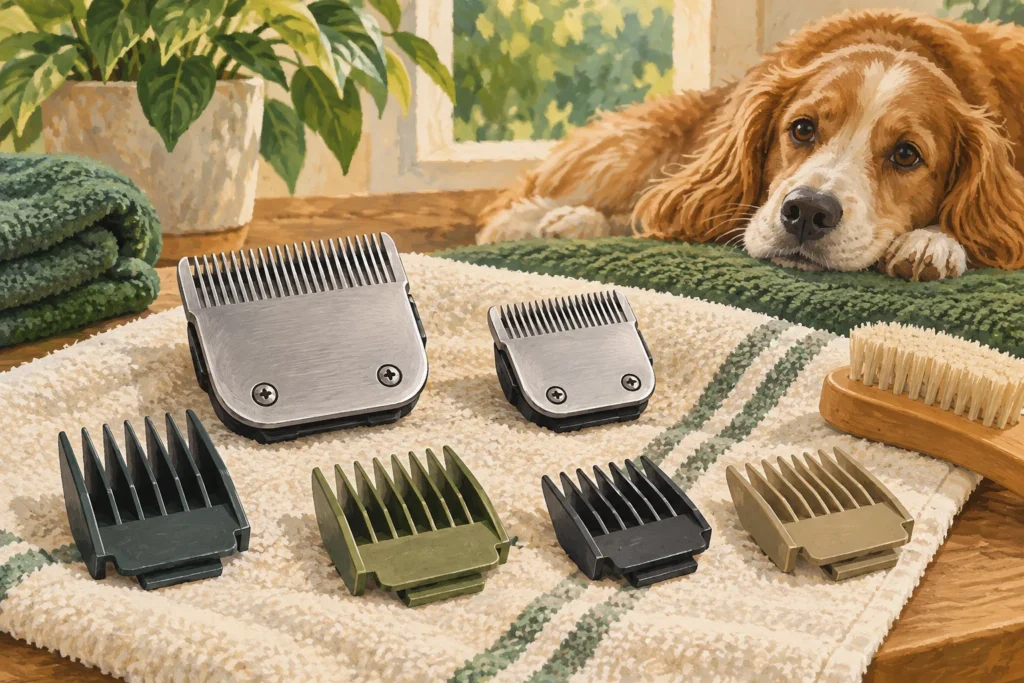
Dog clipper blades cut the hair; comb guards sit over a compatible cutting system to help leave more length. They are not interchangeable pieces of plastic with a universal fit. Before buying either, identify the exact clipper model and the attachment system it uses. A guard that looks right in a photograph can still attach poorly or be unsuitable for the blade underneath it.
This guide explains the purchase decision, rather than teaching a full haircut. If the coat is tightly matted, the skin is sore or you cannot comfortably identify what lies beneath the hair, book a reputable groomer or ask your vet. PDSA specifically advises owners against tackling mats at home.
Table of Contents
Start with the machine you actually own
Find the model number on the clipper and locate its manual. Record whether it uses a fixed blade, an adjustable integrated blade or a removable blade system. Also note the manufacturer’s supported replacement parts. A familiar brand name is not enough: one company’s home clipper, professional clipper and small detail trimmer can use different fittings.
If you have bought a second-hand machine, do not assume the loose accessories in the box belong to it. Check the part numbers against the manual. An attachment that clicks into place still needs explicit compatibility and a secure fit before being used near a dog.
What the different parts do
| Part | Its job | Check before ordering |
|---|---|---|
| Replacement cutting blade | Provides the cutting teeth for the machine | Model compatibility, intended use and stated cutting length |
| Adjustable blade lever | Changes the setting within that machine’s range | The actual millimetre range in its manual |
| Attachment comb or guard | Spaces a compatible blade away from a prepared coat | Supported blade, secure fixing and stated length |
| Blade oil and cleaning brush | Supports the maintenance specified by the maker | Products approved for that equipment |
The number printed on a blade or comb is a product designation, not a reliable universal measurement across all systems. Compare the stated millimetres and compatibility instructions. Do not order a shorter-cutting component simply because someone recommended its number for a different clipper.
Coat preparation matters more than a large accessory set
A guard needs to pass through a coat without catching or pulling. It does not make a tangled coat ready for clipping. Nor does a powerful motor turn an unsuitable blade into a safe choice. Ask your groomer which between-appointment maintenance is appropriate for your dog’s coat, and which areas should be left for professional work.
The tools in a broad dog-grooming kit can be a starting point, but you may only need one suitable comb and the maintenance supplies for a machine you already own. Buying a dozen unfamiliar guards is poor value if you use one or cannot establish their compatibility.
Choose a useful first purchase
For an owner maintaining a groomer’s established trim, the most useful next step is a conversation: bring the clipper model, the current blade and a photograph of the desired result. Ask which work is reasonable to do at home, which exact accessory is supported and whether your dog’s coat needs professional preparation first.
This article contains Amazon affiliate links. As an Amazon Associate, we earn from qualifying purchases.
For replacement supplies, Find Wahl blade-care supplies on Amazon UK. Match any search result to the manufacturer’s part number and the machine’s manual; the words “universal” or “professional” in a marketplace title are not sufficient proof of fit.
Inspect the equipment before each session
Look for cracked comb teeth, a loose mounting clip, bent cutting teeth or a damaged cable. Clean accumulated hair as directed and follow the specified oiling procedure. Check the blade’s temperature regularly during use; stop if it becomes uncomfortable to touch. A cooling spray is not permission to continue using a damaged, dirty or poorly maintained blade.
Prepare a stable, non-slip work area at a comfortable height. Keep cables and loose accessories out of reach, and arrange the session so the dog can be handled calmly. If the dog becomes worried or struggles, stop instead of trying to complete the haircut at any cost. Never leave a dog unattended on a raised grooming surface.
Compare the full cost
A cheap machine with unavailable replacement blades may be less useful than a repairable model. Compare supported parts, maintenance supplies and access to servicing alongside the initial price. Keep a small record of the model and compatible part numbers so that the next replacement purchase is straightforward.
The sensible beginner setup is the smallest set of clearly compatible tools that meets an agreed grooming task. The right accessory should make a suitable job more predictable; it should not encourage you to attempt a difficult or uncomfortable clip without help.