
Last updated: 9 September 2026
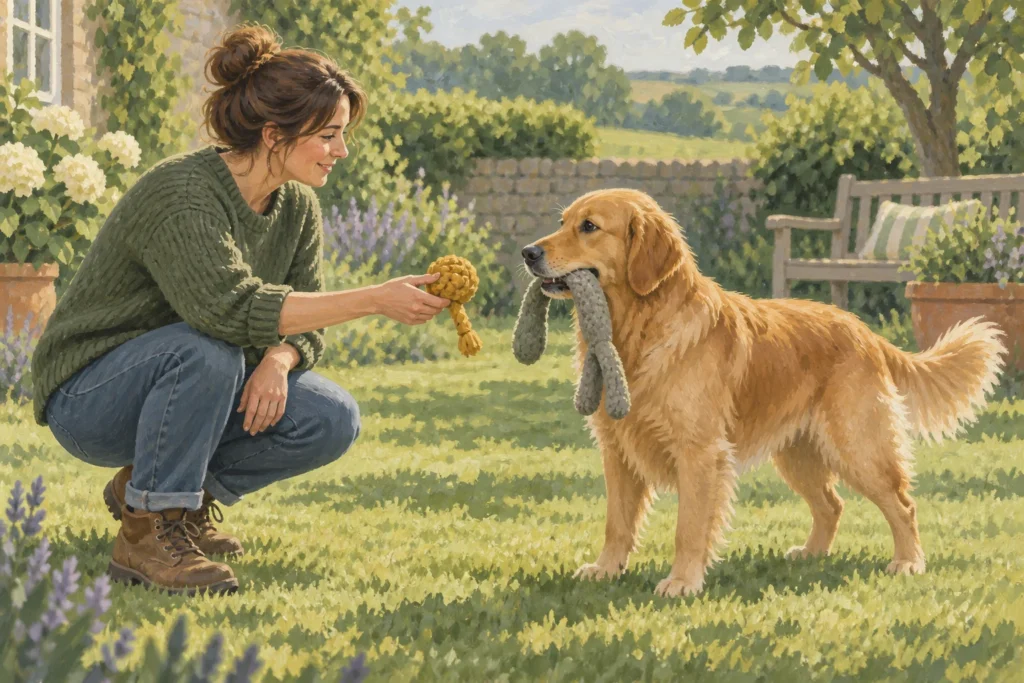
Teach “drop it” by making it worthwhile for your dog to release something they already hold. Start with an ordinary toy and a pleasant exchange, not a stolen sock or a dangerous object. The aim is for your approach to predict a good outcome, rather than a contest over who can grip harder.
This exercise is for relaxed practice. If your dog stiffens, growls, snaps or guards possessions, stop trying to take items and ask your vet for help accessing a qualified behaviour professional. Children should not practise taking things from a dog’s mouth.
Table of Contents
Set up an easy exchange
Choose a quiet room and a toy your dog likes but does not fiercely value. Have small suitable rewards ready before you begin. Use a clear floor area so the dog can find the reward without rushing between furniture, and keep other pets out of the session.
Let the dog pick up the toy. Offer a better alternative nearby and give them time to choose to release it. Avoid reaching into the mouth or looming over them. When they let go, acknowledge that choice calmly, allow the reward and then return the safe toy so the game can continue.
Dogs Trust describes this as a fair-trade approach. Returning the toy is useful because releasing it does not always mean that enjoyable play ends. Keep practice brief enough that both of you remain relaxed.
Add the words once the action is predictable
Initially, concentrate on an easy, successful exchange. Once your dog regularly releases the toy in that setup, say “drop it” just before presenting the familiar reward opportunity. Use the same words and an ordinary voice. Repeating the cue louder while the dog keeps holding the toy does not make the exercise clearer.
As understanding develops, give the dog a moment to respond to the cue before showing the reward. If they release, reward promptly. If they do not, make the task easier again rather than pulling the toy or withholding something they need. A few successful repetitions are more useful than a long session of frustration.
Make the cue useful during play
Practise in slightly different easy situations: another room, another familiar toy, then a calm outdoor space. Change one element at a time. An exciting game in a park with dogs running nearby is a much larger jump than a second quiet room at home.
You can build a predictable rhythm into tug: play briefly, pause, invite the release, reward it and resume when both participants are comfortable. Choose a toy long enough to keep hands away from the dog’s mouth. If arousal increases or teeth repeatedly contact skin, stop the game and reconsider the setup.
Our clicker guide explains how a marker can identify a useful moment. A clicker is optional here; a consistent, gentle verbal marker can serve the same practical purpose.
Common problems and useful adjustments
| What happens | Try next |
|---|---|
| The dog runs away with the toy | Use an easier toy in a smaller calm practice area; avoid chasing |
| The toy is dropped, then immediately grabbed | Place the reward away from it and give the dog time to finish before moving |
| The dog ignores food | Reduce excitement and try at a quieter time rather than escalating the reward endlessly |
| The dog becomes still or defensive | Stop the exchange and seek professional advice |
Keep real hazards out of the lesson
Do not plant harmful objects to test the cue. Prevent access to medicines, food waste and items likely to be swallowed. If your dog gets hold of something dangerous, focus on immediate safety and contact your vet when ingestion is possible; this is not the moment to assess training progress or attempt a risky struggle.
“Leave it” asks the dog to disengage before taking an item. “Drop it” asks for release after pickup. Keeping that distinction clear helps you choose what to practise, but neither cue replaces sensible storage and supervision.
What equipment is worth buying?
This article contains Amazon affiliate links. As an Amazon Associate, we earn from qualifying purchases.
A familiar safe toy and suitable rewards are enough. If a reward pouch would make sessions easier, Find washable training treat pouches on Amazon UK. Choose one you can open without fumbling and clean properly; buying training equipment does not improve the cue unless the practice remains understandable for the dog.
Keep a note of where the cue works comfortably and where it needs easier preparation. Progress means a relaxed, willing exchange across manageable situations. It does not mean demanding that your dog surrender every possession whenever you decide to test them.