
Last updated: 9 September 2026
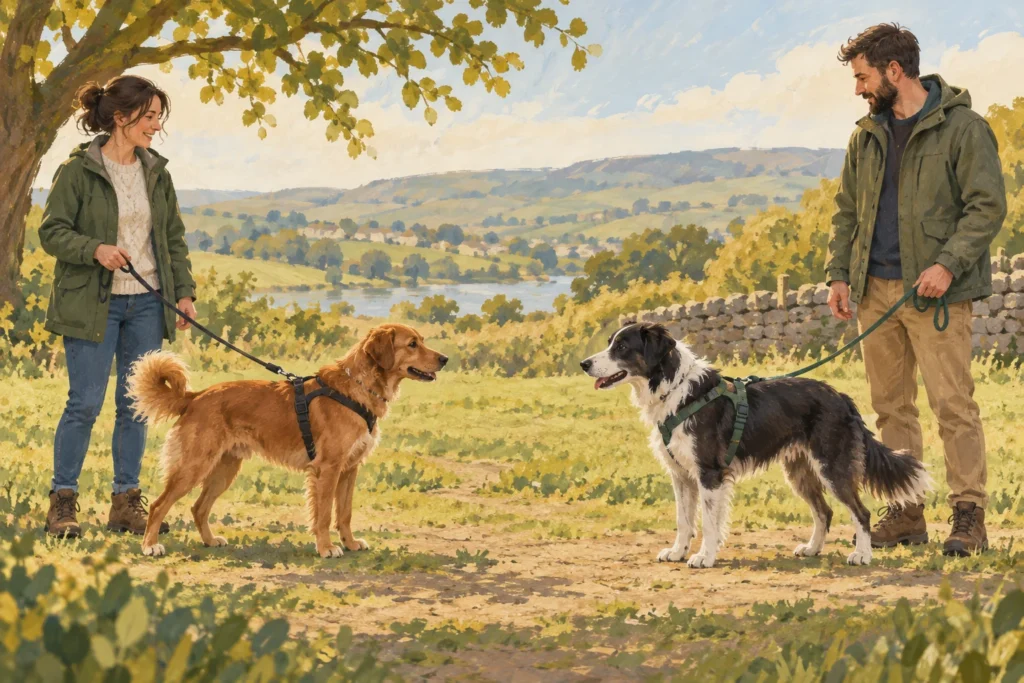
Introducing a second dog starts before the first greeting: assess the match, prepare separate spaces and arrange a supported meeting at a pace both dogs can manage. Friendship cannot be guaranteed. The immediate goal is comfortable coexistence with enough distance and choice, rather than an instant photograph of two dogs sharing a bed.
This article contains Amazon affiliate links. As an Amazon Associate, we earn from qualifying purchases.
Table of Contents
Consider the resident dog’s needs
Think about age, health, play style, handling and previous experience of dogs in the home. Enjoying a brief park encounter does not establish that a dog wants to share meals, rest and people around the clock.
Ask the rescue or breeder what is known about the incoming dog and involve a qualified practitioner early if either dog has a history of conflict. Our dog-choice guide raises broader care questions, but individual behaviour and the actual household should drive this decision.
Map out daily life before collection
Draw a simple room plan. Mark where each dog can sleep undisturbed, where meals will happen and how people will move between areas. Check whether you can give one dog a toilet break without the other rushing through the same doorway.
Prepare more than one water and resting location. Remove likely flashpoints from the shared introduction area, while ensuring each dog’s separate area remains comfortable and properly equipped.
| Routine | Planning question |
|---|---|
| Meals | Can each dog eat without the other approaching? |
| Rest | Can either dog leave interaction and sleep quietly? |
| Doorways | Can you avoid crowding and accidental access? |
| Human attention | Can both receive individual time? |
| Time without supervision | Are separate comfortable spaces available? |
Arrange the first meeting with support
For suitable adult dogs, Dogs Trust recommends a quiet meeting outside the home with a separate handler for each dog. Begin at a comfortable distance and allow movement without forcing a face-to-face greeting. Reduce distance only while both remain comfortable.
Use properly fitted walking equipment and avoid a busy dog park. If a puppy is involved, ask your vet where and when meeting is appropriate for the puppy’s vaccination status and local infection risk.
A short successful encounter is enough for one session. If either dog repeatedly moves away, becomes tense or struggles to disengage, increase space and reassess. A calendar deadline is not a reason to press ahead.
Make the move indoors a separate stage
A comfortable outdoor meeting does not complete the introduction. The home introduces sleeping places, food smells, narrow passages and familiar people. Keep the first indoor arrangement simple and supervise actively.
Use separation before the dogs become exhausted or overstimulated. Find dog gates for separate resting spaces on Amazon UK. A barrier is useful only if appropriately fitted and if the dogs remain comfortable around it; some situations need a closed door and professional guidance instead.
Never leave leads or house lines attached without appropriate supervision, because they can catch or tangle. If a professional recommends them, ask how they should be used in your particular layout.
Protect rest, meals and individual time
Separate feeding makes it easier to see what each dog eats and prevents unwanted approaches. Offer valued toys or chews in protected areas until you have appropriate advice about sharing space around them.
Keep some one-to-one walks, training and quiet attention. The resident dog should not have to manage a puppy’s energy, and the new dog needs opportunities to learn household routines without following another dog constantly.
Respond early to tension
Do not punish warning behaviour or leave the dogs to sort it out. Create distance safely and contact the rescue or a qualified behaviour professional if discomfort persists, or if there is barking, lunging, snapping or guarding.
If an injury occurs, contact the vet. Avoid placing your hands between fighting dogs; ask a professional to help establish a safe management plan before further meetings.
Review the arrangement honestly
Watch whether both dogs can eat, rest and move comfortably, not just whether they sometimes play. Keep notes about successful situations and recurring pressure points. Share those observations with the organisation or practitioner supporting you.
Some dogs become close companions, some prefer more independent routines and some are not a suitable household match. Getting help early allows decisions to reflect both dogs’ welfare while the situation is still manageable.