Dog Training

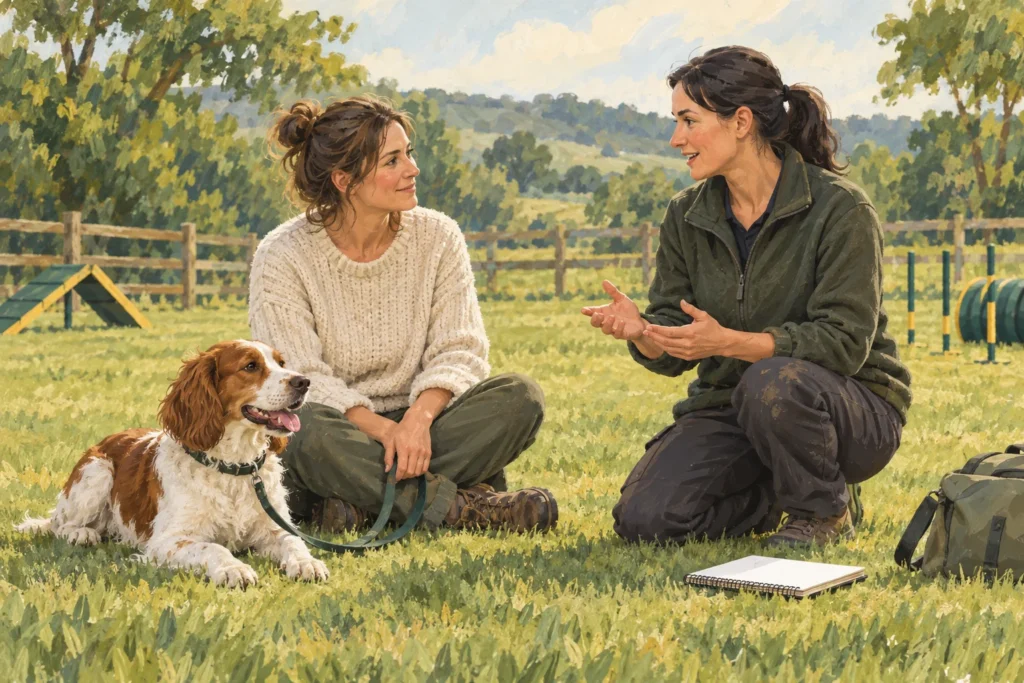
Illustration: An adult dog owner and a friendly trainer talking on a quiet open training field while the dog rests calmly beside them on a loose lead.

How to choose a dog trainer or behaviourist in the UK

Choose a dog trainer or behaviourist by matching their verified role and methods to the help your dog needs. Ordinary skills classes and clinical behaviour cases are different services. For fear, aggression, distress or a sudden behaviour change, start with your vet and ask about suitable referral support.
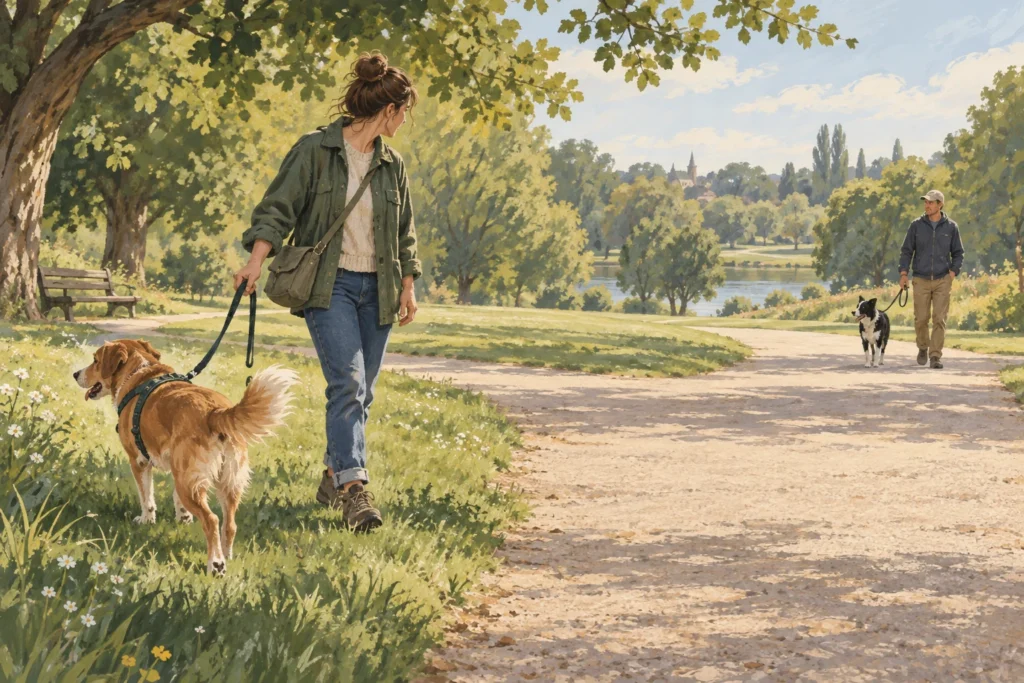
Illustration: Two dog-and-owner pairs on a broad quiet park path with a generous distance between them; the nearer owner calmly turns their dog towards a wider grassy route.

Dog barking at other dogs on walks: a safer starting plan

If your dog barks at other dogs on walks, start by creating more space and making encounters easier to avoid. Repeated close passes are rarely a useful starting lesson. A safer plan combines suitable equipment, calmer routes and professional help when reactions are intense, worsening or difficult to manage.

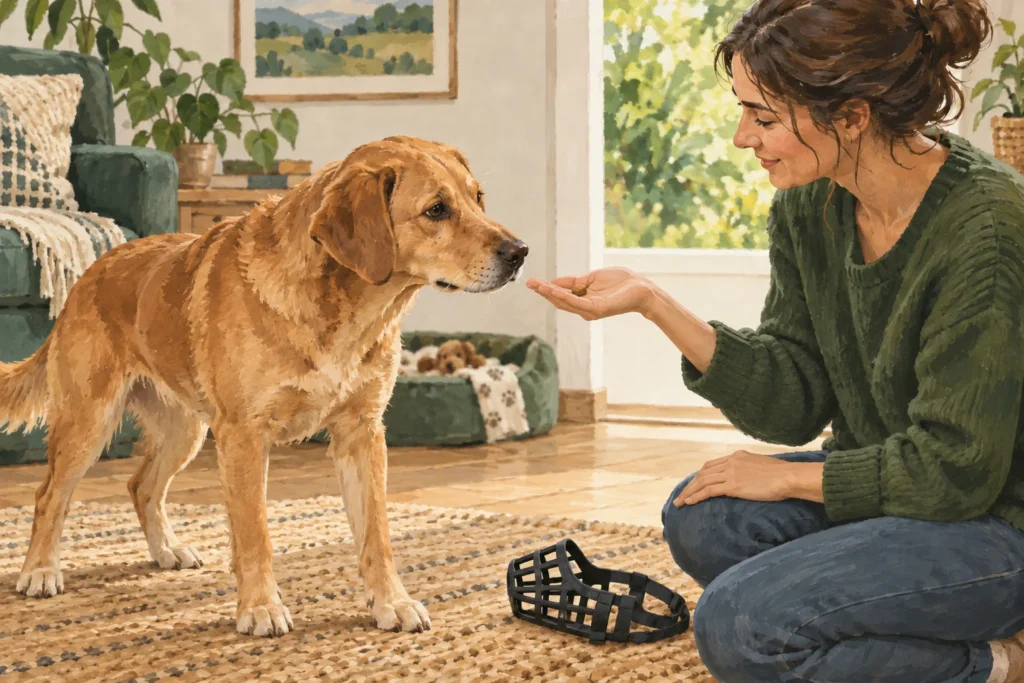
Illustration: A relaxed adult dog lying on a simple portable mat while its seated owner quietly offers a small reward, in a calm sitting room.

How to teach a dog to settle on a mat

To teach a dog to settle, begin where resting is already easy and reward small signs of relaxation on a comfortable mat. Build time and distractions separately. The aim is a dog who can switch off, not one who must remain motionless while worried, uncomfortable or desperate to investigate.

Scroll to Top