Puppies & Rescue Dogs

Illustration: An owner planning dog expenses at a kitchen table with a blank notebook, calculator, plain food bag and folded lead, while a dog sleeps under the table.

How much does a dog cost per month in the UK?

A dog’s monthly cost depends on their size, health, diet and how much paid care your household needs. PDSA publishes minimum estimates of £69 for a small dog, £83 for a medium dog and £116 for a large dog, calculated using 2024 prices. Treat those as dated starting points, not current all-inclusive quotations.
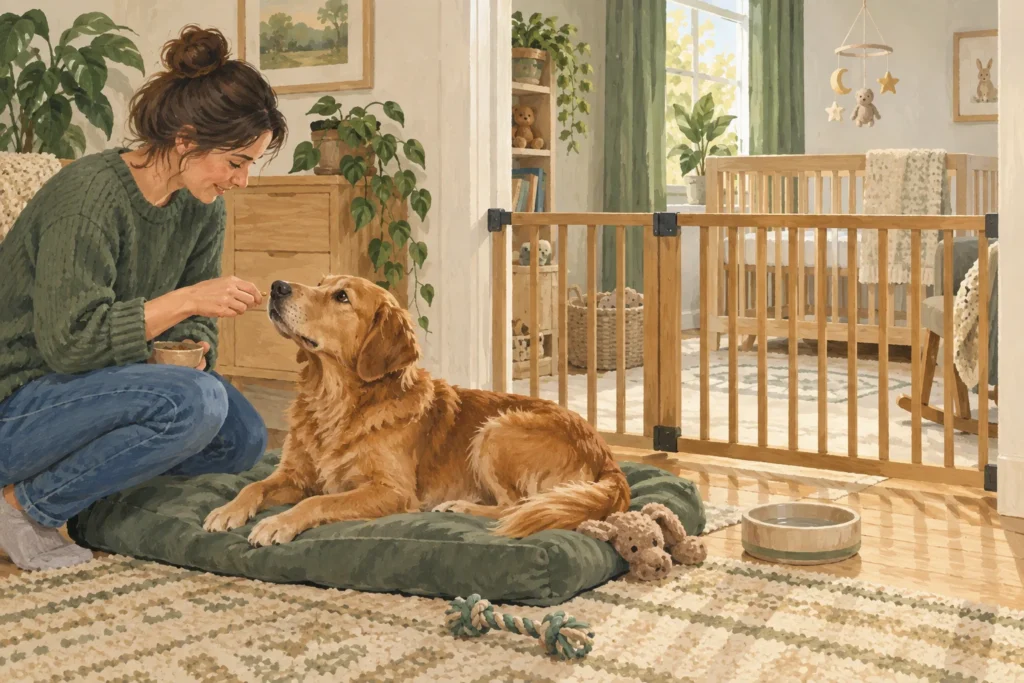
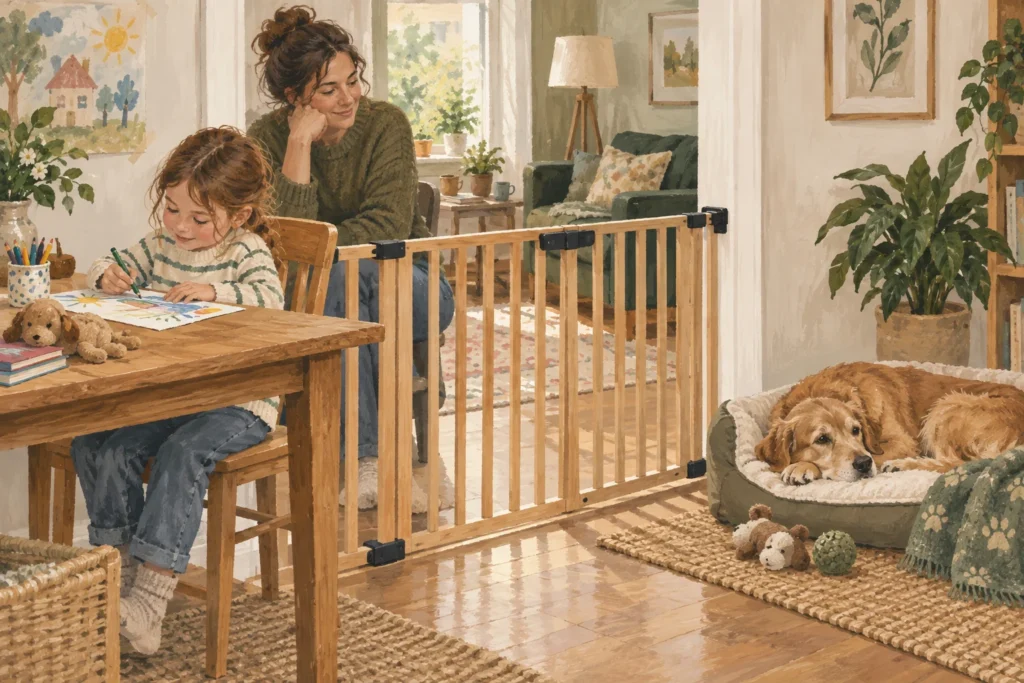
Illustration: An expectant household setup with an empty baby cot safely separated by a sturdy gate from a dog's comfortable resting mat, and an adult rewarding the settled dog.

Preparing your dog for a new baby: a gradual household plan

Preparing your dog for a new baby works best when the household changes begin gradually, before the baby comes home. Plan who will meet the dog’s daily needs, introduce new equipment at a comfortable pace and establish safe separate spaces. The first introduction is only one part of a much longer adjustment.

Illustration: A calm family home with a child drawing at a table on one side of a sturdy safety gate, and a dog resting undisturbed in its bed on the other, with an adult supervising both.

Dogs and children: setting up safer shared space at home

Dogs and children need shared space that an adult can actively supervise, plus comfortable separate areas for times when attention is elsewhere. Familiarity does not remove that responsibility. Build the home around ordinary busy moments—meals, school mornings and visitors—rather than relying on everyone remembering a rule during excitement.

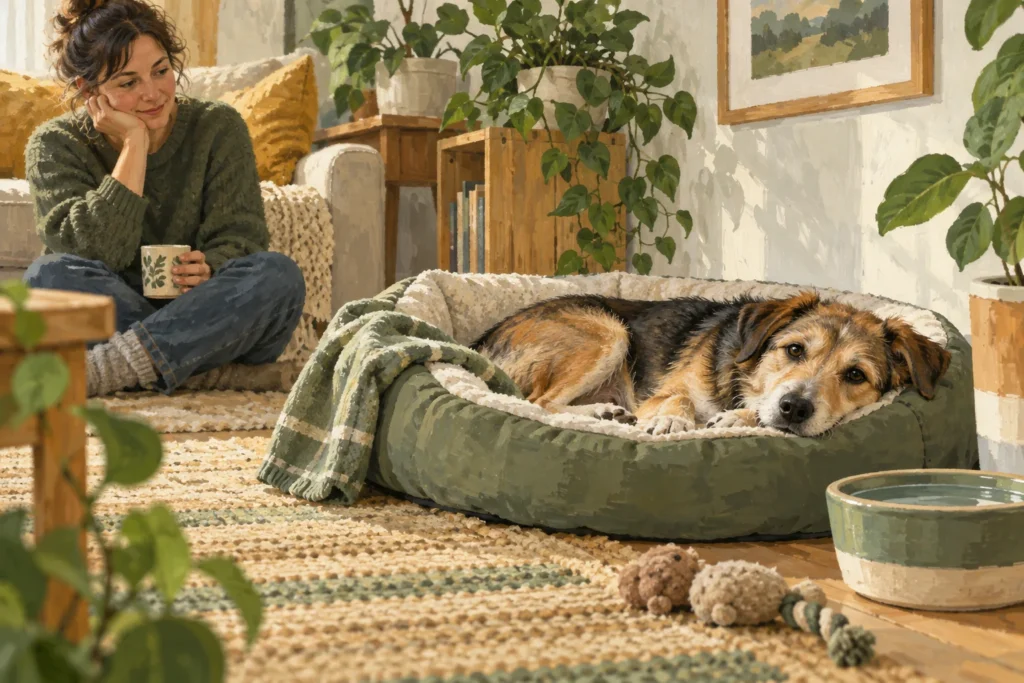
Illustration: An adult rescue-type mixed-breed dog resting in a quiet new-home corner with its own bed and water bowl while an owner sits calmly at a respectful distance.

Bringing a rescue dog home: the first week without rigid deadlines

When bringing a rescue dog home, make the first week predictable and give the dog time to show you what they find comfortable. Prepare the essentials, follow the rescue’s individual advice and keep early demands modest. A fixed three-day or three-week promise cannot tell you when this particular dog will feel settled.

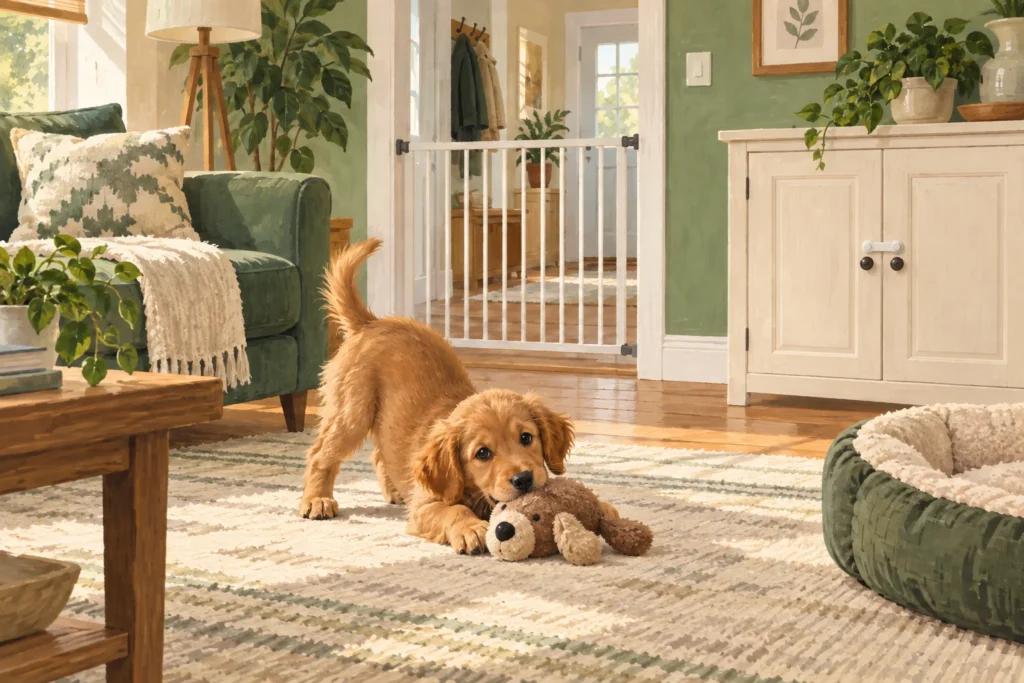
Illustration of a puppy playing in a home with a closed safety gate and latched storage cupboard.

Puppy-proofing your home: a room-by-room checklist

Puppy-proofing your home means removing reachable hazards, limiting access where necessary and checking again as your puppy grows. Start at floor level and follow the routes your puppy will use for sleeping, eating, playing and toileting. A single cleared room is easier to supervise than an entire house full of tempting objects.

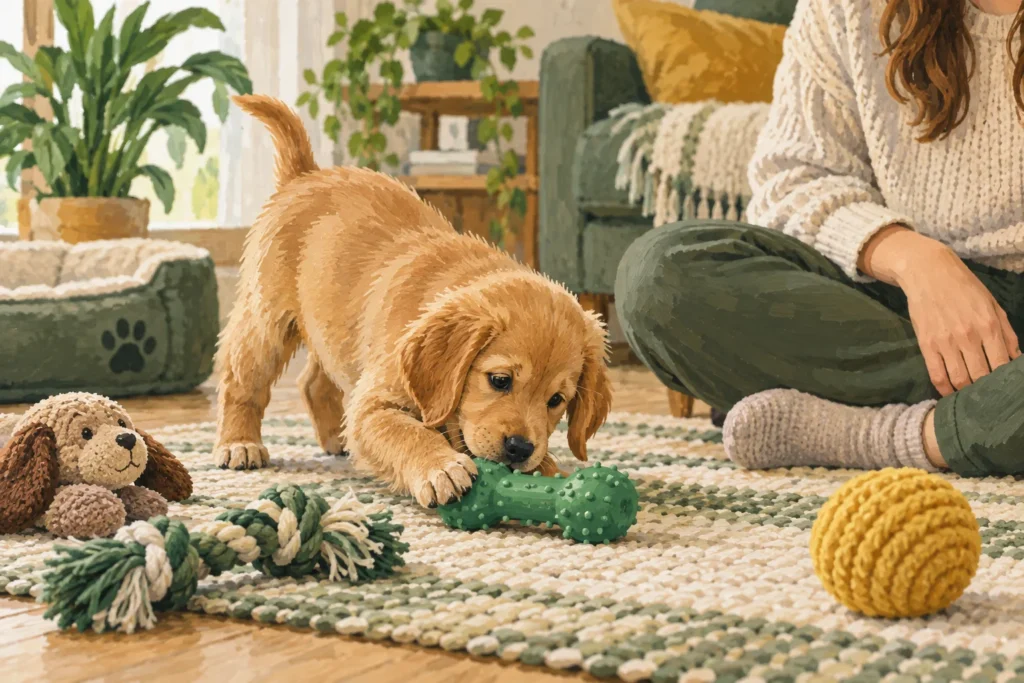
Illustration: A puppy gently investigating an appropriately sized soft rubber teething toy while an adult sits nearby.

Best puppy teething toys: size, texture and safe supervision

The best puppy teething toys are comfortably sized, appropriate for the puppy’s chewing style and easy for you to inspect. A small selection of suitable textures is usually more useful than a large multipack of uncertain materials. Start with a puppy-labelled rubber toy, a manageable play toy and a plan for replacing anything damaged.

Scroll to Top