
Last updated: 9 September 2026
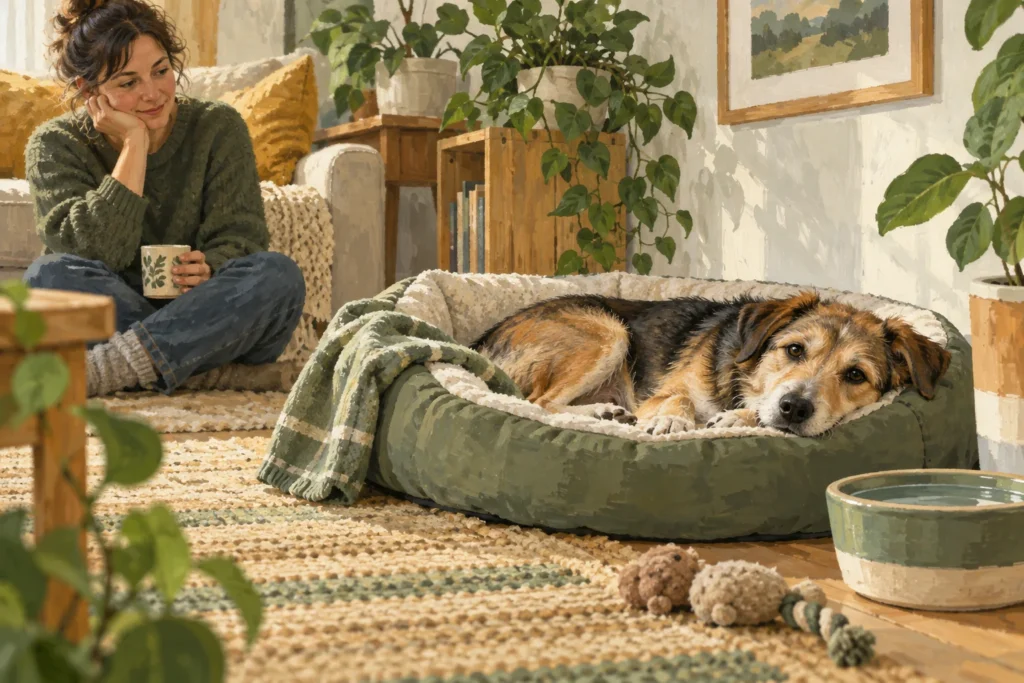
When bringing a rescue dog home, make the first week predictable and give the dog time to show you what they find comfortable. Prepare the essentials, follow the rescue’s individual advice and keep early demands modest. A fixed three-day or three-week promise cannot tell you when this particular dog will feel settled.
This article contains Amazon affiliate links. As an Amazon Associate, we earn from qualifying purchases.
Table of Contents
Get the handover details in writing
Ask about current food, normal meal times, sleeping arrangements, walking equipment and any known health or behaviour needs. Clarify medication instructions with the relevant professional and arrange the transfer of records. Find out who to contact if a question arises after collection.
The best first purchases may be deliberately ordinary: familiar food, a stable bowl and bedding of an appropriate size. Avoid changing every aspect of daily life on arrival because a different product looks more appealing.
Prepare one calm base
Set up a resting area away from the busiest route through the home. Check doors, windows, garden boundaries and reachable hazards before the dog arrives. An adult dog can investigate worktops, gates and storage spaces that a small puppy cannot yet reach.
A washable blanket can make a familiar resting place easier to maintain; Find a washable dog blanket on Amazon UK. If the rescue can send familiar bedding, ask how best to use it. Do not insist on a crate if the dog has not learned to feel comfortable in one.
Make arrival uneventful
Allow a suitable toilet opportunity and introduce the prepared space without a crowd of people waiting to meet the dog. Keep the household’s movements and voices ordinary. A guided tour of every room is less useful than letting the dog explore a manageable area safely.
Contact should be optional. A dog approaching to investigate does not necessarily want a hug or a hand over the head. Pause during gentle interaction and notice whether they choose more. If they move away, let them.
Use a flexible first-week structure
| Part of the day | Useful aim |
|---|---|
| Meals | Use familiar food and a quiet feeding location while you learn the routine. |
| Toilet breaks | Offer regular opportunities and respond calmly to accidents. |
| Walks | Follow the rescue’s individual guidance and choose manageable surroundings. |
| Rest | Protect time without visitors, handling or other pets intruding. |
| Evening | Repeat a predictable wind-down rather than adding a final exciting event. |
These are household arrangements, not deadlines for the dog. If a planned outing proves overwhelming, shorten or change it. If the dog is quietly exploring and seeking company, you can respond without forcing them to remain isolated for a prescribed number of days.
Introduce people and pets deliberately
Delay unnecessary visitors. Tell household members where the dog can rest undisturbed and how doors will be managed. Children need active adult supervision and should not approach the dog while eating, sleeping or retreating.
Follow a specific introduction plan for resident pets. Separate food, resting places and valued items so the animals do not have to negotiate every resource immediately. If either animal appears uncomfortable, increase space and contact the rescue for advice rather than insisting they sort it out.
Record changes without labelling the dog’s personality
A short diary can include appetite, sleep, toileting, comfortable interactions and situations that seemed difficult. Behaviour can change as the dog becomes familiar with the home. An unusually quiet first day does not prove they will always be quiet, and one unsettled evening does not establish a permanent problem.
Health concerns should not be written off as settling in. Contact a vet about illness, pain, inability to eat or drink normally, or other worrying signs. Keep contact details with your first-aid essentials.
Finish the administrative handover
Register with a vet, confirm identification details have been updated and review insurance arrangements and any exclusions. Keep the rescue’s support number accessible. Asking for help early gives the dog and household a better chance of resolving a difficulty before it becomes an established daily pattern.