
Last updated: 9 September 2026
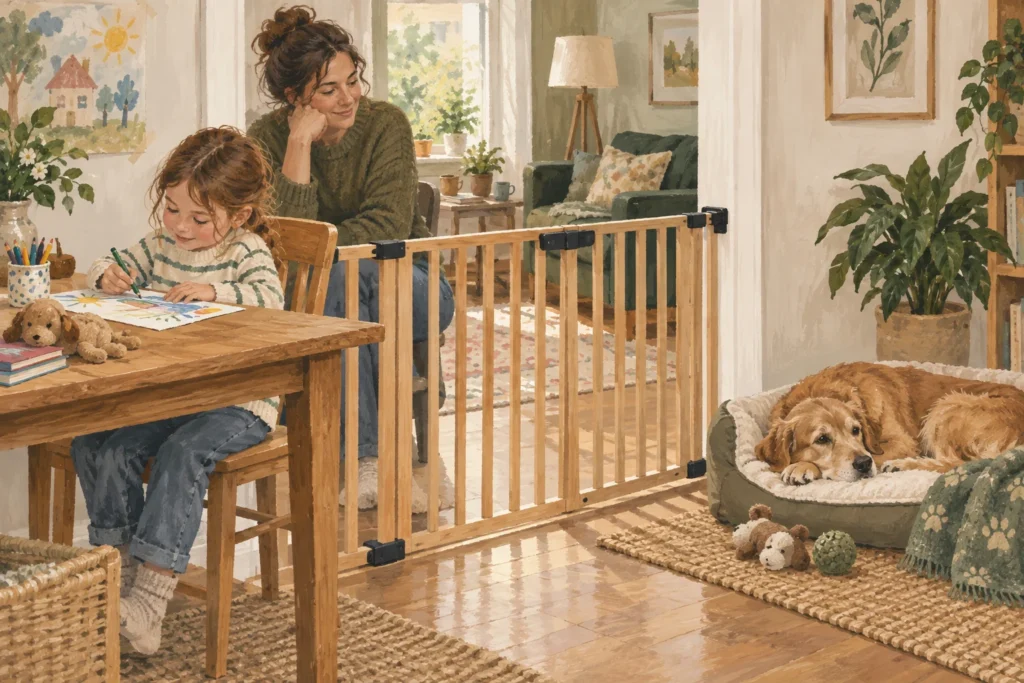
Dogs and children need shared space that an adult can actively supervise, plus comfortable separate areas for times when attention is elsewhere. Familiarity does not remove that responsibility. Build the home around ordinary busy moments—meals, school mornings and visitors—rather than relying on everyone remembering a rule during excitement.
This article contains Amazon affiliate links. As an Amazon Associate, we earn from qualifying purchases.
Table of Contents
Make supervision an actual job
An adult needs to stay close enough to notice both the child’s actions and the dog’s response, and be free to intervene. Being in the same room while focused on cooking or a phone is not the same arrangement.
Decide who is responsible when several adults are present. An explicit handover is better than each person assuming someone else is watching. If nobody can pay attention, separate the dog and child safely and comfortably.
Give the dog a retreat children do not enter
Choose a resting area away from children’s main play route. It should be available before the dog becomes overwhelmed, with enough room to lie comfortably and an easy way to leave interactions.
Find a suitable household safety gate on Amazon UK. Match the barrier to both the dog and the children using the space, including fixing requirements and whether anyone can climb, open or squeeze through it. A gate helps organise separation; it does not replace adult supervision during contact.
Protect the moments that are easy to overlook
| Household moment | Practical arrangement |
|---|---|
| Dog’s meal | Feed in a protected place and prevent children approaching the bowl. |
| Rest or sleep | Keep the resting area undisturbed, even when a child wants to say hello. |
| Chew or favourite toy | Allow the dog to use it away from reaching hands. |
| Children’s active games | Give the dog another comfortable space before running and shouting begin. |
| Visitors arrive | Manage the door and introductions before allowing shared access. |
Think through the layout from the dog’s position. If their bed is beside the toy cupboard or the path to the garden, it may not offer much peace even though everyone calls it the quiet corner.
Teach children behaviours they can practise
Use short, concrete instructions appropriate to the child’s age: let the dog come over, stroke gently when the dog is comfortable, and stop if the dog moves away. Avoid asking a young child to interpret a complicated set of body-language signals before an adult intervenes.
Hugging, kissing, climbing on a dog and putting faces close can make escape difficult. Demonstrate safer affection and praise the child for giving space. A child should never be responsible for taking food or a valued object from the dog.
Respond early to discomfort
Watch the whole interaction. A dog turning away, becoming still or trying to leave may need space well before barking or growling. Move the child away or end the activity calmly. Do not punish the dog for communicating discomfort.
If growling, snapping or biting has occurred, stop free contact and seek veterinary and qualified behaviour advice. Do not arrange further child–dog encounters to see whether it happens again. The family needs an individual safety plan.
Keep positive activities modest and supervised
An older child may enjoy helping an adult prepare the dog’s walking kit or placing a toy ready before the dog enters. Shared activities do not all require touching. Choose tasks that suit the particular child and dog rather than expecting the relationship to look like a photograph.
If attending a puppy class, ask the instructor how family members can participate appropriately. Training skills can support daily life, but a reliable sit does not make unsupervised contact safe.
Revisit the arrangement as everyone changes
A crawling baby, visiting toddler, older dog or school holiday can alter the demands on the home. Review gates, rest areas and supervision plans at those changes. The aim is a relationship built around comfortable, manageable experiences for both the child and the dog, with adults consistently responsible for making them possible.