
Last updated: 9 September 2026
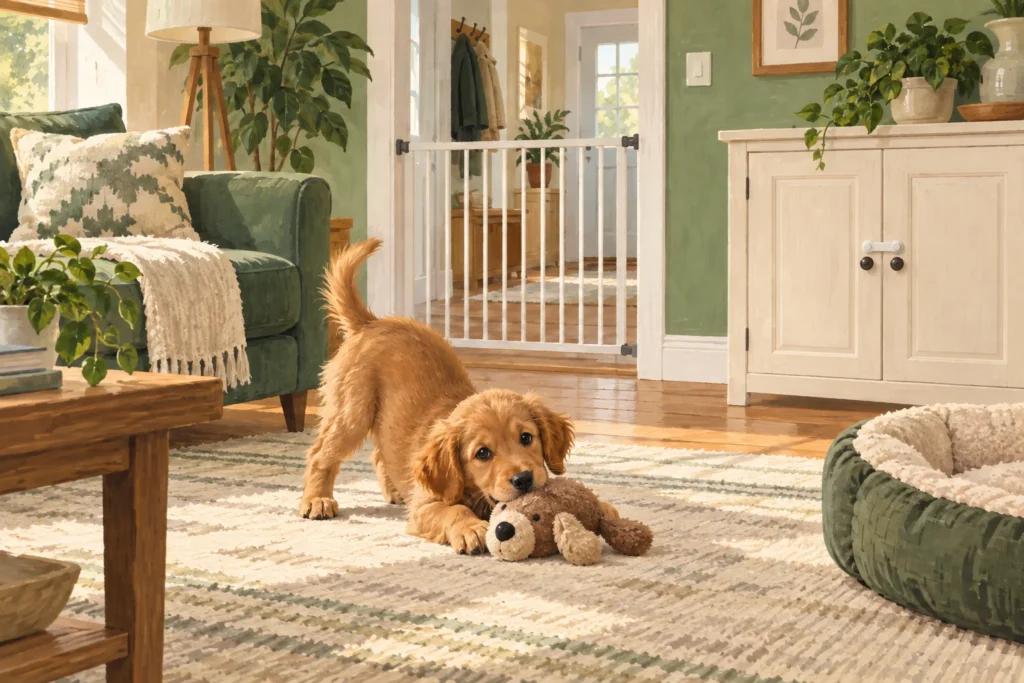
Puppy-proofing your home means removing reachable hazards, limiting access where necessary and checking again as your puppy grows. Start at floor level and follow the routes your puppy will use for sleeping, eating, playing and toileting. A single cleared room is easier to supervise than an entire house full of tempting objects.
This article contains Amazon affiliate links. As an Amazon Associate, we earn from qualifying purchases.
Table of Contents
Set up a manageable starting area
Choose a space where the puppy can rest without constant traffic, reach water and spend time near the household. Remove things you would otherwise be telling them to leave every few minutes. Puppy-proofing works best when the ordinary environment makes sensible behaviour easy.
A properly fitted gate can restrict access to stairs or another room. Find a puppy safety gate on Amazon UK. Check bar spacing, the manufacturer’s installation instructions and whether the design is suitable for its location. A gate is a management tool; it does not mean a puppy can safely be left for long periods without care or company.
Kitchen and utility room
Move food, cleaning products and dishwasher or laundry products into secure storage. Do not rely on a low cupboard staying closed if the door opens with a nudge. Check bins, recycling, shopping bags and anything temporarily left on the floor after a delivery.
Look underneath units and appliances for dropped items. Keep access to hot surfaces and open appliance doors controlled. Everyone should know to check where the puppy is before moving heavy objects or starting a machine.
Create one feeding location with a stable water bowl and enough space to eat without being crowded. Store the food separately so a torn bag does not become an unscheduled meal. Cleaning equipment should be accessible to people but beyond the puppy’s reach.
Living room and bedrooms
Lift charging cables and secure electrical leads rather than covering a tangled pile with a cushion. Remove batteries, remote controls, sewing materials, small toys and loose objects that could be swallowed. Consider what drops out of handbags or coat pockets, including medicines and food.
Check access behind furniture and any gap where the puppy might become trapped. Reclining furniture creates moving spaces that need particular care: locate the puppy before operating it. Put valued shoes and clothing away rather than expecting a young dog to recognise their importance.
Bathroom and household medicines
Keep medicines, cosmetics and cleaning products secured, including items in visitors’ bags. Use a closed door where a room cannot easily be made suitable. Do not store a pet’s medication where the puppy can investigate it; packaging does not make it inaccessible.
If you suspect your puppy has swallowed something harmful, contact a vet promptly with the packaging and details if available. Do not try home treatments or induce vomiting unless a vet specifically instructs you to do so.
Garden, entrance and escape routes
Walk the whole boundary, checking under fences, behind sheds and around gates. A space that looks small to you may be usable by a puppy. Remove accessible garden chemicals and inspect plants and outdoor items for hazards. Supervise garden time while you learn what your puppy investigates.
| Location | Question before access |
|---|---|
| Front door | Who keeps the puppy back while someone enters? |
| Garden gate | Does it latch reliably after every person uses it? |
| Stairs | Is access appropriate and controlled? |
| Resting area | Can the puppy sleep without children or pets disturbing them? |
| Visitor belongings | Are bags and medicines out of reach? |
Make the checklist part of the day
Do a quick floor scan before allowing access and after meals, craft activities or visitors. At bedtime, check the overnight area and plan how the puppy will reach their toilet place safely. Reassess when they become taller, stronger or more interested in opening things.
Offer suitable toys and normal learning opportunities alongside these controls. The goal is a home where the puppy can explore safely, not a life with no choices. Once the setup is manageable, our puppy socialisation class guide can help you consider structured support for the next stage.