

Dog poo bags compared: recycled, compostable and actual disposal
Compare recycled and compostable dog poo bags by size, opening, cost and the bin you will actually use. Understand what the environmental labels mean.
Compare recycled and compostable dog poo bags by size, opening, cost and the bin you will actually use. Understand what the environmental labels mean.
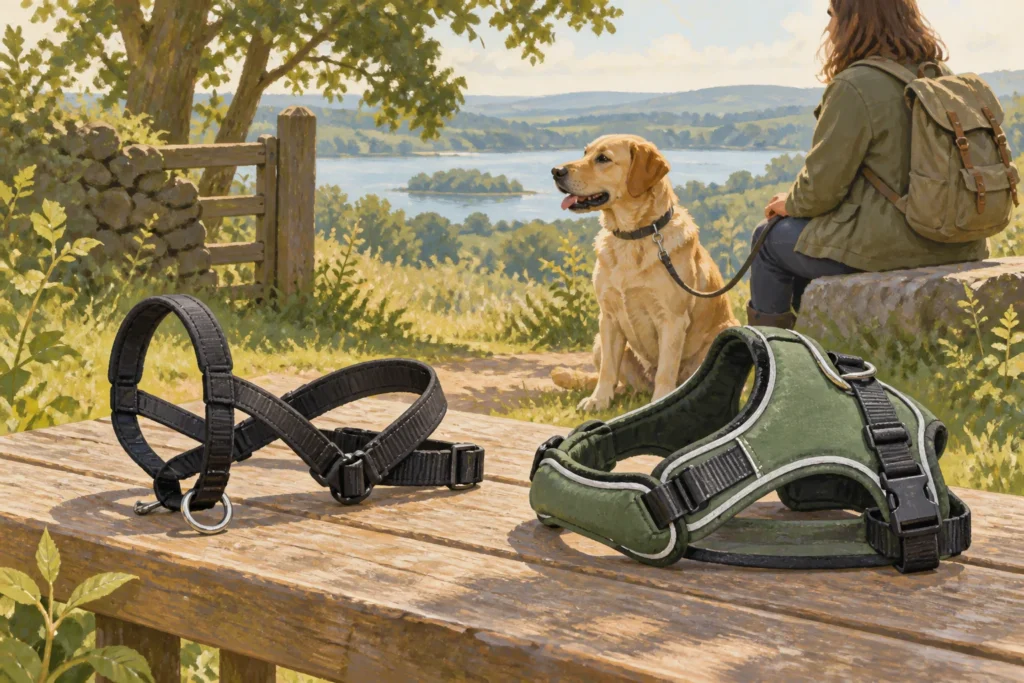
Compare dog headcollars with harness alternatives. Check fit, safety links and gradual introduction before buying, with clear limits on what equipment can do.
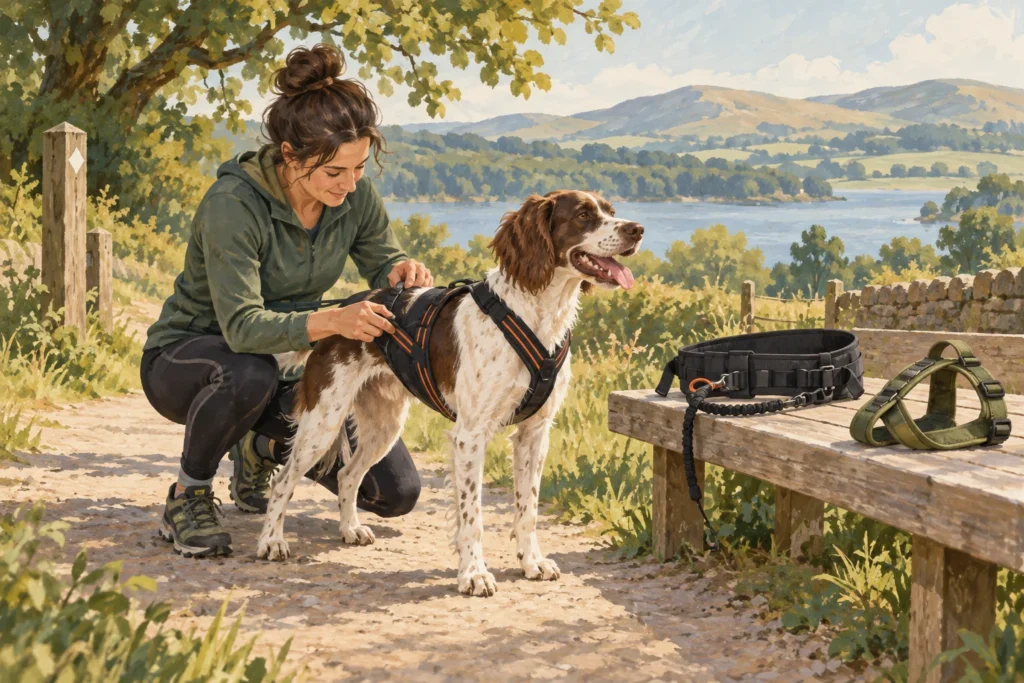
A canicross harness must be suitable for the dog moving ahead and pulling against a line attached to the runner. An everyday walking harness may be designed mainly for loose-lead use and close control. Choose the intended pulling geometry and individual fit, rather than assuming any padded harness can do both jobs.
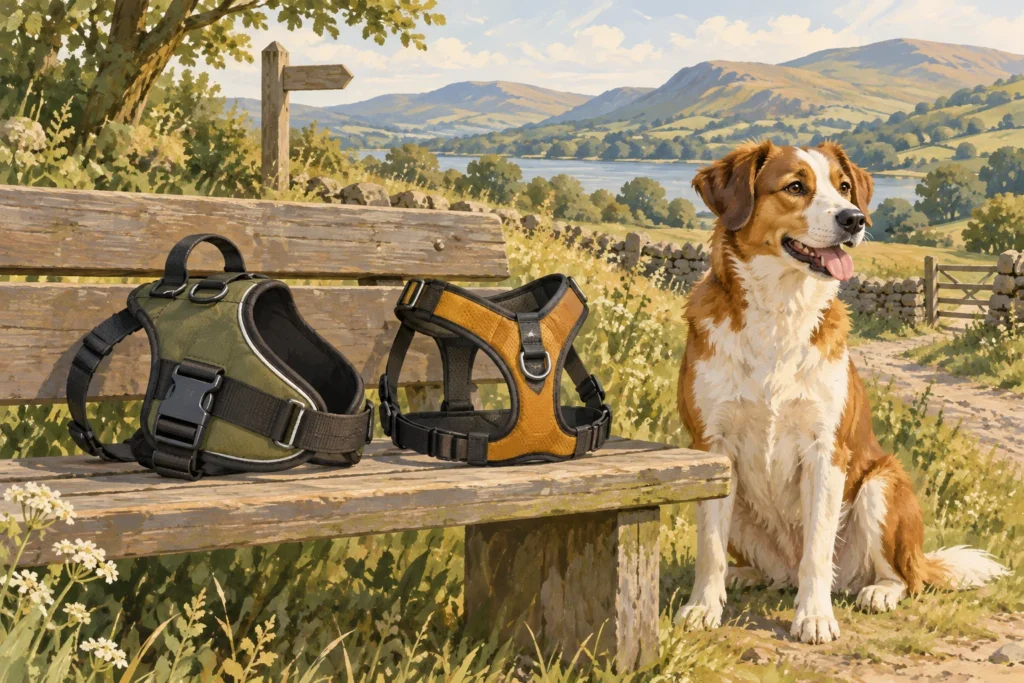
Julius-K9 IDC Powerharness is the everyday walking option in this comparison; IDC Longwalk adds a different adjustable construction aimed at longer walks and hiking. Choose between them by fit and the actual job you need the harness to do. A trail-focused name does not prove that one model will fit every dog better.
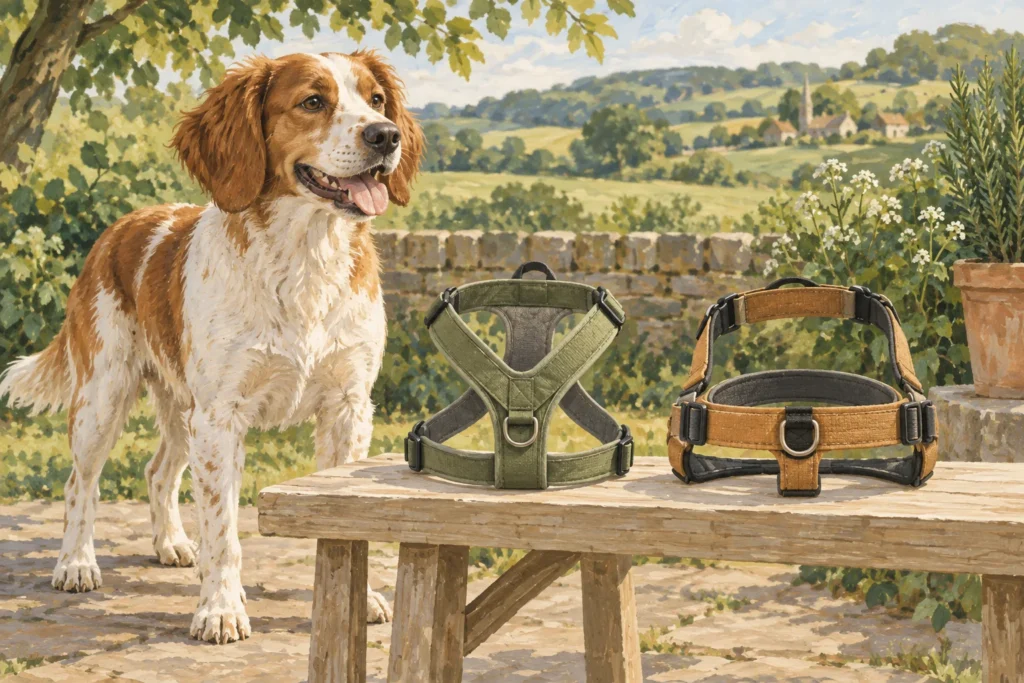
A Y-shaped harness and a chest-strap harness place material differently across the dog’s front, but the outline alone does not settle the buying decision. Check where the straps sit on your dog, how the harness moves and whether it remains secure. A well-marketed shape can still fit poorly.
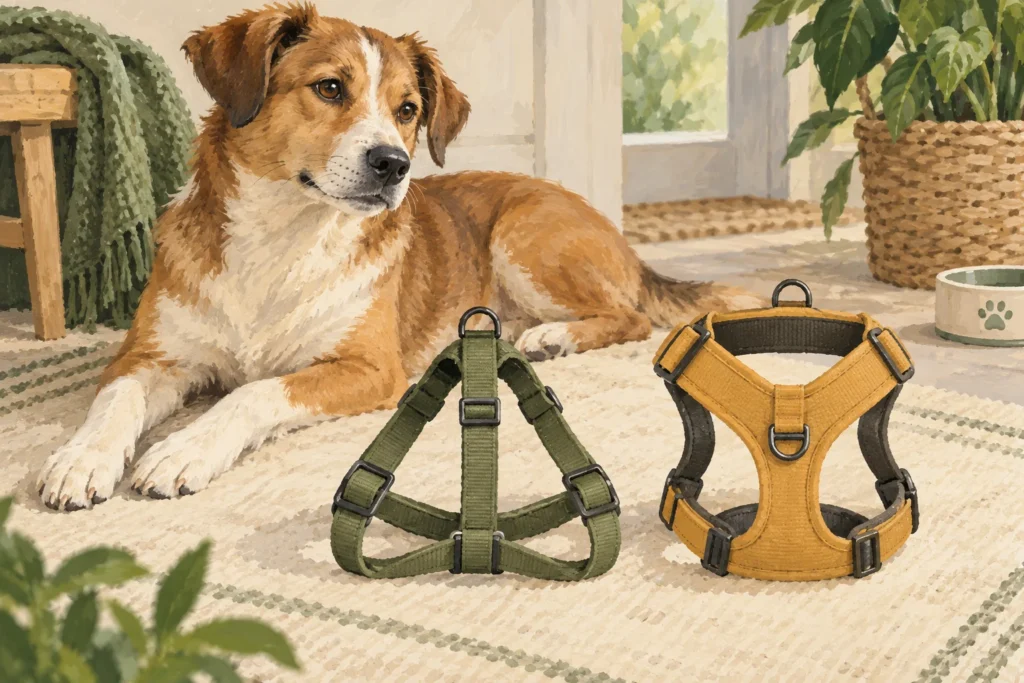
Step-in vs over-head dog harnesses is primarily a question about fitting and handling. A step-in design avoids pulling a neck opening over the head, but it asks the dog to place or allow handling of their front legs. An over-head harness can be simpler for a dog comfortable with that movement. Neither design automatically fits better.