Grooming

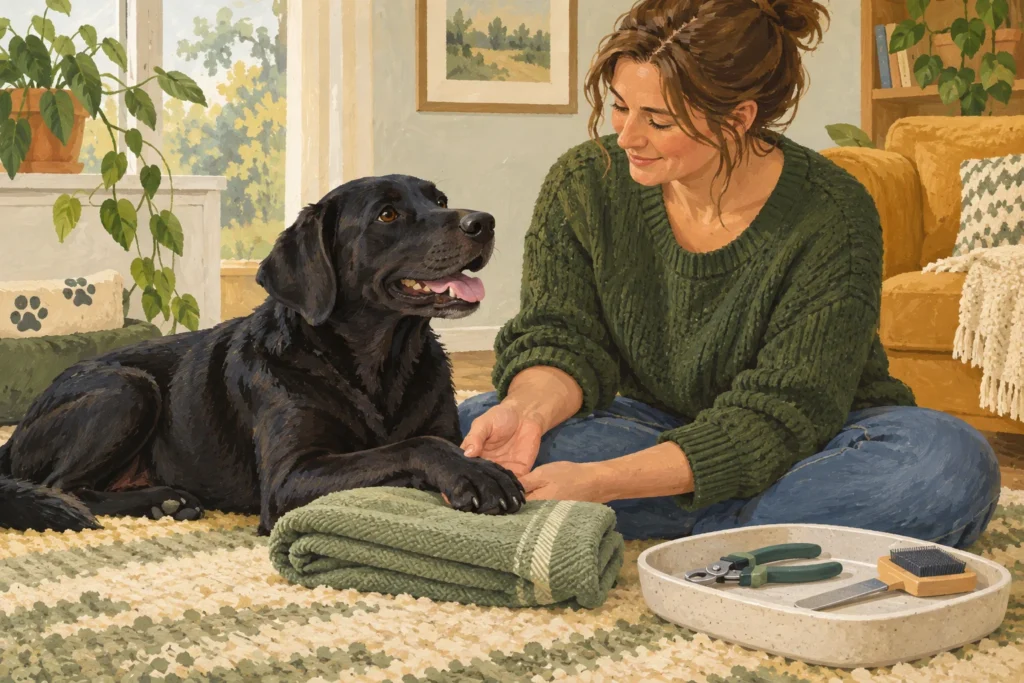
Illustration: A calm dark-coated dog voluntarily resting its paw on a folded towel while an adult sits beside it with nail tools switched off and safely set aside.

Black dog nails: how to approach trimming and when to use a groomer

Black dog nails can make the quick difficult to see, so the safest starting point is a demonstration from a vet nurse, vet or suitably experienced groomer. Do not guess how much to remove from a photograph or copy the amount taken from a pale nail. The aim is comfortable, manageable nails with as little worry as possible.
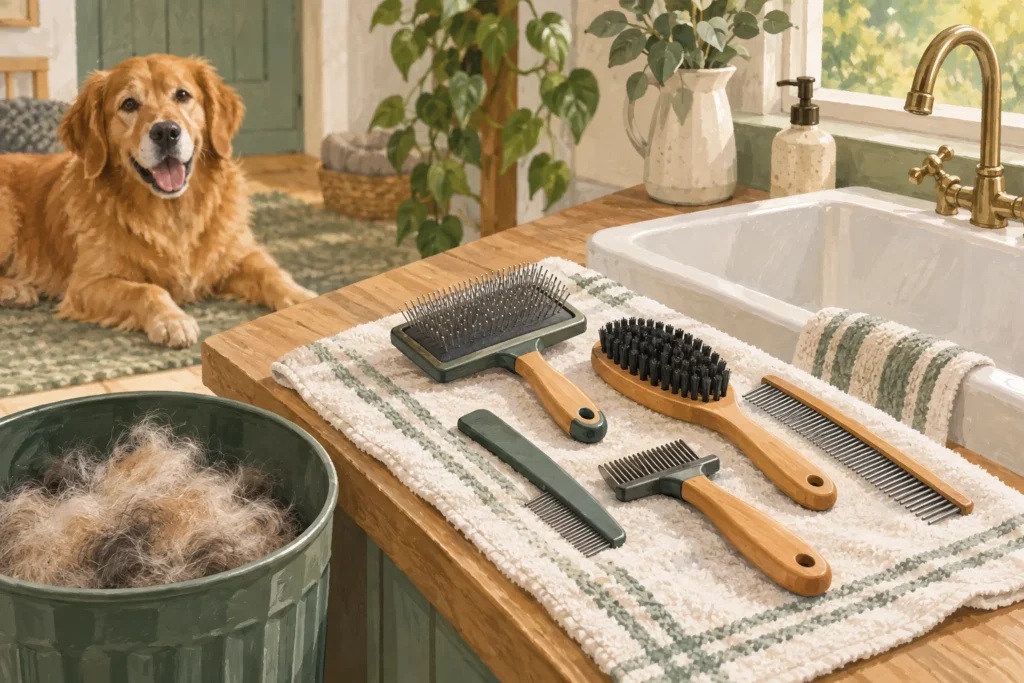
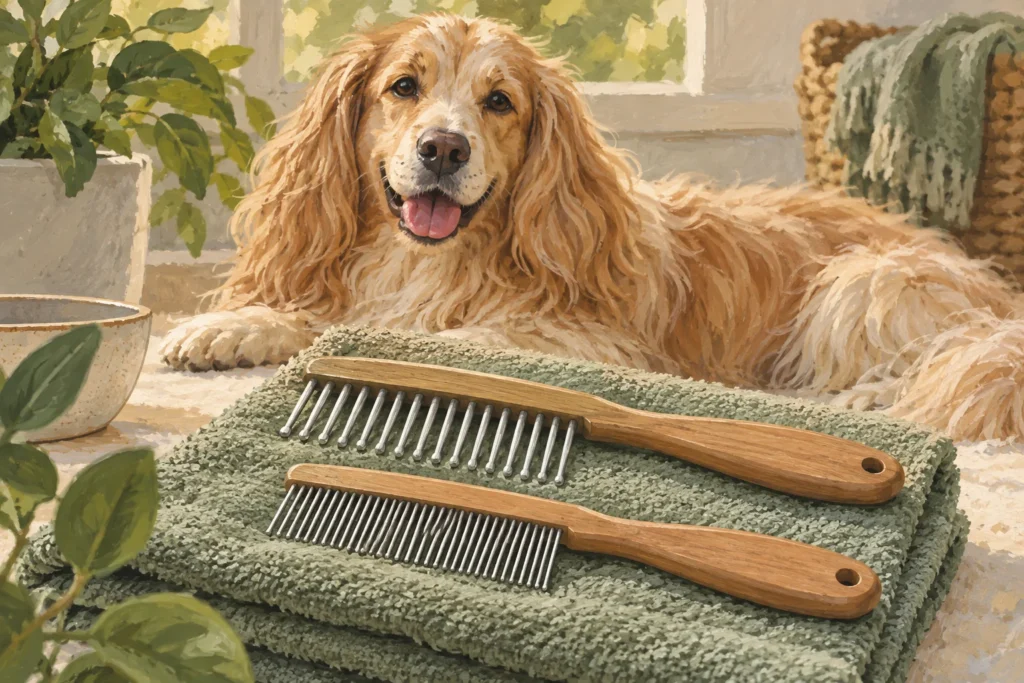
Illustration: Clean dog brushes and combs drying on a towel next to a wash basin, with loose removed hair gathered separately in a bin.

How to clean dog brushes and combs without damaging them

To clean dog brushes and combs, remove trapped hair first, follow the tool’s material-specific washing instructions and dry it fully before storage. Do not put every item in the same soaking bowl. Metal teeth, wooden handles, cushioned brush heads and electrical clippers can require very different care.

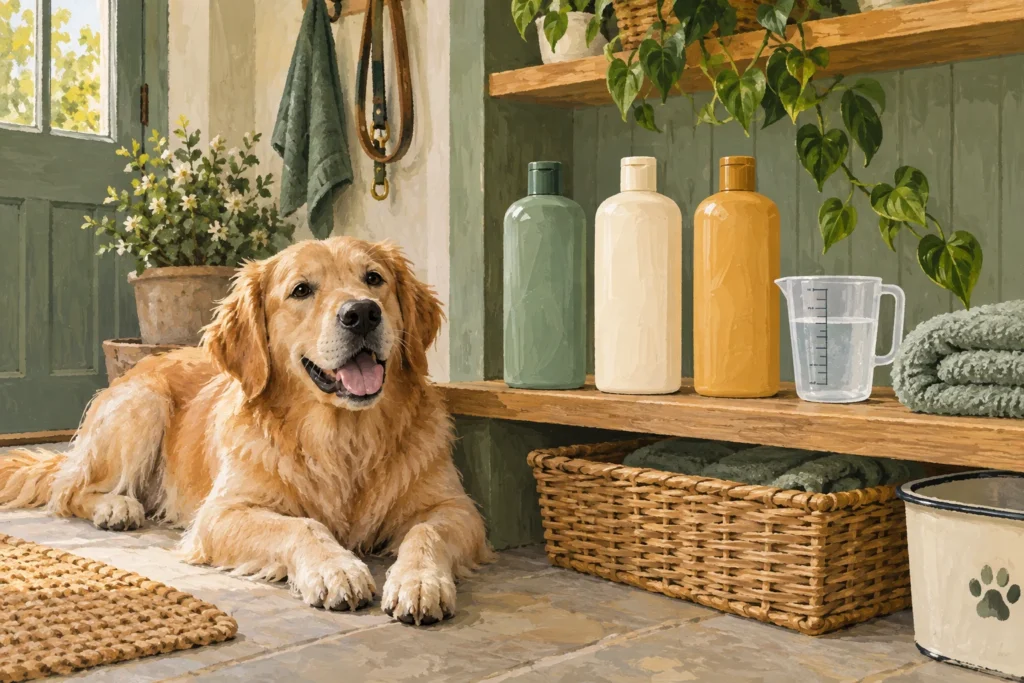
Illustration: A clean close-up of two unbranded dog combs with wide and narrow tooth spacing on a folded grooming towel, with a relaxed long-coated dog behind.

Best dog combs for long coats: teeth spacing and comfortable handling

The best dog combs for long coats have tooth spacing and length that let you check the coat without dragging painfully through it. A comb is useful for finding areas a brush has missed; it should not be used to force out tight mats. Choose a manageable tool and ask a groomer to demonstrate the technique for your dog’s coat.

Scroll to Top