
Last updated: 9 September 2026
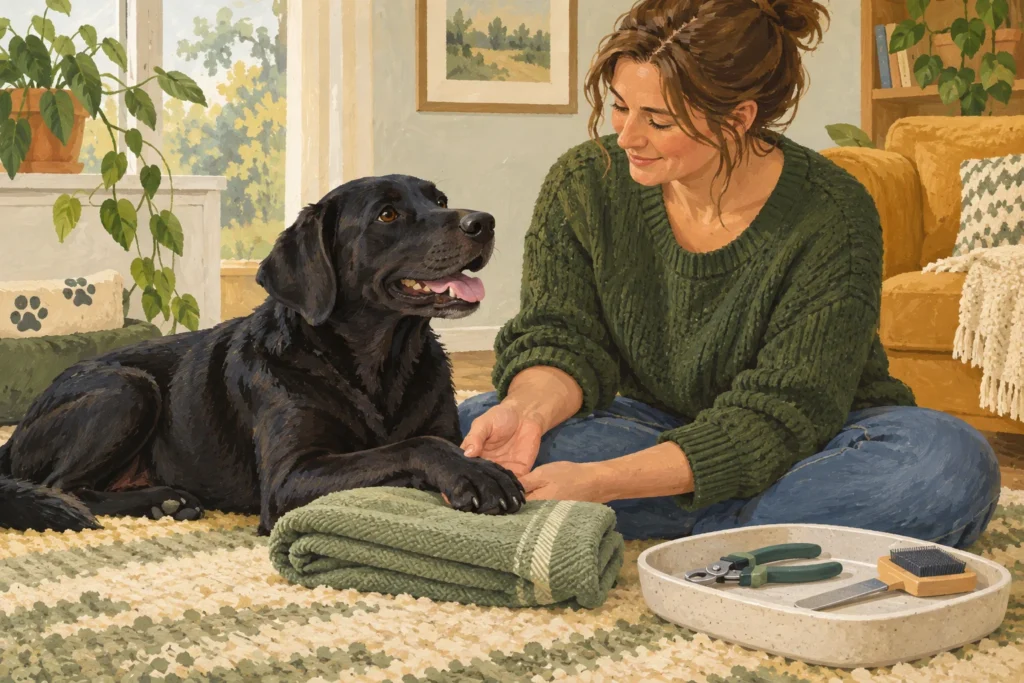
Black dog nails can make the quick difficult to see, so the safest starting point is a demonstration from a vet nurse, vet or suitably experienced groomer. Do not guess how much to remove from a photograph or copy the amount taken from a pale nail. The aim is comfortable, manageable nails with as little worry as possible.
This article contains Amazon affiliate links. As an Amazon Associate, we earn from qualifying purchases.
Table of Contents
Why dark nails need particular care
The quick contains nerves and blood vessels. Cutting it hurts and can cause bleeding. With a pale nail it may be visible through the nail; dark pigment can conceal it. PDSA advises asking a veterinary professional to demonstrate trimming when the nails are black and the quick cannot be seen.
A cutting guide or built-in light does not give a reliable guarantee that the quick has been located. Tools can help with grip or visibility, but judgement and the dog’s cooperation still matter.
Decide whether this is a routine trim
Contact your vet before trimming a nail that looks split, damaged, swollen at the base or painful. Nails growing into the pad, limping and sudden resistance to paw handling also need veterinary advice. Trying to tidy the appearance first may make an injury more uncomfortable.
| What you notice | Next step |
|---|---|
| Healthy nails, calm handling, uncertain quick | Arrange a practical demonstration and agree a maintenance plan. |
| Fear, struggling or a risk of biting | Stop and ask for a low-stress handling plan. |
| Broken nail, pain or an embedded claw | Contact the vet rather than attempting a routine grooming trim. |
| Previously manageable trimming suddenly becomes difficult | Discuss the change with the vet. |
Practise the handling before introducing a cut
Choose a quiet place and a position in which the dog feels secure. Briefly touching a leg may be the first manageable step; holding a paw comes later. Reward comfortable participation and release the paw before the dog needs to struggle.
Work separately on seeing the tool and hearing any sound it makes. A grinder introduces vibration and noise as well as contact. Do not assume that changing from clippers to a grinder will immediately solve a handling problem.
Progress depends on the dog. Completing one calm practice repetition can be more useful than attempting every paw during a long session. Ask a qualified professional for help if the dog remains worried.
Choose tools that fit the task
Use sharp clippers designed for dog nails and appropriate for their thickness. Household scissors and human nail clippers are poor substitutes. Ask the person demonstrating the trim to show you a suitable grip and explain when the blade needs replacing.
Find dog nail clippers on Amazon UK. Select the size and mechanism after that advice rather than choosing the largest set or one advertised as impossible to misuse. Our grooming-kit guide puts nail tools alongside other routine care equipment.
Agree a conservative maintenance routine
Have the professional show you exactly which nails need attention and how they assess them. Include dewclaws, which can be easy to overlook. Ask what you should do between appointments and which changes should prompt another visit.
There is no single trimming interval that suits all dogs. Growth, activity, surfaces and individual nail shape differ. Regular observation is more useful than following a calendar while ignoring the feet in front of you.
If a nail bleeds
Stop trimming. Keep the dog as calm as possible and seek veterinary advice if bleeding is persistent, the nail is damaged or the dog is very painful. Gentle pressure with clean material may help while you contact the practice, provided you can handle the foot safely. Do not continue trimming the remaining nails to finish the job.
Make professional appointments easier to use
Tell the groomer or practice about previous painful experiences, handling sensitivities and any medical concerns. Ask whether shorter visits or gradual preparation would help. Taking this route is a sensible care choice: home trimming is optional, while comfortable feet and a workable routine are essential.