
Last updated: 9 September 2026
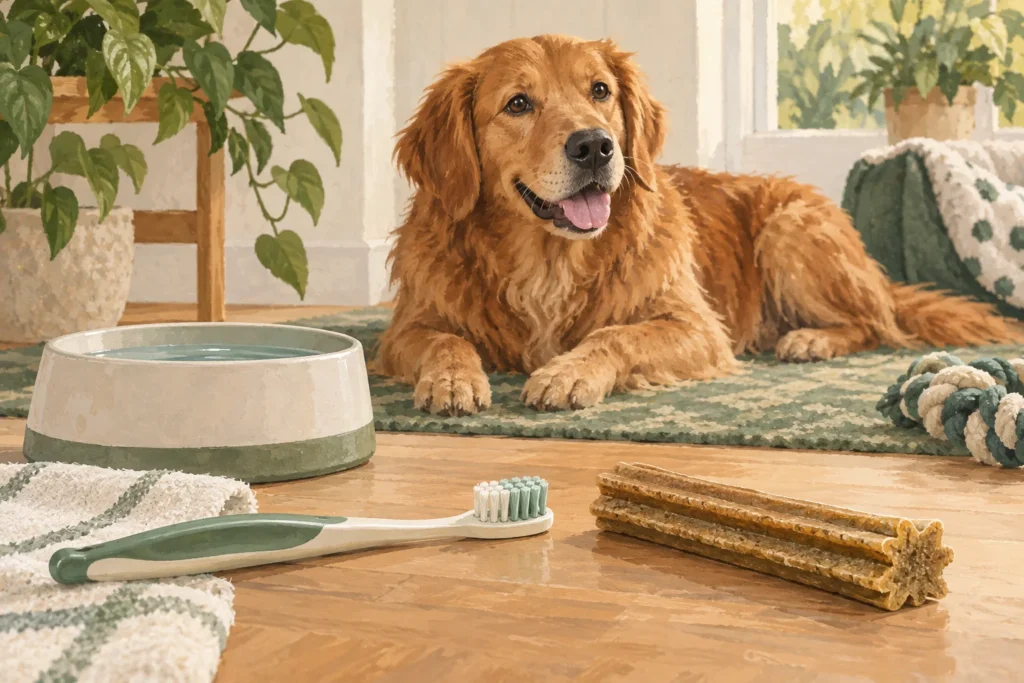
In dental chews vs brushing, daily toothbrushing remains the main home-care method to discuss with your vet. A suitable dental chew can be an addition, especially when its exact product has evidence for reducing plaque or tartar. A chew is not a substitute for investigating a painful mouth or completing recommended treatment.
Start with the condition of the teeth and gums. If your dog has pain, bleeding, a broken tooth or difficulty eating, arrange veterinary advice before trying to brush harder or introducing a tougher chew.
Table of Contents
What the two methods offer
| Method | Practical role | Limit |
|---|---|---|
| Toothbrushing | Regular contact with tooth surfaces to remove plaque | Needs comfortable handling, suitable tools and consistency |
| Dental chew | A product-specific additional way to reduce deposits when used as directed | Dog must chew it appropriately; calories and suitability matter |
| Veterinary dental care | Examination and treatment of disease | Cannot be replaced by either home-care purchase |
Why brushing deserves the first place in the routine
Brushing allows you to work on particular tooth surfaces rather than relying on where a chew happens to contact the mouth. VOHC’s brushing guidance emphasises asking the vet which technique is appropriate. A practical demonstration is especially helpful with a small mouth, awkward reach or a dog new to handling.
Choose a brush head you can manoeuvre comfortably and a toothpaste made for dogs. Virbac’s Oral Hygiene Kit is one example containing a pet toothpaste and brush options. The kit is a tool choice; it does not mean every dog should start with the same brush or that toothpaste alone replaces brushing.
This article contains Amazon affiliate links. As an Amazon Associate, we earn from qualifying purchases.
Find Virbac CET dog oral hygiene toothbrush toothpaste kit on Amazon UK. Check the flavour and exact contents, particularly if your dog has dietary restrictions. Use the vet’s introduction advice and stop if handling is uncomfortable.
What the VOHC seal tells you about a chew
The Veterinary Oral Health Council lists accepted products and identifies whether the supported claim concerns plaque, tartar or both. Read the exact name, regional version and size information. A brand’s accepted chew does not automatically confer acceptance on its entire range.
The list includes, for example, European-size Purina DentaLife Daily Oral Care treats with a tartar claim, and C.E.T. VEGGIEDENT FR3SH with plaque and tartar claims. Match the current entry with the UK pack and follow its weight and age instructions.
Find Virbac Veggiedent FR3SH dog dental chews on Amazon UK. Check the appropriate size before purchasing. This is an item-specific search, not confirmation that every result corresponds to the accepted product.
Make the chew part of the food plan
A daily chew adds food as well as an activity. Record its calories where available and account for it in the overall feeding plan. A smaller-looking dental product can still be a meaningful addition for a small dog.
Supervise use and observe how the dog handles it. A product intended to be chewed is a poor fit for a dog that tries to swallow it in large pieces. Do not choose a smaller size merely because it costs less or seems lower in calories; the manufacturer’s sizing has a purpose.
If the dog has an elimination diet, swallowing problems or another relevant condition, ask the vet before adding a chew. A dental label does not override those restrictions.
What if brushing is difficult?
Break the routine into manageable stages: comfortable approach, gentle lip handling and brief brush contact when appropriate. Keep the dog able to opt away and reward cooperation. Progress may mean one calm small action rather than completing the whole mouth immediately.
If the dog previously accepted brushing and suddenly objects, consider pain rather than labelling it stubbornness. For persistent difficulty, request a demonstration or behaviour support and ask which alternative home-care options fit the dog.
A realistic combined routine
Keep the brush where it is easy to remember, build towards the frequency your vet recommends, and use a suitable evidence-supported chew only if it fits the dog and diet. Schedule mouth checks rather than assuming fresh-smelling breath proves everything is healthy.
Our teeth-cleaning product guide compares practical tools, and the dental sticks guide provides additional buying context. The strongest routine is one you can maintain comfortably and review with the vet, with each product serving a clear purpose.