
Last updated: 9 September 2026
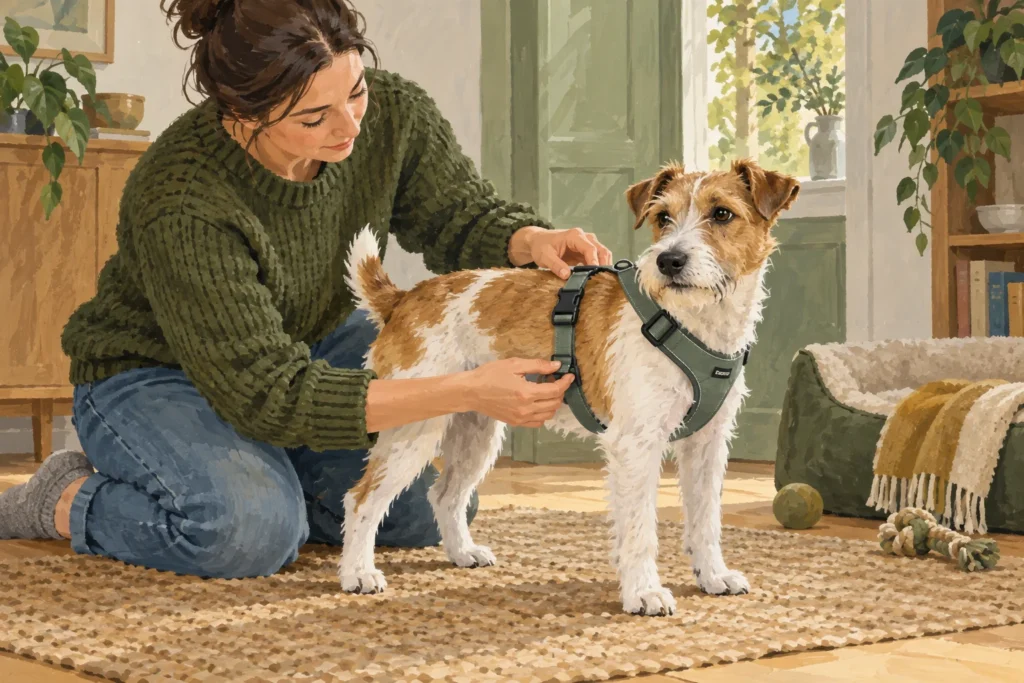
If a dog harness is rubbing or slipping, stop using the uncomfortable setup and check both the dog and the harness. Loose straps can rotate; overly tight straps can press; a shape that does not suit the body may do both in different places. Buying the next size up is not always the answer.
Look for broken skin, soreness, swelling or a new reluctance to be touched. Ask your vet about injury, pain or a sudden change in tolerance. A product fitting exercise should not replace attention to a painful area.
Table of Contents
Find out when the problem happens
Does the harness turn only when the lead is attached at the chest? Does it sit correctly on a dry walk but shift after swimming? Does the dog move comfortably until lowering its head to sniff? These details help identify whether adjustment, surface friction or the overall design is involved.
Take short videos from the side and front in a safe place. They can show a fitter or trainer more than a single standing photograph. Keep the dog’s normal posture; a fit demonstrated while you pull the head upwards may hide the issue.
| What you see | What to inspect | Next step |
|---|---|---|
| Harness rotates around the body | Uneven adjustment, slack and lead attachment | Refit according to the exact manual and observe movement |
| Strap approaches the armpit | Panel length and strap placement | Consider shape as well as circumference |
| Fit changes during a walk | Webbing threaded through adjusters and worn hardware | Check the threading instructions; replace damaged equipment |
| Dog avoids putting it on | Comfort, pain and the introduction routine | Address the cause before repeatedly fitting it |
Reset the adjustment properly
Use the manufacturer’s current instructions rather than guessing which strap to pull. Ruffwear’s Front Range guide, for example, explains extending straps before tightening them to fit. Other harnesses use different adjusters and sequences.
Make sure the left and right sides are appropriately balanced and that webbing lies flat. Check each strap after adjusting another; changing the neck opening can alter the position of the chest panel and girth straps.
A finger-clearance check is a starting aid, not the whole assessment. You still need to see the dog moving, confirm that the harness remains in place and check there is no pressure at an edge. Follow the exact product’s fit guidance rather than imposing one universal gap on every construction.
Inspect what touches the coat
Grit, dried mud, twisted webbing or a hard edge can change how a harness feels. Remove it after the walk and inspect both the contact surfaces and the dog’s coat. Wash according to the care label and let it dry before storing.
Long or dense coats can conceal developing rubbing. Part the coat gently to inspect the skin where straps pass, especially when the dog’s shape or coat changes. Do not try to solve a poor fit by adding improvised padding that changes the harness geometry.
When a different shape is more useful than another size
If the girth fits but the neck cannot be adjusted sufficiently, or the body panel consistently places a strap badly, the proportions may be wrong for this dog. Going larger may create slack without moving the troublesome section into a useful position.
Write down the specific mismatch before shopping: “chest fits, neck too loose” is more useful than “medium was wrong”. Take those measurements to a retailer or fitter who can compare shapes. Our harness and collar guide explains the broader equipment choices.
This article contains Amazon affiliate links. As an Amazon Associate, we earn from qualifying purchases.
Find soft flexible measuring tape dog harness fitting on Amazon UK if you need a flexible tape to record the relevant measurements. A new measuring tool is optional; an existing soft tape works just as well. Do not buy another harness until you know what needs to differ.
Reintroduce the comfortable setup
Once fit and any soreness have been addressed, keep putting-on sessions short and positive. Dogs Trust recommends a gentle introduction so wearing a harness predicts something pleasant. Allow the dog time to approach and participate rather than chasing it with the equipment.
If pulling is dragging the harness into a bad position, combine a suitable fit with training. Our guide for dogs that pull can help compare features, but pulling and fear both need attention beyond the purchase.
A successful correction stays comfortable during the entire ordinary walk. Recheck after the first short outing and as the dog grows or changes condition, rather than treating the initial adjustment as permanent.