
Last updated: 9 September 2026
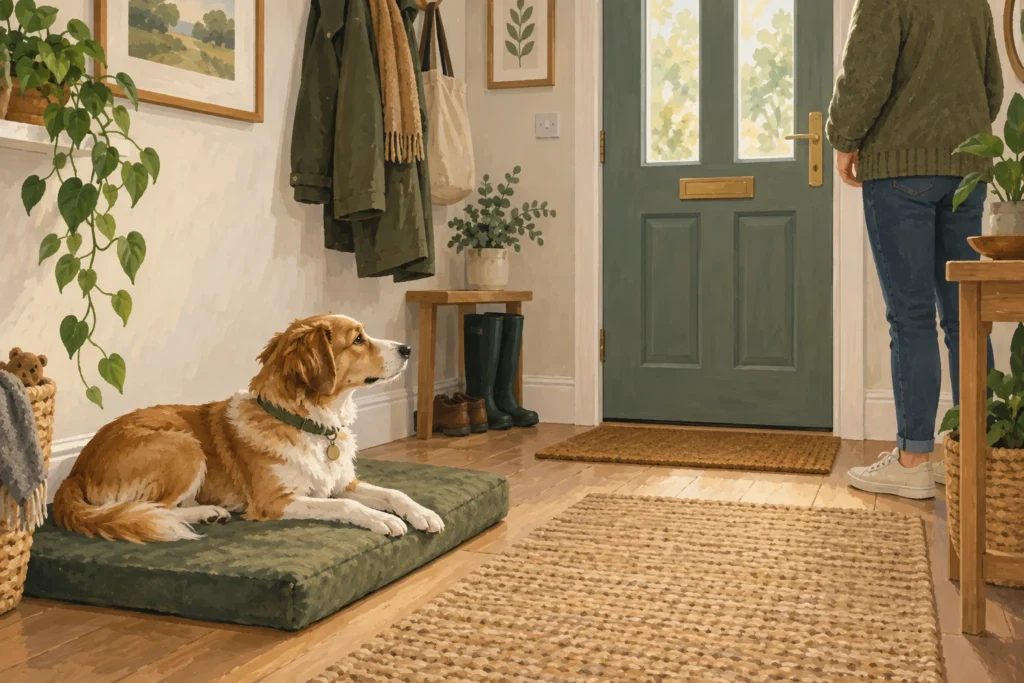
A dog barking at the door needs two things: a safer way to manage real arrivals and easier practice when nobody urgently needs to come inside. Start by reducing the rush towards the entrance. Teaching a different response is much harder while parcels, guests and doorbells repeatedly trigger the old one.
This article contains Amazon affiliate links. As an Amazon Associate, we earn from qualifying purchases.
Table of Contents
Separate deliveries from training sessions
Arrange a parcel location where possible and ask expected visitors to message before approaching. Put your dog in a comfortable area away from the doorway before opening it. This protects the entrance while you work on the underlying response.
A suitable gate can help divide space, provided the dog is comfortable behind it and cannot jump, squeeze through or knock it over. Find a dog gate for your doorway on Amazon UK. Measure the opening and check fixing requirements. If a dog becomes more distressed watching people through bars, a quieter room with an appropriate separation arrangement may work better.
Do not leave your dog alone behind a barrier if that itself causes panic. A household member may need to stay with them. Management should make the situation easier for the dog as well as the person answering the door.
Notice what predicts the barking
Some dogs begin at footsteps outside; others react to the bell, a person’s movement towards the handle or the visitor entering. Make a short record of the sequence. Also note whether your dog appears excited, worried or conflicted, without assuming you can diagnose the reason from one signal.
For example, if the dog reacts before anyone knocks, practising only a doorbell recording misses an earlier trigger. If they are calm until a guest reaches towards them, a quiet doorbell will not solve the greeting problem.
Practise with a sound your dog can handle
Choose a time with no real visitor expected. Try a very quiet version of the relevant sound, at enough distance for your dog to remain comfortable. Reward a calm response. If they rush or bark, reduce the intensity or stop and reset; do not keep repeating the noise at the same level.
Use short sessions and change one feature at a time. Louder sound, a different room and a person standing up are three separate increases in difficulty. A dog who succeeds with a quiet recording may need much easier practice when the actual door is involved.
Give your dog a clear alternative
A comfortable bed or mat away from the entrance can become the place your dog goes while the door is handled. Teach that location independently first. Reward voluntary use, then a familiar cue, before combining it with very easy arrival practice.
| Practice stage | What success looks like |
|---|---|
| Mat without a door sound | Your dog can go there comfortably and stay briefly. |
| Quiet sound, then familiar cue | Your dog can still respond without rushing the entrance. |
| Helper approaches outside | The sound and movement remain manageable. |
| Planned visitor enters | The dog is safely settled away from the door, with support. |
Use our clicker training guide if you need help understanding reward timing. A quiet verbal marker is also an option; the equipment matters less than clear, achievable practice.
Make greetings optional
Brief visitors do not need to meet your dog. For a planned guest, explain the arrangement in advance: no crowding the dog, reaching into their bed or insisting on contact. Let the visitor settle first and allow the dog to choose whether to approach, if an introduction is appropriate.
A dog taking food from a guest is not necessarily comfortable being stroked. Keep the interaction low pressure and allow a retreat. If there is a history of growling, snapping or biting at visitors, seek professional assessment rather than staging practice encounters yourself.
Measure progress by recovery as well as silence
A single bark followed by moving away may be a useful improvement over prolonged rushing and distress. Record how quickly your dog recovers and whether they can respond comfortably. Shouting, startling devices and forcing the dog to face visitors may suppress signals without resolving their feelings. New or worsening behaviour also deserves a veterinary check.