
Last updated: 9 September 2026
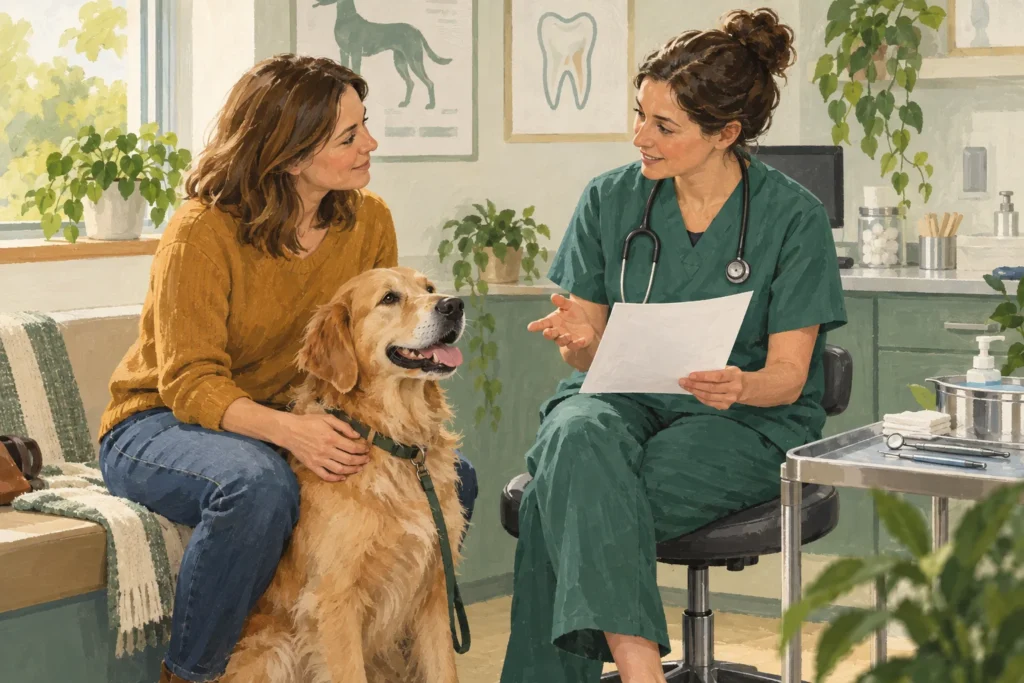
Dog teeth-cleaning costs in the UK depend on what your dog actually needs, so the useful starting point is a written estimate from the practice after an examination. A routine-looking scale and polish and a procedure involving dental X-rays or extractions are different jobs. A single national “average” can hide that difference.
This guide helps you ask for a clear estimate; it does not substitute a made-up price range for your dog’s assessment. If cost is a concern, say so early. That gives the practice an opportunity to explain reasonable options and the likely scope of treatment.
Table of Contents
What does “teeth cleaning” include?
PDSA explains that effective veterinary dental procedures require general anaesthesia and that the full extent of treatment may only become clear during examination. Ask the practice what it currently expects and which findings could change the plan.
| Estimate item | Question to ask |
|---|---|
| Initial assessment | Is the consultation included or charged separately? |
| Pre-anaesthetic assessment | What checks are recommended for this dog, and why? |
| Anaesthesia and monitoring | What does the quoted procedure include? |
| Dental examination and cleaning | Is this the complete intended procedure or a starting fee? |
| Dental imaging | Are X-rays expected and included? |
| Extractions | Are they included, estimated separately or charged according to the work required? |
| Medication and follow-up | What aftercare and recheck costs should I allow for? |
Ask what could change the total
Useful wording is: “What is the likely range for the treatment you currently expect, and what would make the bill higher?” That invites an explanation of uncertainty rather than a promise that cannot reasonably be made before the full mouth is assessed.
For example, two estimates may both mention cleaning, but one may include imaging and a post-procedure check while the other lists those separately. Compare the contents line by line before treating the lower initial number as better value.
Write down what is known, what remains uncertain and who will contact you if the plan changes. Keep your phone available on the day and give an alternative contact if needed. This is a practical way to make the consent conversation useful when decisions arise.
Agree how additional work will be discussed
RCVS guidance says clients should have enough information to give informed consent, including fee estimates and relevant risks. Its guidance also addresses contacting the client when an estimate or agreed limit is likely to be exceeded.
Ask the practice to record the agreed contact process and financial limit, and to explain any circumstances where immediate decisions might be needed. A number written on a form is easier to understand when everyone has discussed what it covers.
If another person will collect the dog, make sure they know how payment and discharge information will be handled. Save the written estimate somewhere accessible rather than relying on a remembered telephone figure.
Do not compare cosmetic cleaning with dental treatment
A service that removes visible deposits from the outside of teeth while the dog is awake is not equivalent to a veterinary dental examination and treatment under anaesthesia. Ask your vet about the clinical need rather than using the lowest cosmetic-cleaning price as a benchmark.
Likewise, a new bag of dental chews cannot address a tooth that needs treatment. A dog may continue eating despite dental discomfort. Changes such as difficulty eating, a broken tooth or facial swelling warrant veterinary attention rather than another product trial.
Discuss affordability directly
Ask whether the practice offers a payment arrangement, whether any existing plan includes relevant services, and what charitable help may be available if you meet eligibility criteria. Availability varies; do not assume a practice must offer instalments or that a monthly health plan includes dental surgery.
If you have insurance, check the actual policy and contact the insurer about the proposed procedure. Dental cover can depend on the type of problem and policy conditions. Obtain that answer before relying on reimbursement, and do not delay urgent care while browsing cover options.
Budget for the routine after treatment
At discharge, ask when and how home care should restart and what signs require a call. Keep the written feeding and medication instructions; do not copy another dog’s recovery routine.
Once the vet confirms suitable home care, our dog teeth-cleaning product guide can help with brushes and other tools. The immediate buying decision here is the treatment estimate itself, so there is no need to add a shopping list to a discussion of necessary veterinary care.