
Last updated: 9 September 2026
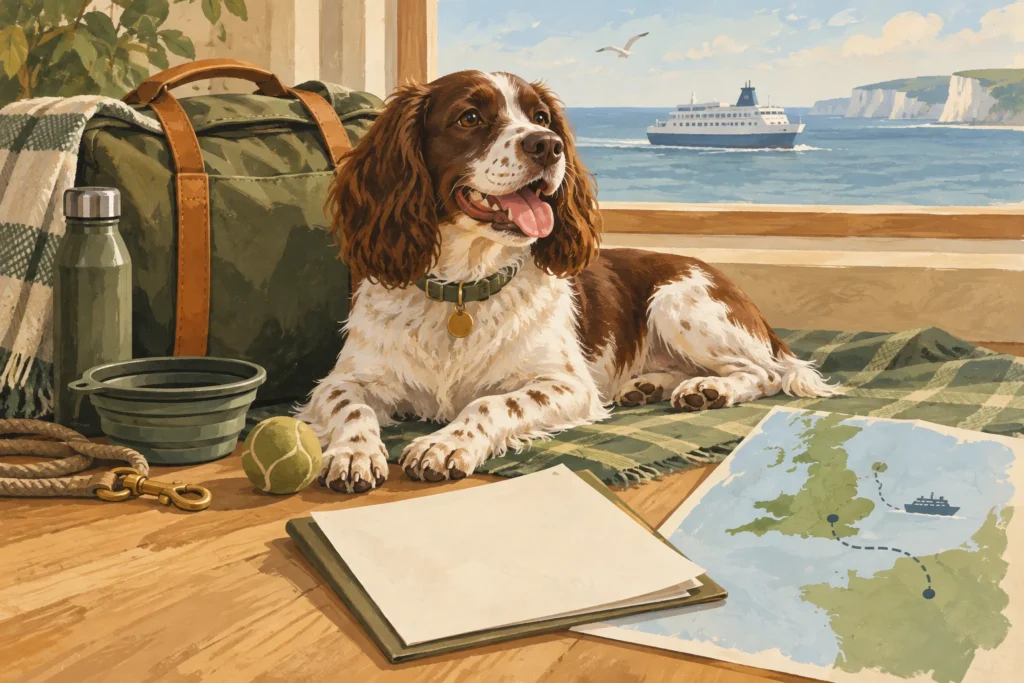
Taking a dog to France from Great Britain requires an eligible travel document, the correct identification and vaccination arrangements, and a carrier booking that includes the dog. Plan the return journey at the same time, especially the veterinary tapeworm treatment normally needed before re-entering Great Britain from France.
This checklist covers an ordinary accompanied holiday, not commercial movement, rehoming or every unusual itinerary. Give your vet the full route, departure and return dates, the number of animals and any existing passport so they can check which current rules apply.
Table of Contents
Start with the itinerary and the dog’s eligibility
Confirm the destination, ports or terminals and any countries visited in between. Tell the ferry or tunnel operator about the dog when booking and reserve the required pet space. Check arrival times for pet checks and the current rules for leads, muzzles and onboard accommodation.
Read French customs guidance for entry requirements and any restrictions that may affect the particular dog. If breed/type restrictions, a very young dog or an unusual ownership arrangement could be relevant, resolve those points before paying for non-refundable travel. A general statement that dogs are welcome is not an individual eligibility decision.
Speak to your vet early about microchip records and rabies vaccination. The order and timing of veterinary procedures matter; do not assume an old vaccination card is automatically sufficient for the planned journey.
Book the document appointment carefully
GOV.UK’s animal health certificate guidance says the certificate is issued by an official veterinarian and is valid for EU entry within ten days, with the issue date counted as day one. Bring the requested microchip and vaccination evidence to the appointment.
The current guidance gives six months for onward EU travel after entry and six months for re-entry to Great Britain. Those longer periods do not turn the certificate into a reusable pass for separate future departures from Great Britain. Ask the vet to confirm the precise dates for your trip and the validity of the underlying vaccination.
If you already have a pet passport, have its issuing country and current entries checked. Do not assume an old Great Britain-issued passport remains valid for entering France simply because it can still be used for some journeys back into Great Britain.
Keep a dated travel checklist
| When | Task |
|---|---|
| Before booking | Confirm dog eligibility, carrier acceptance and suitable accommodation |
| Well before departure | Review chip and rabies records with the vet |
| Within the correct departure window | Obtain the required certificate and check every entry |
| Before leaving France | Attend the required tapeworm appointment within the return window |
| Before both crossings | Recheck documents, pet booking and service updates |
Check the dog’s identity details and all dates while still at the practice. Carry the original required documents, with copies stored separately for reference. A photograph may help explain a problem but is not a substitute where an original document is required.
Arrange the return treatment before the holiday ends
For return from France, GOV.UK requires a vet-administered tapeworm treatment no less than 24 hours and no more than 120 hours before arrival in Great Britain. The vet must make the required record. Calculate from the arrival time, not simply the day you leave the accommodation.
Book a French veterinary appointment ahead of time and allow for opening hours, weekends and delays. If the journey changes, check whether the treatment window still works. Short trips may allow treatment before leaving Great Britain, but the same timing rules apply; discuss that arrangement with your vet.
Pack for travel and ordinary days away
Take a suitable restraint, familiar resting mat, water, a bowl, waste bags and any prescribed medication with its instructions. Check current French/EU rules before packing pet food, particularly meat-containing products, and plan how to obtain the appropriate food at the destination. Do not assume a sealed supermarket bag is automatically permitted across the border.
This article contains Amazon affiliate links. As an Amazon Associate, we earn from qualifying purchases.
Find collapsible dog travel bowls on Amazon UK if you need a compact bowl. The travel water bottle guide covers another option. Keep water accessible during the journey rather than buried behind suitcases.
For carriers, use the travel crate sizing guide alongside the operator’s exact requirements. Plan breaks, comfortable temperatures and a route your dog can manage. Save local and emergency veterinary details before arrival.
Recheck official guidance shortly before departure because travel rules can change. A successful trip depends on the paperwork and the dog’s practical comfort both being planned, including the final veterinary visit and journey home.