
Last updated: 9 September 2026
Choose a dog walker by how well their service fits your individual dog, not only their hourly price. The important questions concern who handles the dog, where they go, how they travel, which other dogs join them and what happens when a walk cannot safely proceed. A useful first meeting should make those arrangements clear enough to write down.
Start with your dog’s ordinary routine. Note their preferred walking pace, response to unfamiliar dogs, handling needs and any veterinary restrictions. Be candid about escape attempts, guarding, fear and unreliable recall. The walker needs that information to propose a suitable service; minimising it makes the first outing harder for everyone.
Table of Contents
Ask what the booked time includes
“One hour” can mean an hour outside, an hour from collection to return or part of a longer group pickup route. Ask for the expected walking time and the likely total time away from home. Find out whether toileting, drying muddy paws and refreshing water are included.
For example, two walkers may quote the same price while one provides a local individual walk and the other collects several dogs before driving to a field. Neither arrangement is automatically preferable, but they are different services. A dog uncomfortable in vehicles may find the second unsuitable despite enjoying the walk itself.
Meet the person who will actually walk
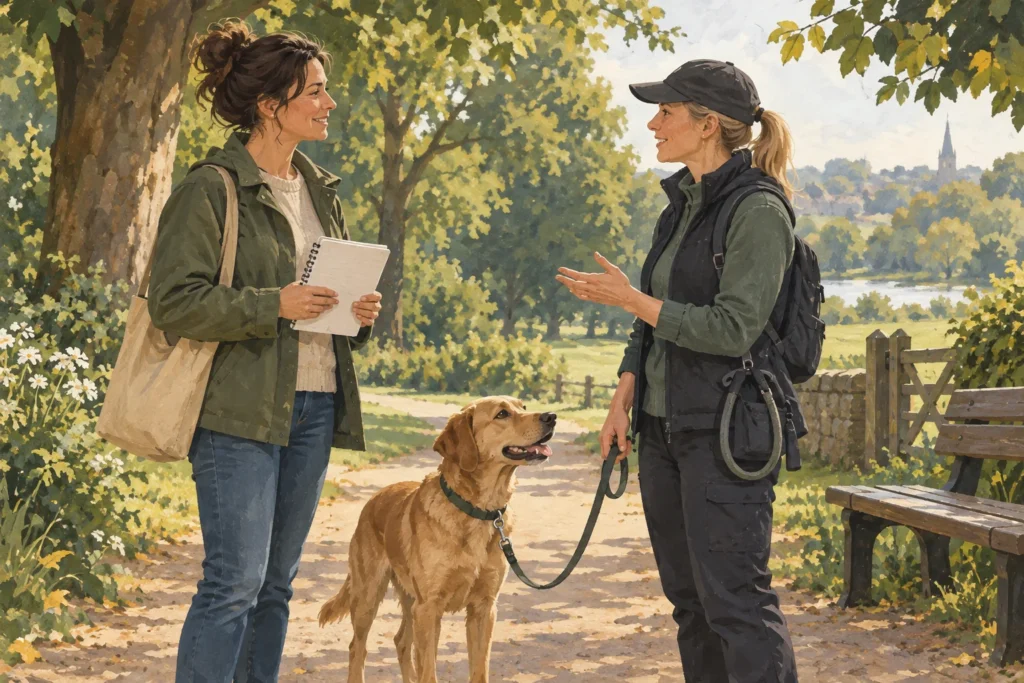
Arrange an introduction before handing over access to your home. If the business uses several staff or substitutes, ask who has responsibility for your dog and how a replacement is introduced. Watch whether the walker gives your dog space to approach, asks about familiar cues and responds thoughtfully to hesitation.
Ask directly about handling methods. You should hear a clear approach to rewarding useful behaviour and managing difficult situations, not promises to establish dominance or stop every behaviour immediately. Dogs Trust recommends considering qualifications, experience, references, insurance and applicable local requirements when choosing a walker.
Compare the practical arrangements
| Topic | Question to ask |
|---|---|
| Group walks | How are dogs matched, introduced and reassessed? |
| Lead use | What written permission is required before any off-lead walking? |
| Transport | How are dogs separated, secured and kept comfortable? |
| Weather | What changes in heat, storms or icy conditions? |
| Emergencies | Who contacts the vet and what decisions may be made? |
| Absence | What happens if the regular walker is ill or unavailable? |
A large group is not proven safe because its members usually get along. Ask how the walker responds when a dog’s needs change, and whether an individual walk is available. Equally, a private field does not remove the need for secure handovers and attentive supervision.
Put important permissions in writing
Agree collection times, home-access arrangements, contact details and where equipment is kept. Include the dog’s vet and an alternative emergency contact. Discuss how urgent veterinary attention and associated costs would be handled if you cannot be reached. Store keys and personal information through a clearly explained process.
Make any off-lead permission specific rather than treating it as a blanket entitlement. Identify the agreed equipment and tell the walker about recent adjustments. Check national and local rules relevant to the service; professional-walking requirements can vary, so a generic “fully licensed” claim needs explanation.
Supply a small, consistent handover kit
Keep the agreed lead, harness, identification and waste bags together. If the walker uses your dog’s normal food as rewards, provide a labelled measured amount and explain any restrictions. Do not expect them to identify an unlabelled medicine or infer instructions from a partially used packet.
This article contains Amazon affiliate links. As an Amazon Associate, we earn from qualifying purchases.
A washable bag can make the handover more straightforward. Find dog-walking organiser bags on Amazon UK. It is an organisational convenience, not evidence that a walker is competent. Our walking-bag comparison covers useful features if you also need one for your own outings.
Review the service after a trial
Begin with a manageable introduction and ask for factual feedback: where the dog walked, how long they were out and anything unusual. Photographs are pleasant, but they do not substitute for an account of the dog’s comfort or a prompt report of an incident.
Reassess if your dog’s health, age or behaviour changes, or if the business changes staff or group arrangements. A reliable walker should welcome a conversation about fit. The best long-term choice is someone whose normal working practices meet your dog’s needs and whose plans still make sense when the day does not go as expected.