
Last updated: 9 September 2026
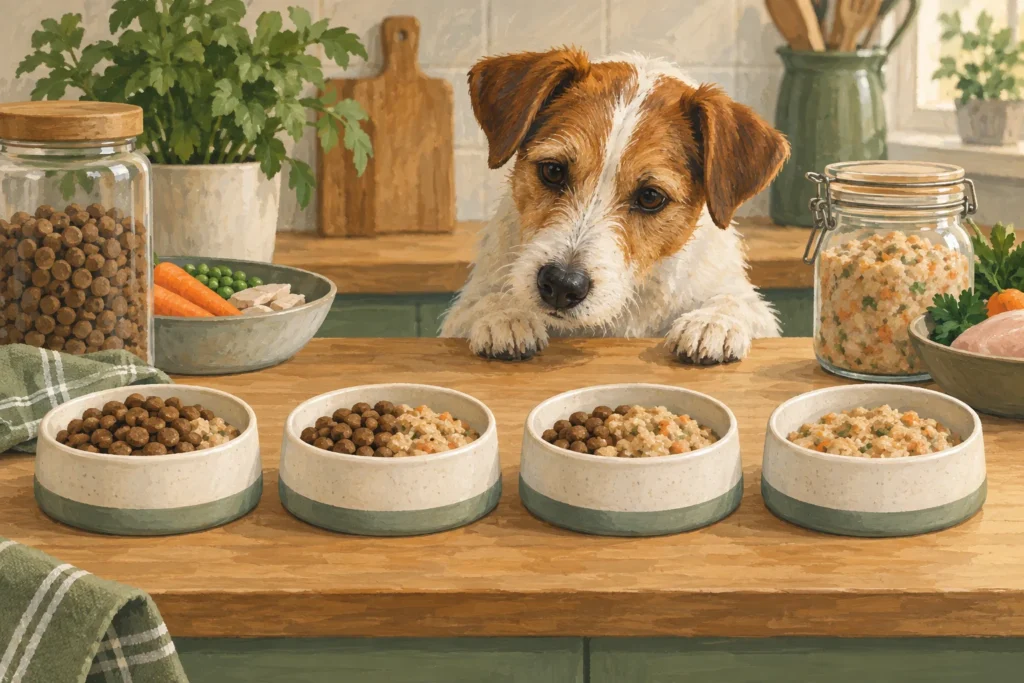
When changing dog food, introduce the new food gradually unless your vet has given a different plan. Keep enough of the old food for the transition, measure each recipe using its own feeding guidance, and watch how your dog responds. The aim is a tolerable change you can repeat consistently, not reaching a new bag by an arbitrary deadline.
A medically directed change, suspected food allergy, current illness or an urgent product recall may need different instructions. In those situations, contact your vet or follow the relevant recall advice rather than using a routine switching schedule.
Table of Contents
Before opening the new bag
Confirm that the new food is appropriate for the dog’s life stage and intended use. Check complete status, the full recipe and any veterinary restrictions. Write down the reason for changing: cost, availability or a specific recommendation. A clear reason helps you judge the result without switching again after every imperfect meal.
Keep the original packaging for both foods so the feeding instructions, batch and ingredients remain available. Use separate labelled containers if needed, and tell everyone who feeds the dog that the routine is changing.
Use proportions of the daily allowances
The old and new recipes may contain different energy per gram. Equal handfuls or equal scoop volumes are not a dependable way to exchange them. Work from the appropriate full daily amount of each recipe, then calculate the intended share.
Suppose, purely for illustration, the agreed old-food allowance is 200g per day and the new-food allowance would be 160g. The following combinations represent fractions of those separate allowances:
| Illustrative mix | Old food | New food |
|---|---|---|
| Mostly old | 150g: three quarters of 200g | 40g: one quarter of 160g |
| Equal shares of allowances | 100g | 80g |
| Mostly new | 50g | 120g |
These figures explain the arithmetic, not the right ration or timing for your dog. Follow the transition advice on the food and from your vet, progressing according to tolerance. PDSA advises a gradual introduction rather than a sudden routine change.
Make a short diary that is actually useful
For each day, record the amounts offered, how much was eaten, stools, any vomiting, and anything unusual about activity or behaviour. Note treats and food from other people too. A simple note such as “ate breakfast slowly; normal stool; had a new chew at lunch” is more helpful than “food didn’t suit”.
Keep other feeding variables steady where possible. Introducing a new food, several treats and a supplement together makes it hard to understand what changed. You do not need a complicated app: a kitchen note or phone document is enough.
This article contains Amazon affiliate links. As an Amazon Associate, we earn from qualifying purchases.
Find digital kitchen scales grams tare on Amazon UK if you do not already have a suitable scale. Use the grams setting and tare the bowl before adding food. The useful feature is repeatable measurement, not a pet-specific label on the device.
What to do if the dog is reluctant
Check that the food is the intended recipe, stored correctly and served according to its instructions. Offer a manageable transition rather than repeatedly changing the entire bowl. Do not escalate through a succession of rich extras to persuade the dog to eat.
A new or persistent loss of appetite, repeated vomiting or diarrhoea, blood, pain, marked lethargy or other illness needs veterinary advice. Puppies and dogs with health conditions can need help sooner. Do not withhold needed care while waiting to see whether the transition settles.
Plan the final handover
When the dog is comfortably eating the new food, update the household’s daily amount, shopping reminder and storage label. Discard an old scoop mark that referred to a different recipe. If a repeating order is involved, check the next delivery so you do not accidentally receive both foods indefinitely.
Continue monitoring body condition and weight with appropriate advice. A packet guide starts the portioning conversation; it does not guarantee that one fixed amount will remain correct as activity or condition changes.
Our dog food guide can help if the new choice itself is still unclear. Once a suitable food is selected, the most useful transition is usually a quiet one: measured portions, a consistent routine and enough observation to spot a problem early.