
Last updated: 9 September 2026
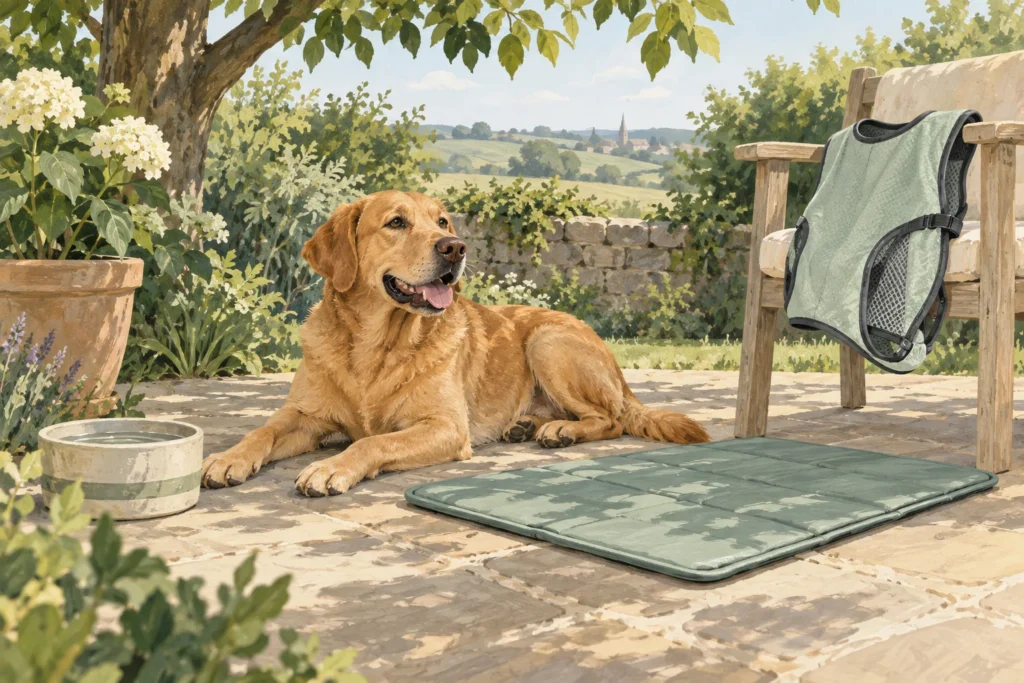
A dog cooling vest is a wearable product, usually designed to work with water evaporation, while a cooling mat gives the dog a cooler surface to rest on. Choose according to where your dog will be and how you can monitor them. Neither replaces shade, drinking water, sensible exercise decisions or a cooler environment.
If your dog is already showing signs of overheating, stop the activity and begin cooling with water while seeking veterinary advice immediately. A shopping comparison is not the next step. RVC guidance emphasises starting cooling before transport and maintaining airflow; do not wait for a mat or vest to take effect.
Table of Contents
Compare the jobs, not just the word cooling
| Feature | Evaporative vest | Gel-style mat |
|---|---|---|
| How it is used | Wetted and worn on the dog | Placed where the dog can choose to rest |
| Routine attention | Check moisture, fit and the dog’s comfort | Check temperature, damage and resting choice |
| Practical setting | Supervised use with water available | A shaded, suitable resting area |
| Main limitation | Needs correct use and rewetting | Only useful while the dog chooses contact |
| What it cannot establish | A safe temperature for a long walk | A safe temperature inside a parked car |
Different products use different materials. A thin fabric sold as cooling may not contain the same gel as a heavier mat, and a drying coat is not automatically equivalent to a purpose-designed evaporative vest. Read the mechanism and instructions for the exact item.
How an evaporative vest fits the routine
Ruffwear describes the Swamp Cooler Vest as a water-activated design that should be soaked again when it dries. Its side buckles and lead opening allow it to be worn over a compatible harness. These features make water supply, fit and regular checks part of using the product.
This article contains Amazon affiliate links. As an Amazon Associate, we earn from qualifying purchases.
Find Ruffwear Swamp Cooler dog cooling vest on Amazon UK. Measure according to the current chart and check that the vest does not restrict movement or interfere with the harness. Introduce wearing it in comfortable conditions before considering it for a warmer day.
Evaporation depends on the surrounding conditions, including airflow and humidity. Do not expect an identical effect in every setting or treat a cool-feeling outer fabric as a measurement of the dog’s internal temperature. If the vest is dry or uncomfortable, follow the maker’s directions rather than leaving an unnecessary layer on.
How a cooling mat fits the home
TRIXIE’s gel Cooling Mat is described as working through body contact without added water or electricity. The maker advises keeping it out of direct sun and provides care and storage limits. Those restrictions matter more than a broad marketing statement that it prevents overheating.
Find TRIXIE cooling mat dog gel 28683 28687 on Amazon UK. Compare the usable dimensions and check that the dog can move away freely. Put it beside another suitable resting option, rather than covering every available surface with the mat.
Watch initial use. Some dogs prefer ordinary cool flooring or dislike the feel under their feet. Remove a damaged mat and prevent chewing or ingestion of its filling. A “non-toxic” claim, where made, does not mean swallowing pieces of the outer material is safe.
Decide what to change before buying
If the room becomes hot in direct afternoon sun, first address shade, ventilation and access to a cooler area. If a planned walk is long and exposed, change the route or timing. A product should support an already sensible plan, not justify keeping an unsuitable one.
Pack water for drinking separately from water used to wet equipment. Check your dog throughout any activity and allow breaks. Older dogs, very young dogs and dogs with health or breathing difficulties may need a particularly cautious plan agreed with their vet.
Know the limit of a comfort product
Excessive panting, reluctance to move, weakness or collapse can signal heat-related illness. RVC’s cooling guidance recommends water-based cooling and prompt veterinary advice. Use available water cooler than the dog with air movement; protect the airway and do not force drinking. Even apparent improvement does not remove the need for veterinary guidance.
Do not wrap an overheating dog in wet towels or rely on a vest as emergency treatment. Keep the focus on rapid effective cooling and professional advice. Our first-aid preparation guide helps organise useful information before an emergency.
For normal resting use, our cooling mat guide looks more closely at mat designs. Choose a vest only if you can manage its use, and a mat only if your dog willingly uses it in an appropriate space.