
Last updated: 9 September 2026
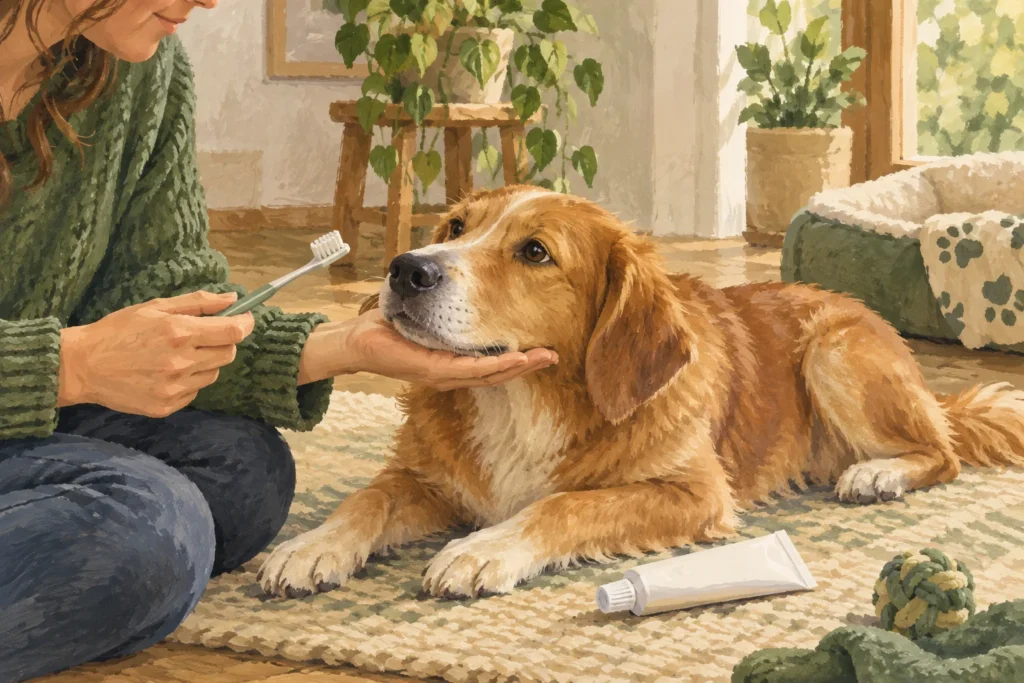
To brush your dog’s teeth, first help them feel comfortable with mouth handling, dog-safe toothpaste and a suitable soft brush. Build up in short, relaxed sessions and aim for a daily routine once they are ready. Forcing the mouth open or holding a struggling dog still can make the next attempt harder and risks injury.
This article contains Amazon affiliate links. As an Amazon Associate, we earn from qualifying purchases.
If your dog has a sore mouth, bleeding, a broken tooth or a sudden change in eating or handling tolerance, contact your vet before starting. An adult dog can continue eating despite dental discomfort, so appetite alone does not establish that brushing will be comfortable.
Table of Contents
Prepare a small kit
- A soft toothbrush with a head appropriate for your dog’s mouth.
- Toothpaste labelled for dogs and suitable for any dietary restrictions.
- A clean cloth if your veterinary team recommends it for initial handling.
- A quiet place and an easy way for your dog to move away.
Find soft dog toothbrushes on Amazon UK and Find dog-safe toothpaste on Amazon UK if you need supplies. A long handle can keep your fingers farther from the teeth, but the right size and a comfortable technique matter more than a large accessory bundle. Ask your veterinary nurse to demonstrate equipment for your individual dog.
Use dog-safe toothpaste rather than human toothpaste. Read the product directions, including how much to use, and put the tube away after the session so it cannot be chewed.
Start with consent to the easy parts
Choose a time when the dog is already calm. First practise briefly touching near the muzzle, then stop and reward calm participation. Let the dog approach again. If they move away, turn their head, stiffen or become worried, reduce the difficulty rather than following them around the room.
The first session may involve no brushing at all. That is still useful preparation. A dog that willingly returns for a tiny step gives you a better starting point than a dog that endured a complete brush while being restrained.
Introduce the taste and sensation separately
Offer a small amount of the dog toothpaste as directed, allowing the dog to investigate it. On another easy attempt, introduce gentle lip handling. Build these experiences before combining paste, brush and movement.
PDSA recommends gradual reward-based introduction over time. Some dogs progress quickly, while others need many brief sessions. Use the dog’s response rather than a fixed calendar to decide when to move on.
A finger brush may suit some dogs during introduction, but it puts a finger inside or close to the mouth. Do not use it when there is any risk of being bitten. Ask for professional help if you cannot handle the area comfortably and safely.
Build from one accessible area
Once your dog accepts the brush, begin with a brief gentle contact on an accessible outer tooth surface. Lift the lip only as much as needed; do not prise the jaws apart. Use the brushing motion demonstrated by your veterinary team and keep pressure light.
Stop while the dog is still comfortable. Gradually extend the area you can reach in later sessions, including farther-back teeth when the dog is ready. Avoid repeatedly scrubbing a small area because completing the entire mouth feels difficult.
For example, your first successful brush contact might last a second. The next attempt can repeat that same easy step. Increase duration or reach separately so you can see what the dog finds uncomfortable, rather than changing everything at once.
Make daily care easy to remember
Attach brushing to a stable household event, such as your own evening bathroom routine. Keep the kit accessible to people and inaccessible to the dog. A tick on a calendar can help several carers avoid assuming someone else has done it.
Rinse and dry the brush according to its instructions, inspect the bristles and replace damaged equipment. Use separate labelled brushes for different dogs. A short calm routine is easier to maintain when preparation does not require searching several cupboards.
Know when brushing is not the answer
Hard tartar already attached to teeth is a reason to ask your vet about dental care, not an invitation to scrape it off with a household tool. Do not use sharp instruments or attempt professional dental procedures at home.
If tooth brushing remains unsafe despite careful introduction, discuss alternatives and dental checks with your vet. Suitable chews or other products may support a plan, but a product’s availability does not establish that it suits every dog. Our dental-care product guide explains the broader routine.
Keep the aim practical: comfortable participation, appropriate equipment and consistent care. A veterinary demonstration is especially useful when you are unsure about technique or your dog’s mouth has not been checked recently.