
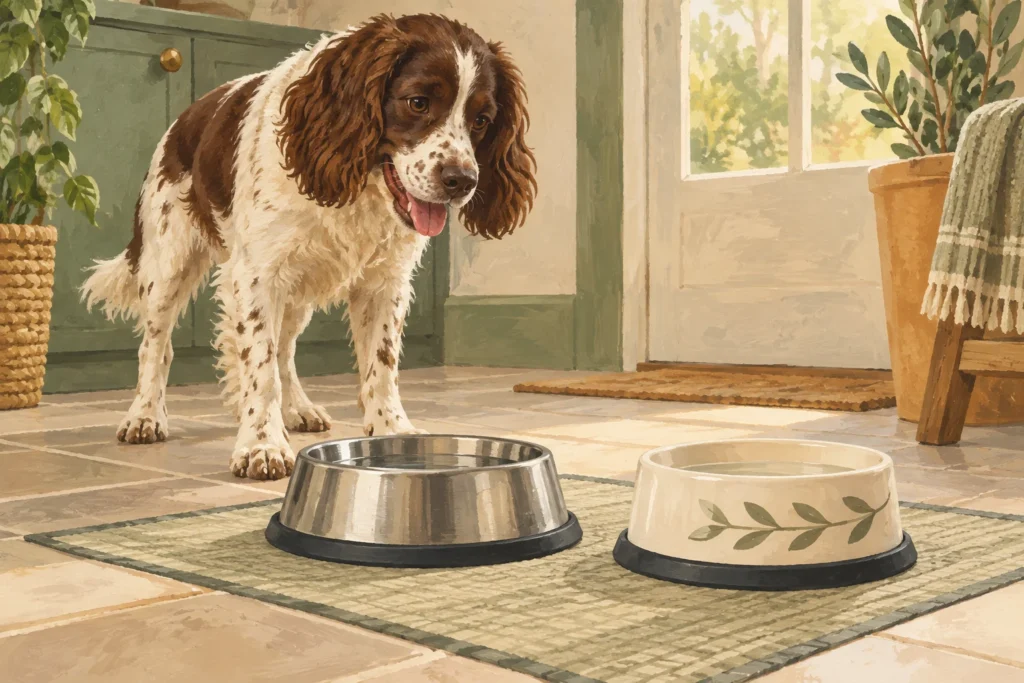
Best non-slip dog bowls: base grip, weight and cleaning compared
Compare non-slip dog bowls by base grip, usable capacity, weight and cleaning. Find a stable feeding setup without assuming every heavy bowl stays put.
Compare non-slip dog bowls by base grip, usable capacity, weight and cleaning. Find a stable feeding setup without assuming every heavy bowl stays put.
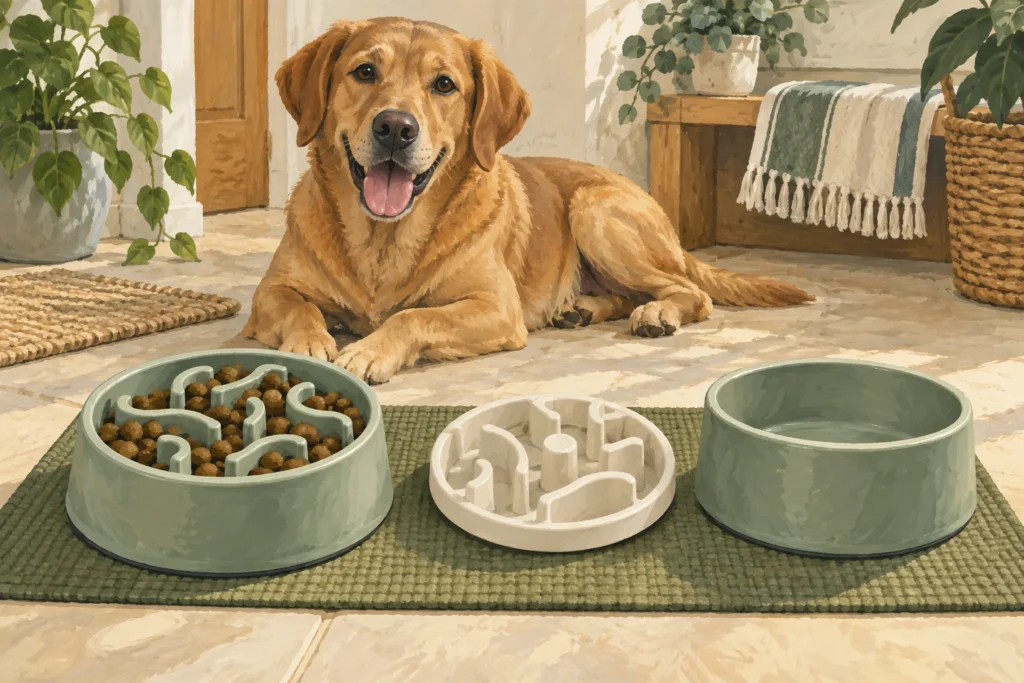
A slow feeder insert is useful when it fits a bowl you already like and stays securely in place; a complete maze bowl avoids that compatibility step. Choose according to your dog’s access to food and your ability to clean the whole setup. Making a meal as difficult as possible is not the aim.
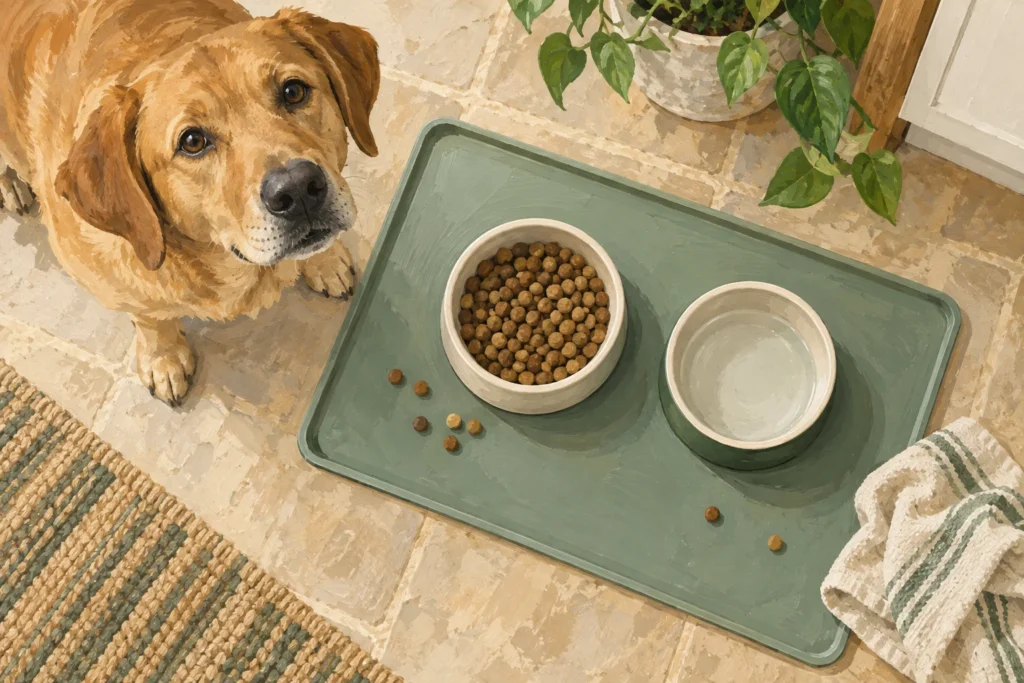
The best dog feeding mat depends on the mess you need to manage. An absorbent mat can catch drips, while a raised-edge tray can contain loose food and modest spills for wiping up. Measure both bowls and the splash area before buying: a decorative mat barely larger than the bowls may protect very little floor.
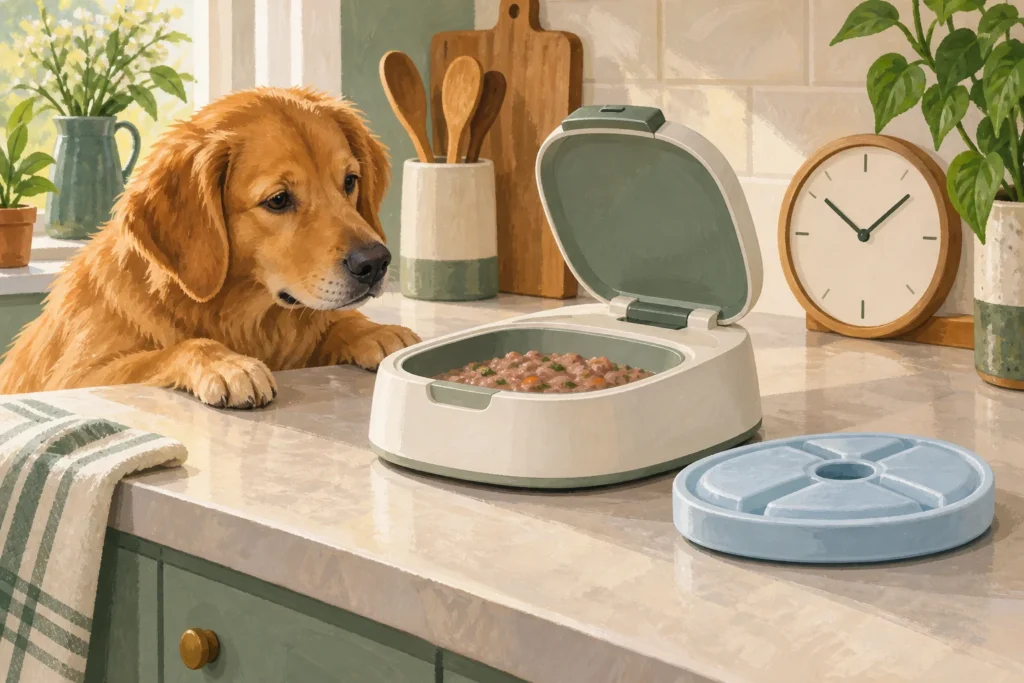
Automatic feeders for wet dog food need to do more than open on time. They must suit the food’s storage requirements, hold your dog’s actual portion and remain usable when the room is warm. A timed lid is not refrigeration, and an automatic meal does not replace the care and checks a dog needs from a person.
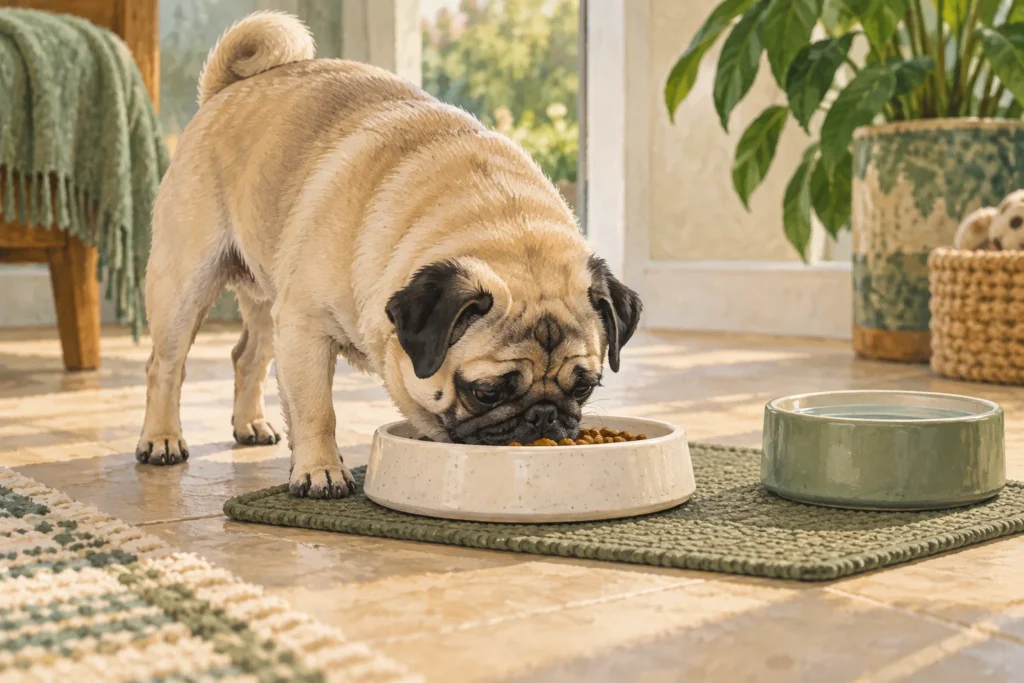
Dog bowls for flat-faced dogs should make food easy to reach without the dog pressing their face into deep sides or narrow channels. Start by observing how your dog uses the current bowl. A broad shallow dish may be sufficient; a complicated slow feeder is not automatically an improvement.
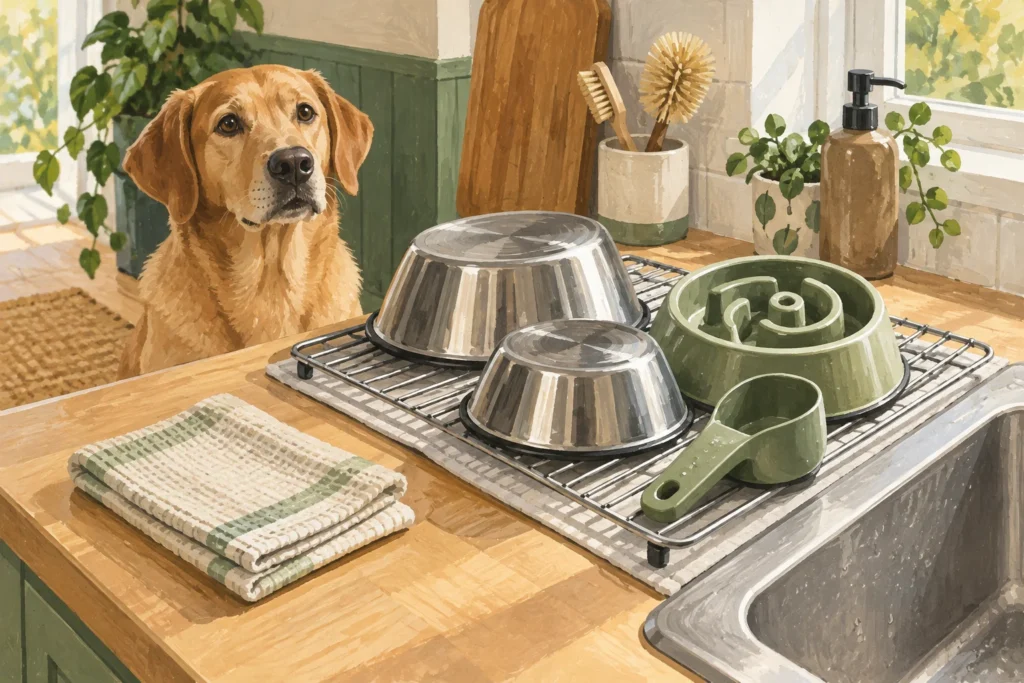
Treat bowls and food toys as food-contact equipment: remove residue, wash thoroughly and follow the care instructions for each part.