
Last updated: 9 September 2026
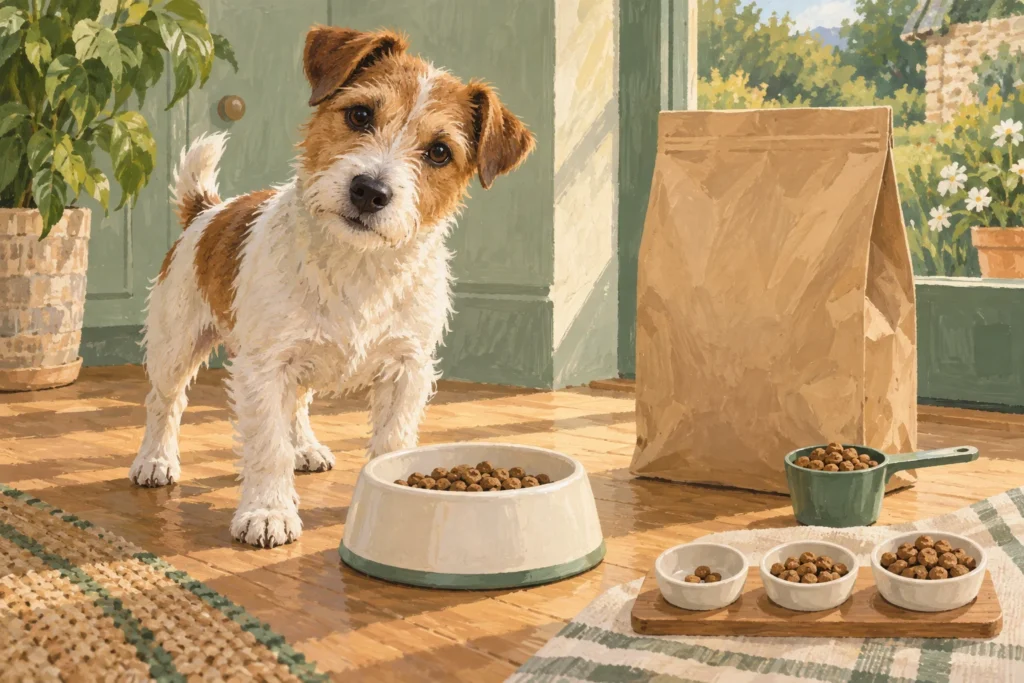
Small-breed dog food should be suitable for the dog’s life stage and comfortable to eat, with portions you can measure accurately. Small kibble can be convenient, but the words small breed do not replace checking the complete-food label, ingredients and feeding guidance. Pack size matters too when daily quantities are modest.
This article contains Amazon affiliate links. As an Amazon Associate, we earn from qualifying purchases.
Table of Contents
Start with the individual dog’s needs
A small puppy, an active adult and an older dog with dental problems do not have identical requirements. Check the product’s stated age and weight range. If your dog has a medical condition or needs a veterinary diet, obtain individual advice before choosing from a general small-dog shortlist.
Difficulty picking up or chewing food should not be dismissed as fussiness. A change in appetite, dropping food or apparent pain calls for a veterinary check rather than repeated purchases of smaller biscuits.
Royal Canin Mini Adult: a clearly defined range
The UK Mini Adult product is labelled as complete food for adult small-breed dogs up to 10kg and over ten months old. Its product information describes kibble adapted for smaller mouths and provides gram-based feeding guidance.
Find Royal Canin Mini Adult food on Amazon UK. Confirm that the listing is Mini Adult rather than Mini Puppy, an age-specific senior product or another similarly named recipe. Read the actual pack’s ingredients and directions before deciding it fits your dog.
This is a named option with a defined target group, not a claim that every dog below 10kg needs it or that it is better than every suitable all-breed food.
Consider other textures and portion formats
Forthglade’s range includes a small-dog cold-pressed recipe and small wet-food trays. These provide alternatives to conventional kibble, but check whether the selected recipe is complete and appropriate for the life stage.
Find Forthglade small-dog complete wet trays on Amazon UK. Smaller trays can reduce the amount left after a meal, although the actual feeding quantity determines whether the pack is convenient. Do not assume a 150g tray is one complete meal for every small dog.
| Format | Possible practical benefit | Check before buying |
|---|---|---|
| Small conventional kibble | Easy portioning and cupboard storage. | Piece size, complete label and daily grams. |
| Small-dog cold-pressed pellets | A different dry-food texture. | Actual pellet dimensions and its own feeding guide. |
| Small wet trays | Less opened food to store. | Complete versus complementary and fridge instructions. |
| Suitable all-breed complete food | May already meet the dog’s needs. | Comfortable eating and appropriate portions. |
Make small portions measurable
When the daily amount is small, an extra scoop or generous handful can make a meaningful difference. Use a scale that measures the quantities you serve reliably and include treats, chews and training rewards in the overall allowance.
Find digital food-portion scales on Amazon UK. Check the smallest useful measurement and place the bowl on the scale before zeroing it. The manufacturer’s feeding table is a starting guide; monitor body condition and ask for help adjusting intake when needed.
In a household with several feeders, write down the planned meals and rewards. A second breakfast given with good intentions is still part of the day’s total.
Calculate how long the bag will remain open
Divide pack weight in grams by the amount used each day. For example, a 2,000g bag used at an illustrative 50g a day lasts 40 days. This is arithmetic to apply to your food, not a portion recommendation.
Compare that time with the product’s storage guidance. A much larger bag may offer a lower price per kilogram but create an awkward long opening period. Store dry food protected from moisture and retain the batch and label information.
Compare daily cost instead of premium labels
Use the normal pack price and actual daily amount, including any wet topping. A small tray can seem inexpensive while costing more over the month than expected. Conversely, a larger-looking kibble bag may cover many more days.
Do not rank foods solely by meat percentage, grain-free claims or packaging that resembles human food. The complete recipe, suitability and reliable feeding routine are more useful starting points.
Keep a suitable food working
If your current complete food suits the dog, has accessible pieces and is manageable to store, a small-breed label alone is not a reason to switch. Our dog food guide helps compare broader options. If you do change, follow appropriate transition advice and seek veterinary help for persistent symptoms rather than attributing everything to kibble size.