
Last updated: 9 September 2026
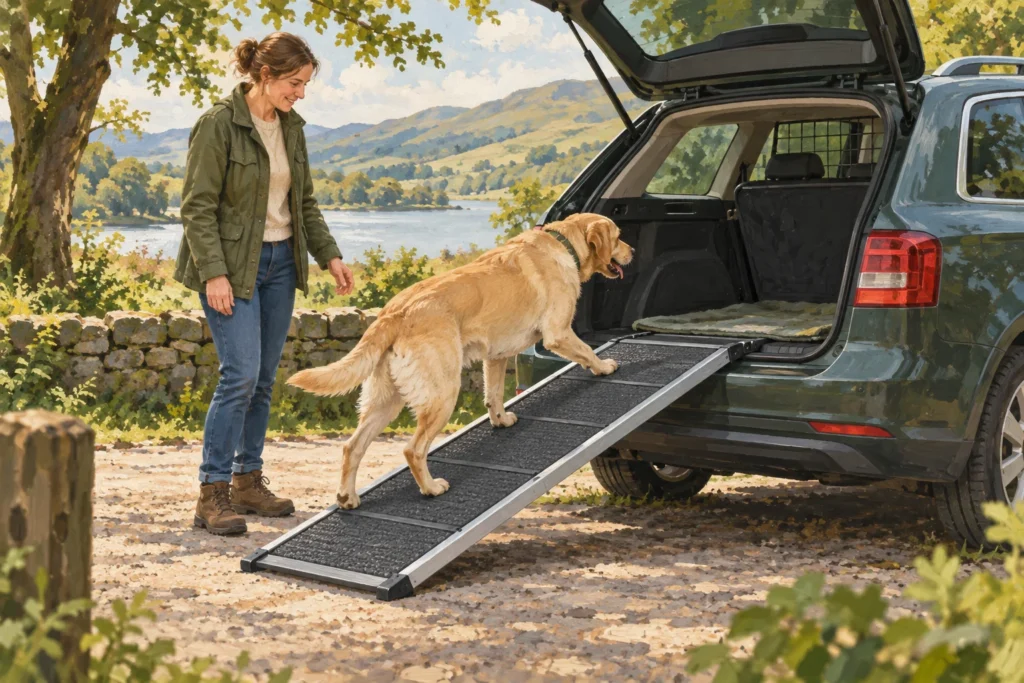
The best dog ramp for a car is long enough for the vehicle’s loading height, wide enough for the dog to walk confidently, and manageable for you to carry. A high weight limit alone does not establish any of those things. Start with the boot and your usual parking space before comparing brands.
If your dog has become reluctant to jump, is limping or needs support following treatment, ask your vet what movement and assistance are appropriate. A ramp can change access; it does not explain why jumping has become difficult.
Table of Contents
Measure the journey from ground to boot
Measure the vertical height from level ground to the actual surface the ramp will rest against. Check whether the bumper shape provides the required support. A painted lip, curved edge or loose boot liner may not provide the contact shown in the manufacturer’s instructions.
Then measure the clear space behind the car. A long ramp makes a gentler incline at the same height, but needs more room. The ramp that works on your drive may project into traffic in a roadside space. Plan where your dog will wait while you set it up and how you will keep both of you away from moving vehicles.
For an illustration, a 150cm ramp reaching a 60cm-high boot has an angle of about 24 degrees to level ground; a 200cm ramp reaches the same height at about 17 degrees. Those are geometry examples, not recommended angles for an individual dog. Use the product’s vehicle-height limits and any advice for your dog.
Three PetSafe formats worth comparing
PetSafe’s published instructions distinguish the standard, XL and Compact telescoping ramps. The measurements below are rounded conversions from those instructions; match the exact model to the retailer’s listing.
| Ramp | Published length range | Practical reason to consider it | Trade-off to check |
|---|---|---|---|
| Happy Ride Telescoping | About 99–183cm | General vehicle use where this length fits | About 99cm long even when shortened |
| Happy Ride XL / Extra-long | About 119–221cm | More length and width for suitable higher vehicles | More to carry and store |
| Happy Ride Compact Telescoping | About 71–178cm | Shorter closed length for a crowded boot | Narrower than the XL; assess walking room |
This article contains Amazon affiliate links. As an Amazon Associate, we earn from qualifying purchases.
Find PetSafe Happy Ride Extra Long Telescoping Dog Ramp on Amazon UK. For the shorter closed format, Find PetSafe Happy Ride Compact Telescoping Dog Ramp on Amazon UK. Check the full model name, usable walking width, carrying weight and current instructions before ordering; similar product photographs are not enough.
Folding or telescoping?
A folding ramp closes at hinges, so look at the thickness of the folded package as well as its length. A telescoping ramp slides into itself, which can make extension adjustable but requires keeping sliding parts clear of grit. Neither mechanism is automatically easier with wet hands or restricted mobility.
Try a cardboard rectangle matching the closed dimensions in your boot. Will it still fit beside the dog’s travel enclosure and luggage? Can you reach it without unloading bags? A convenient handle is useful only if you can lift the complete ramp and turn it through the boot opening.
Grip, sides and cleaning
Look for a continuous walking surface with no damaged or lifting sections. Side rails provide a visible edge, but do not contain the dog like a fence. Width must allow your dog to choose a straight, comfortable line rather than squeeze between raised sides.
Ask how the tread should be cleaned and whether replacement material is sold. Mud that remains in the surface can change the next use. Store the ramp so its dirty side does not rub against bedding, and secure it as luggage during travel. Our car seat cover guide can help with the separate problem of protecting upholstery.
Make the first use a practice session
PetSafe advises introducing its ramps flat on the ground before moving to the vehicle. Use a quiet setting and reward willing steps. If the dog refuses an incline, return to an easier stage instead of pulling them up. Read the exact setup sequence before extending or placing the ramp.
Before each use, check the contact points, locking arrangements and surface condition. Keep fingers clear of moving sections. Once the dog is in the vehicle, use the appropriate travel restraint; the ramp and a correctly sized travel crate solve different parts of the journey.
Choose the shortest closed package that still provides appropriate extended access. Saving boot space is valuable, but a ramp that cannot reach the vehicle comfortably will be an expensive item to leave at home.