
Last updated: 9 September 2026
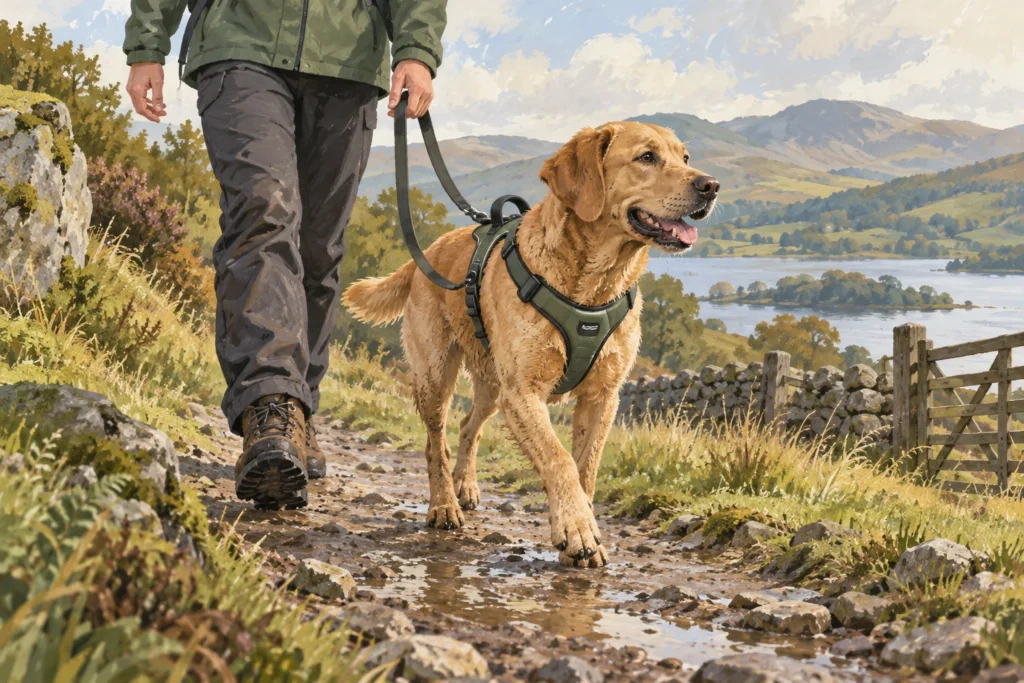
The best dog harness for hiking is one that fits comfortably through the movements your dog makes on the route: walking, sniffing, turning and stepping over modest obstacles. Useful extras include accessible adjustment, an appropriate handle and easy cleaning. A hiking label does not prove the harness will fit better than the one your dog already wears.
Plan the route around the dog’s fitness, age and comfort. Equipment cannot make an unsuitable distance or difficult terrain appropriate, and a handle should not be the reason to attempt an obstacle you cannot safely manage.
Table of Contents
Two designs to compare
| Harness | Manufacturer-described features | Reason to investigate |
|---|---|---|
| Ruffwear Flagline | Longer body coverage, six adjustment points and a padded assistance handle | You want to assess a supportive body design with several attachment options |
| Julius-K9 IDC Longwalk | Adjustable hiking design, top handle and elastic elements | You want to compare its fit and handling with your usual walking equipment |
This article contains Amazon affiliate links. As an Amazon Associate, we earn from qualifying purchases.
Find Ruffwear Flagline (medium, Basalt Grey) on Amazon UK. For the other design, Find Julius K9 IDC Longwalk dog harness on Amazon UK. Confirm the exact model: Longwalk, Longwalk Light and other Julius-K9 harnesses are not identical, and a similar colour does not establish the same features.
This shortlist compares designs you can investigate. We have not tested these products on a mountain route or independently measured comfort, durability or force reduction.
Fit through movement, not just standing
Measure according to each maker’s guide. Then observe the dog walking on a loose lead, lowering its head and turning both ways. Check that the body panels remain centred and straps do not crowd the front legs or underside.
Take a short familiar walk before a long outing. Look for coat disturbance, rubbing or repeated harness rotation afterwards. A fit that needs constant correction on a pavement is unlikely to become simpler on an uneven path.
Dogs Trust recommends careful harness selection and a gentle introduction. Our harness and collar guide explains the general choice, while a hiking purchase adds weather, route and carrying considerations.
What should the handle do?
Decide whether you need brief close handling or an assistance function the manufacturer expressly supports. A loop that is useful for steadying the dog is not automatically designed for lifting the whole dog, and none should be treated as climbing or rescue equipment without specific certification for that use.
If your dog regularly needs help because of a medical condition, get advice on suitable support. Also assess your own ability: a handle does not make a heavy dog easy to move safely. Choosing an easier route may be the better solution.
Practise any permitted assistance in a simple setting first. The first attempt should not happen beside a drop or on a slippery stile.
Wet-weather practicalities
Inspect how much fabric will hold water, how easily mud can be removed and where grit might collect around buckles. Manufacturer claims of quick drying or all-weather performance do not remove the need to clean and inspect the harness.
After rain or a stream crossing, recheck the fit and the dog’s skin-contact areas. Remove debris promptly and follow the washing instructions at home. Keep a wet harness separate from food and bedding during transport.
Reflective details can help others notice a dog when illuminated, but they are not a substitute for a visibility plan in poor light. Plan to finish within conditions you can manage rather than relying on a small strip of trim.
Lead connections and carrying extras
Use only attachment points intended for the lead. An accessory loop or label panel is not necessarily load-bearing. Check the lead clip closes freely and does not rub against another fitting.
Adding bags changes the equipment your dog carries. Do not assume every adult dog should carry a percentage of its body weight because a generic hiking article says so. Seek individual advice where carrying loads is contemplated and introduce changes conservatively.
Pack a short pre-walk checklist
- Harness fit checked with the intended lead.
- Webbing, seams, clips and buckles inspected.
- Dog comfortable on a shorter practice route.
- Water, breaks and an appropriate weather plan arranged.
- Exit or turnaround options identified if the dog struggles.
If pulling makes the walk difficult, our guide for dogs that pull can help with the equipment decision alongside reward-based training.
Choose the harness that stays comfortable and straightforward across an ordinary outing. A useful handle, sound adjustment and a clear care routine are worth more than features intended for adventures you will never take.