
Last updated: 9 September 2026
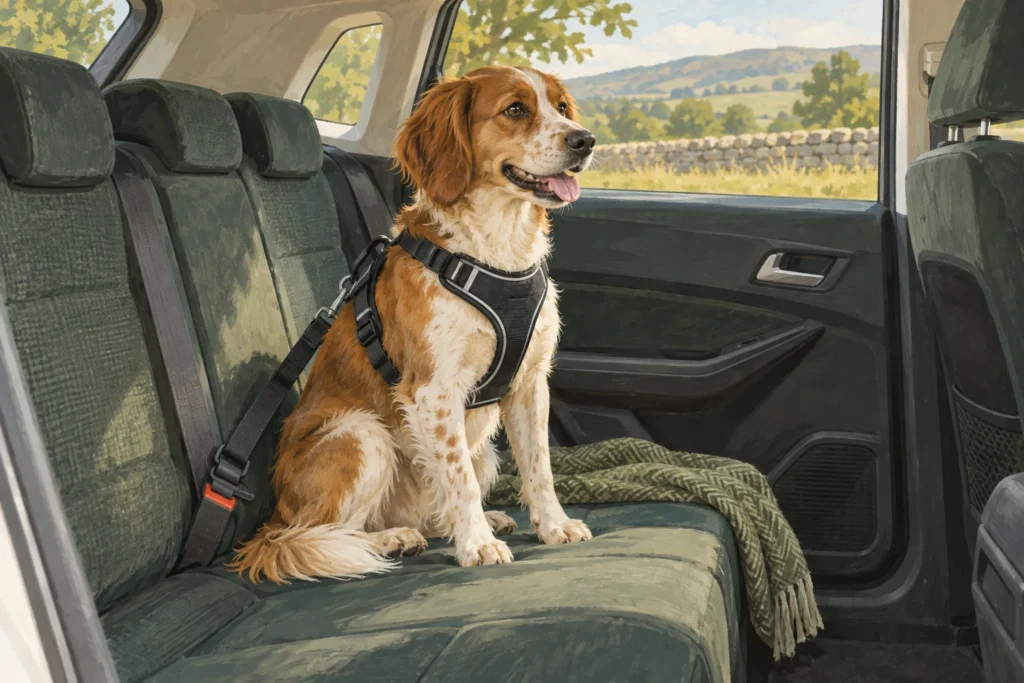
The best dog car harness in the UK is a correctly fitting model with clear installation instructions and meaningful evidence for the exact design and size. Start with documented testing, then check whether the harness suits your dog and rear-seat setup. A strong walking harness with an added tether does not automatically provide the same restraint.
Great Britain’s Highway Code Rule 57 advises suitable restraint to prevent distraction and injury during sudden stops. It lists several possible approaches, including harnesses, but does not certify products or say that every item sold as a car harness provides equal crash protection.
Table of Contents
Our evidence-led shortlist
| Model to investigate | Evidence available | Buyer’s essential check |
|---|---|---|
| Sleepypod Clickit Range | Model-specific Center for Pet Safety certification listing and manufacturer instructions | Correct regular/long fit, eligible size and prescribed rear-seat belt arrangement |
| Kurgo Enhanced Strength Tru-Fit | Manufacturer publishes crash-testing information and a stated 75lb test limit | Enhanced Strength version, exact size and the installation used in the test |
This is a comparison of published evidence and practical purchase checks. It does not rank the models by injuries prevented or claim that we crash-tested them.
Sleepypod Clickit Range: begin with the certificate
Clickit Range has a dedicated entry on the Center for Pet Safety’s website. Sleepypod describes rear-seat installation using the vehicle belt and offers different body fits. That gives buyers a clearer starting point than a badge without an identifiable model.
Read the fit guide with your dog’s measurements in front of you. A dog whose weight sits inside a stated range still needs the correct chest and body fit. Check the actual harness name and version when comparing sellers; evidence for Clickit Range should not be casually transferred to another Sleepypod product.
This article contains Amazon affiliate links. As an Amazon Associate, we earn from qualifying purchases.
Find Sleepypod Clickit Range harness on Amazon UK. Confirm the seller, variant, included accessories and return arrangements before buying. The search may show other models, and the correct size is more important than the first result.
Kurgo Enhanced Strength: separate fit range from test scope
Kurgo’s Enhanced Strength Tru-Fit page states crash testing up to 75lb, roughly 34kg. Its size chart includes larger dogs, which makes a useful distinction: a harness can physically fit a weight that is outside the published crash-test limit. Do not read the largest size as proof of equivalent evidence at that weight.
The page also distinguishes its recommended belt attachment for maximum crash protection from simply using a longer tether. Follow the current instructions for the exact model. Do not add an extension because the dog appears to want more room without checking whether the manufacturer permits it.
Find Kurgo Enhanced Strength Tru Fit car harness on Amazon UK. Look for “Enhanced Strength” in the product identity and inspect the current manufacturer guide, rather than assuming any Tru-Fit harness has the same construction and test history.
How to read “crash tested” without overreading it
A useful claim should answer five questions: which product, which size, what test, what result and what installation? A promotional video can show that a test took place while leaving several of those questions unanswered.
Independent certification and manufacturer-commissioned testing are different evidence routes. Neither means a dog is guaranteed to avoid injury in every collision. Test direction, speed, dummy size and attachment method describe a particular scenario; they are not a promise covering every vehicle and event.
If the listing supplies only a logo, follow it to the organisation or request the report. Be cautious about old articles discussing an earlier version: a historical result may not describe the item currently on sale, whether the old conclusion was positive or negative.
Check the installation in your own car
- Read before ordering. Confirm the restraint can be installed in the intended seat using the permitted belt arrangement.
- Measure the dog. Use the model’s instructions, not a size copied from a walking harness.
- Practise while parked. Check buckles, belt routing and the dog’s permitted positions with the engine off.
- Keep accessories consistent. Use only additions the manufacturer allows; a generic clip can change the system.
- Check every journey. Inspect webbing and hardware, confirm fastening and secure separate luggage.
Our harness and collar guide covers walking choices, which require a separate decision. For a dog outside a suitable harness fit or test range, investigate a properly sized travel crate with its own installation evidence.
Buy the whole system you can install correctly. A simpler suitable arrangement used consistently is more valuable than premium equipment connected in a way its maker never intended.