
Last updated: 9 September 2026
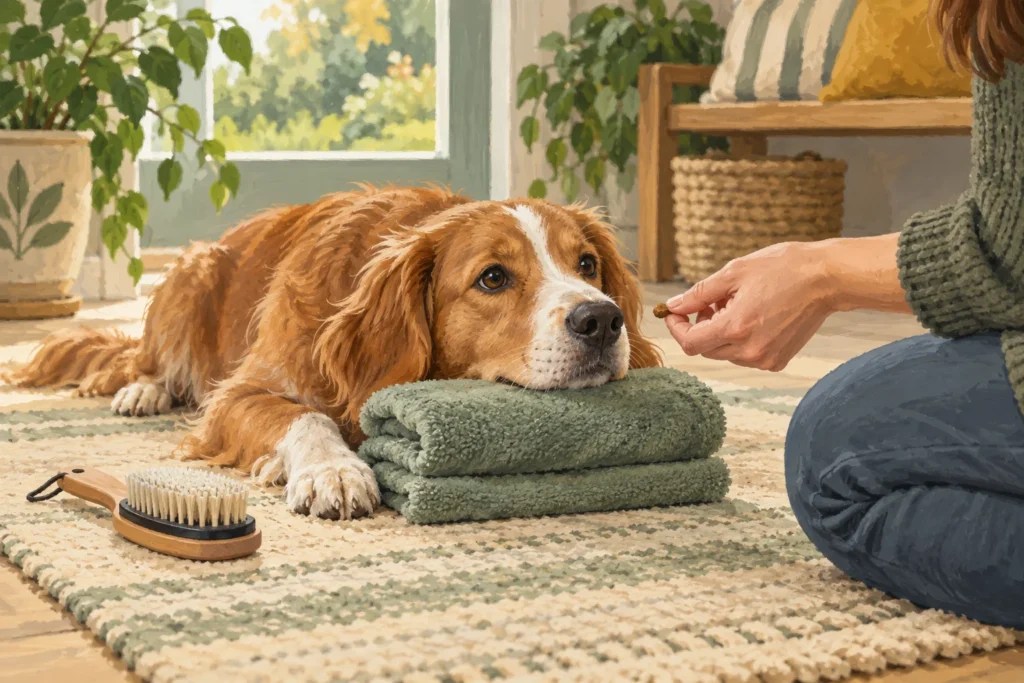
Cooperative handling means teaching your dog that routine care can happen in small, predictable steps, with opportunities to pause. Begin with an easy touch the dog already accepts and pair it with something they enjoy. Practise before nail care, grooming or an examination becomes urgent, rather than trying to teach a new skill during a difficult procedure.
The aim is comfortable participation, not holding the dog still until they stop resisting. A quiet dog may still be worried. Watch their whole body, keep sessions easy and involve a vet or qualified behaviour professional if handling is painful, frightening or unsafe.
Table of Contents
Choose one small task
Start by naming the specific goal: briefly touching a shoulder, looking at a paw from a distance or seeing a brush appear. “Accept grooming” contains many different sensations and movements. Breaking it down lets you teach one part without adding everything at once.
Set up a comfortable, non-slip surface and have suitable rewards ready. Practise when the dog is relaxed and free to move away. Keep tools switched off or at a distance while you establish comfort with their presence. Do not begin with the area the dog most strongly avoids.
Dogs Trust recommends gradual positive handling and veterinary help for established fear or aggression. If the dog has recently become less tolerant, have potential pain or illness assessed before treating the issue as missing training.
Separate approach, touch and duration
| Part of the task | Example of a small practice step |
|---|---|
| Your movement | A hand moves slightly towards an accepted area, then away |
| Brief contact | A gentle familiar touch followed by a reward |
| Tool appearance | The brush becomes visible without touching the dog |
| Tool contact | One comfortable contact before putting the tool down |
| Duration | A small increase only after earlier steps remain easy |
These are examples of dividing a task, not instructions to progress through all stages in one sitting. Make the next step small enough that the dog remains comfortable. If they lean away, become tense or leave, pause and make the next practice easier.
A reward should follow a manageable step, not lure the dog into enduring something they are trying to avoid. If you need one person continuously feeding while another completes an uncomfortable task, ask whether the procedure and training plan need reassessment.
Give the dog a predictable way to participate
Some training plans use a familiar station, such as standing on a mat, or a taught resting position as a signal to begin. These can be useful with professional guidance because the handler can clearly notice when the dog changes position and pause.
The signal only has value if you respond to it. Do not teach that leaving the position pauses practice and then repeatedly continue anyway. For necessary veterinary procedures that cannot be interrupted in the same way, discuss an appropriate handling plan with the veterinary team rather than pretending the training signal applies unchanged.
This article contains Amazon affiliate links. As an Amazon Associate, we earn from qualifying purchases.
Find non-slip washable dog mats on Amazon UK if a stable practice surface would help. Choose one that does not slide or bunch, and introduce it separately from care. A mat is an organisational aid, not evidence that the dog has consented to every procedure performed on it.
Keep rewards and records simple
Use food that fits the dog’s diet or another reward they genuinely enjoy. The training treat guide discusses convenient formats. Prepare small suitable portions so the session remains about learning rather than large amounts of extra food.
Write a brief note afterwards: which area, what action, how long and how the dog responded. “One brush touch at the shoulder, relaxed afterwards” is more informative than “good session”. It helps you start at a familiar level next time instead of accidentally making a large jump.
If using a clicker or verbal marker, establish its meaning first. Our clicker guide explains the marking role; a precise sound does not compensate for an uncomfortable handling step.
Work with the people who provide care
Tell the groomer or vet which tasks the dog accepts, which are difficult and what signals you use. Ask for their advice on preparation and on any changes needed for the dog’s coat or health. A short familiarisation appointment may be possible, depending on the practice or salon.
Do not delay necessary treatment while trying to complete a training programme. The vet can discuss appropriate immediate care and a separate longer-term plan. Build handling skills during ordinary weeks, keep them comfortable and maintain them in small doses so routine care becomes more predictable for both of you.