
Last updated: 9 September 2026
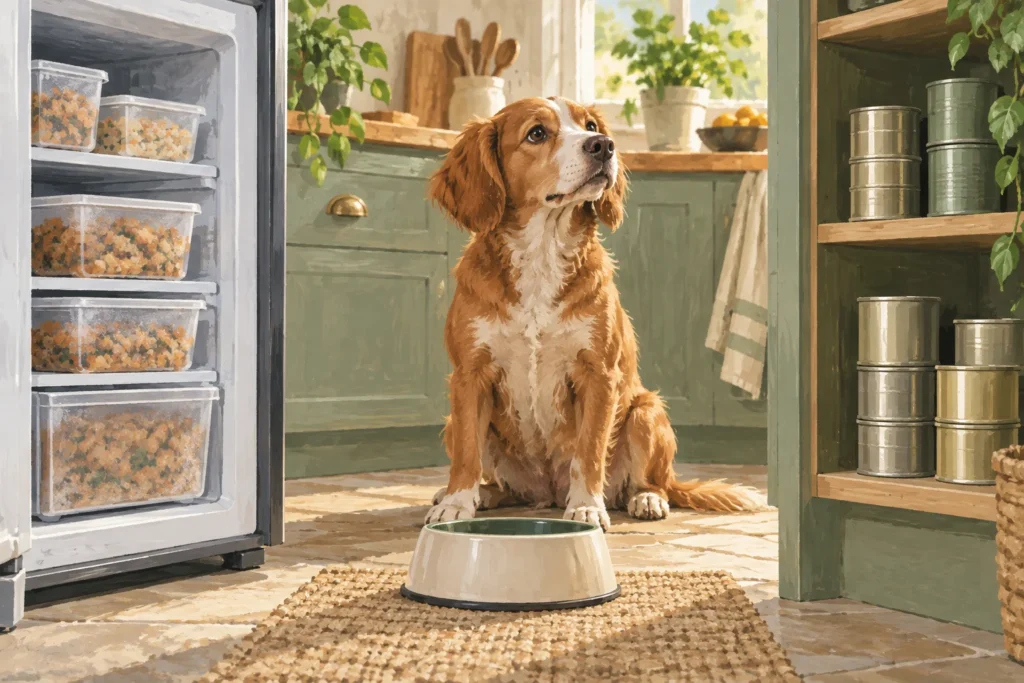
Fresh cooked and shelf-stable wet dog food can both provide suitable complete meals when the exact recipe matches your dog’s needs. The clearest everyday difference is storage: frozen cooked deliveries require freezer and thawing arrangements, while unopened shelf-stable wet packs can usually be kept as their label directs without refrigeration.
This article contains Amazon affiliate links. As an Amazon Associate, we earn from qualifying purchases.
Table of Contents
Compare food formats without the marketing shorthand
In this guide, fresh cooked means commercially prepared cooked meals delivered frozen or chilled, rather than a homemade recipe. Shelf-stable wet food means sealed tins, trays or pouches designed for storage at room temperature before opening.
Both are processed to create a usable product. Terms such as gently cooked or natural do not establish that one provides better nutrition for every dog. Assess the final food and your ability to feed it consistently.
| Household decision | Frozen cooked meals | Shelf-stable wet meals |
|---|---|---|
| Unopened storage | Reserve freezer space and follow delivery instructions. | Use appropriate cupboard storage as directed. |
| Daily preparation | Plan safe thawing and opened-pack use. | Open a pack, then refrigerate leftovers as directed. |
| Travel | Reliable cold storage is a central requirement. | Unopened packs may be simpler to carry; leftovers still need care. |
| Cost comparison | Use the normal plan price for the same feeding coverage. | Use the price and quantity needed for the actual daily portion. |
Complete and complementary are more important labels
A complete food is intended to supply the required nutrition when fed appropriately. A complementary food must be used with other food in a suitable feeding plan. Attractive ingredients or a high meat percentage do not make that distinction disappear.
Forthglade, for example, sells complete wet ranges and a separate Just complementary range. A shopper buying by brand alone could choose the wrong format for sole feeding. Check the specific pack and life-stage guidance every time.
When frozen cooked food may fit
A cooked subscription may suit you if you value scheduled delivery, a personalised portion starting point and the available recipe textures. Measure freezer space for a full delivery before judging convenience. Consider who will handle the next thawed portion when the usual feeder is away.
Butternut Box illustrates the planning required: its instructions distinguish unopened refrigerated food from opened meals and advise against refreezing food thawed at home. Use the rules for your own supplier, not a timetable borrowed from another brand.
Keep a sensible contingency plan for a delivery problem or an unexpectedly empty fridge. That might involve a suitable alternative food agreed in advance rather than improvising a nutritionally incomplete meal.
When shelf-stable wet food may fit
Wet tins and trays can suit households with limited freezer space or those who want to buy smaller quantities without a subscription. They can also be practical for trips where unopened food must travel before reaching refrigeration.
Find Forthglade complete wet dog food on Amazon UK. Check that the result is a complete recipe appropriate for the dog, and confirm pack size and quantity. This search is for shelf-stable meals, not a way to buy a fresh-food subscription through Amazon.
Once opened, the advantage changes: leftovers need the storage and use-by routine on the pack. A very large tin may be awkward for a small dog if it cannot be finished within that period.
Compare the whole feeding cost
Match the same dog and the same percentage of daily feeding. A fresh topper plan should not be compared with a wet-food quantity intended to feed the entire diet unless the remaining food cost is included.
Account for routine extras, delivery charges and waste. A larger pack can be cheaper per kilogram but more expensive in practice if part is discarded. Do not compare dry and wet foods using weight alone if you widen the shortlist; their feeding quantities differ.
Make a transition you can evaluate
Follow appropriate transition guidance and involve your vet for medical diets, suspected reactions or other health needs. Keep track of the food served and avoid changing several treats and supplements at the same time.
Acceptance matters, but a dog eagerly eating a new meal does not prove a health advantage. Contact a vet about persistent symptoms rather than moving repeatedly between formats in search of a marketing claim that sounds right.
Choose the format that remains workable
Shortlist suitable complete recipes first, then compare storage, portion handling and normal cost. Our dog food guide provides the wider context. The best everyday option is one you can source, store and feed reliably while meeting your dog’s individual needs.