
Last updated: 9 September 2026
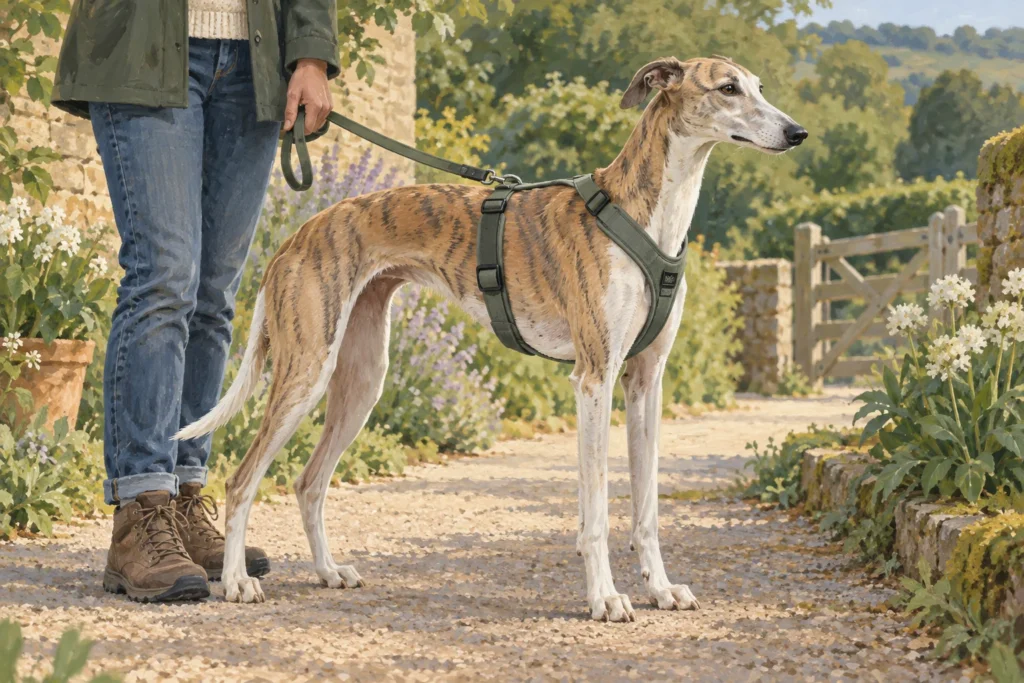
The best harness for a sighthound is the one that fits the individual chest, neck and body length without rubbing or allowing the dog to back out. A deep chest and narrow waist can make a generic size label unhelpful. Look for useful adjustment and check the fit while the dog moves, rather than choosing solely from a breed photograph.
A harness with an additional rear body strap may be worth investigating when retention is a concern, but no design is escape-proof. An anxious dog or a dog with a history of slipping equipment needs a careful fitting and handling plan, ideally with help from a knowledgeable rescue organisation or trainer.
Table of Contents
Measure more than the widest part of the chest
Follow the selected manufacturer’s measurement method. Chest girth is often the starting point, but also check where the neck opening, front panel and body straps will sit. Two dogs with the same girth may have different torso lengths and shoulder shapes.
Record measurements while the dog stands comfortably. Do not buy a size based on another owner’s Whippet or Greyhound without comparing the actual chart. If the dog falls between sizes, follow that model’s instructions or ask the manufacturer; sizing advice is not identical across brands.
The rear strap needs to sit where the design intends without pressing into sensitive areas or interfering with movement and toileting. Extra straps only help when their position and adjustment suit the dog.
Two designs to investigate
| Design | Reason to investigate | Fit question |
|---|---|---|
| Ruffwear Flagline | Multiple body straps and six adjustment points | Does its fixed body length place each strap appropriately? |
| PerfectFit three-piece system | Separate components can be selected as a combination | Which piece sizes suit the dog’s proportions? |
This article contains Amazon affiliate links. As an Amazon Associate, we earn from qualifying purchases.
Ruffwear describes the Flagline as a lightweight harness with a handle, chest/belly panel and three lead attachment points. The six adjustment points provide scope to change fit, but they do not alter every dimension of the underlying harness. Find Ruffwear Flagline (medium, Basalt Grey) on Amazon UK, checking the current model and size chart.
PerfectFit’s three-piece system offers a different way to approach proportions. Use the manufacturer’s fitting support to select the combination instead of guessing that all three pieces should share the same size label. See the PerfectFit system description for the current arrangement. This article does not claim either design has been tested on your dog or is universally better for sighthounds.
Check movement before going outside
Fit the harness in a secure familiar place and let the dog stand, sit, turn and walk. Look for a front panel that twists, straps that move into the armpits or a neck opening that interferes with comfortable movement. Check the manufacturer’s intended position from several angles.
Use gentle lead contact only; do not deliberately frighten the dog into reversing to see whether the harness holds. If retention is uncertain, get an in-person fitting check before using it near roads. An improvised extra-tight setting can create a different problem without making the overall setup dependable.
A handle is useful only within the manufacturer’s stated purpose. Do not assume a lift-and-assist handle turns a walking harness into a restraint for climbing, vehicle crash protection or prolonged suspension.
Consider the lead attachment you will use
A front attachment changes where the lead acts, while a back attachment offers a different handling position. Select the point recommended for the intended activity and use reward-based walking practice. Equipment may help management, but it does not teach the dog how to walk comfortably with you.
The harness versus collar guide covers the broader choice of attachment. If the dog pulls or lunges strongly, combine a suitable fit with individual training advice rather than expecting a particular strap layout to cure the behaviour.
Check lead clips can move freely without pressing on the dog. Attach identification to the appropriate point and keep it separate from any ring that is not intended to bear lead forces.
Inspect after the first short walks
Remove the harness and check the skin and coat where straps sit. Short-coated dogs may make rubbing easier to see, but absence of an obvious mark does not prove perfect comfort. Recheck adjustment after washing and as the dog’s weight or coat changes.
Read the care instructions and let the harness dry properly. Inspect webbing, buckles and stitching, especially where the lead connects. Replace compromised equipment instead of relying on the remaining straps.
The useful shortlist is the one whose measurements and adjustment suit your dog’s proportions. Buy from a seller with a clear fitting and return process, test the fit calmly indoors and seek help where escape concerns make the consequences of a poor fit significant.