
Last updated: 9 September 2026
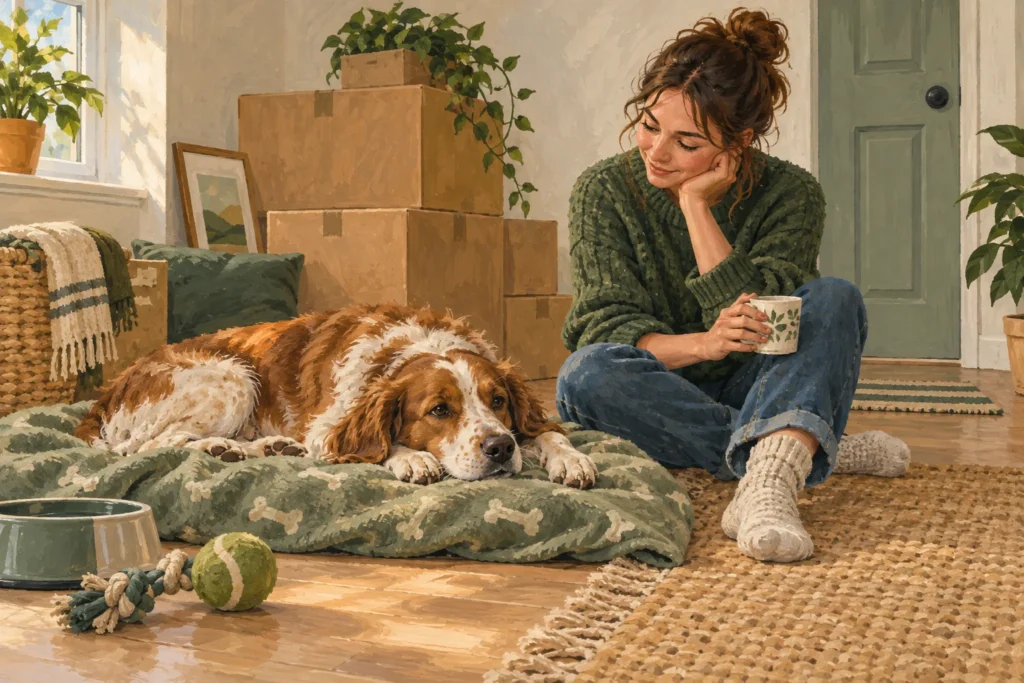
Moving house with a dog is easier when one person is responsible for their care and a secure, quiet place is ready before the removal van arrives. Keep familiar bedding and everyday supplies accessible, update identification details and introduce the new surroundings gradually. The busiest part of moving day is usually a poor time for your dog’s first free exploration.
You do not need a complete new set of pet accessories. Familiar possessions can be useful precisely because they already belong to the dog’s routine. Spend your planning effort on doors, transport, care arrangements and the first few nights.
Table of Contents
In the weeks before the move
Decide whether your dog will stay with a familiar carer or remain with you. Blue Cross suggests arranging trusted help where possible and keeping the dog safely away from the stream of people carrying furniture. If using paid care, confirm availability, collection times and the carer’s requirements early.
Introduce packing materials gradually where practical. Keep walk, meal and rest times reasonably familiar as the rooms change. Avoid dismantling the dog’s resting area first simply because it is easy to pack. Set aside a clearly marked bag containing food, medication if prescribed, bowls, leads, waste bags, towels and the usual bed or blanket.
Check the journey itself. Arrange suitable restraint and breaks, and speak to your vet in advance if travel causes sickness or fear. Do not pack the dog’s supplies in a box that will be inaccessible until the following evening.
Give moving-day responsibility a name
Agree who holds the lead, checks the dog and manages transfers between places. “Someone is watching” is an unreliable arrangement when everyone is distracted. Make a simple handover whenever that person changes.
If the dog stays in a quiet room, tell everyone and place a clear sign on the door. Give the designated carer a way to provide toilet breaks and company without releasing the dog into the loading area. A new crate is not a quick solution for a dog who has never learned to rest in one.
Plan for delays. Keys can arrive late and vans can take longer than expected. A backup carer or a safe place to wait is more useful than discovering that the new house is unavailable while the dog is already in the car.
Check the new home before releasing the lead
| Area | Check |
|---|---|
| Garden boundary | Gaps, loose panels, low sections and accessible gates |
| Inside rooms | Open windows, exposed cables, loose fixings and cleaning products |
| Resting space | Comfortable temperature, water and familiar bedding away from traffic |
| Exits | Who has keys and which doors workers will use |
| First toilet trip | A safe route and secure lead before opening outside doors |
Do not assume an estate agent’s description of an enclosed garden means it will contain your dog. Check from the dog’s height, including behind sheds and under hedges. Supervise outdoor access until you understand the boundary and your dog’s response to it.
Update the details that help someone contact you
GOV.UK says owners are responsible for keeping microchip information current, including after a house move. Contact the database where your dog is registered; changing the address at your veterinary practice does not automatically update that separate record. Update your dog’s identification tag as well.
This article contains Amazon affiliate links. As an Amazon Associate, we earn from qualifying purchases.
Find engraved dog identification tags on Amazon UK if you need a replacement, allowing enough space for the required identification and a readable contact number. Check the engraving after delivery rather than assuming the order form transferred correctly. A current phone number is particularly useful while post and appointments are moving between addresses.
Find the nearest suitable veterinary practice and its emergency arrangements before you need them. Keep existing medical records and prescription information available for registration.
Make the first days predictable
Introduce rooms in manageable stages and let the dog return to their resting place. Keep greetings and visitors modest while the house is unfamiliar. Build short local walks into the routine so new traffic, dogs and noises are encountered gradually. Avoid testing off-lead reliability in an unfamiliar area immediately after arrival.
Expect some adjustment without assuming every change is harmless. Appetite loss, marked distress or unusual behaviour should prompt appropriate veterinary or behaviour advice. If your dog struggles when left, the guide to choosing suitable training support can help you consider the quality of a class or trainer, although an individual settling problem may need individual help.
Unpacking everything quickly matters less to the dog than knowing where to rest, where to go outside and who will respond to them. Establish those basics first, then allow the new home to become familiar at a comfortable pace.