
Last updated: 9 September 2026
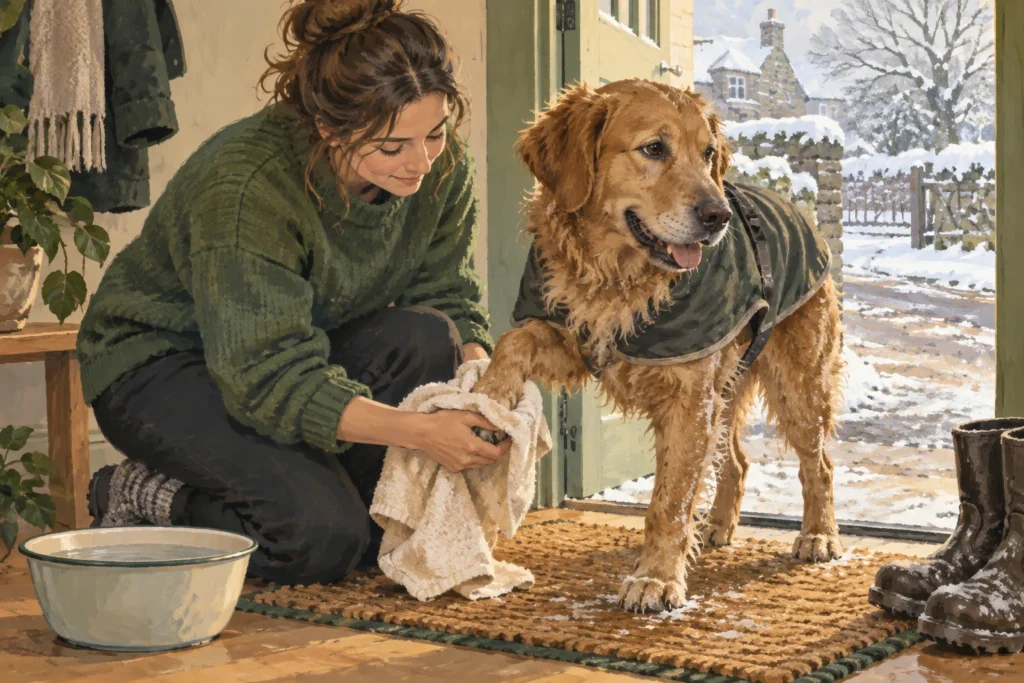
Winter paw care starts with the route and ends with a gentle clean and check. Salt, grit, ice and wet ground can create problems that a quick towel over the back misses. Keep a simple cleaning station by the door so you can remove residue before your dog settles down and licks their feet.
This article contains Amazon affiliate links. As an Amazon Associate, we earn from qualifying purchases.
Table of Contents
Choose footing your dog can manage
Look for firm, reasonably clear ground and avoid making your dog cross unnecessary ice. Shorter local outings may be more sensible than a long slippery route, especially for a dog whose movement is already limited. A coat does not improve grip under the paws.
Keep clear of frozen ponds and other uncertain surfaces. Ice can hide changes in the ground, and a dog chasing a toy may move faster than the conditions allow. You can replace an energetic outdoor session with a quieter day rather than trying to preserve the normal distance at all costs.
Prepare the doorway before the walk
Set out a towel and a practical way to rinse feet with comfortably lukewarm water when needed. Keep the floor beneath the dog from becoming slippery. If lifting paws is difficult, use a position your dog already tolerates and clean one area at a time.
Find washable dog drying towels on Amazon UK. Choose a size you can wash and dry regularly. An old clean towel may do the job just as well; the useful purchase is a spare when the current one is perpetually damp, not a special winter claim on the label.
Rinse residue, then check between the toes
- Bring your dog onto a stable surface and allow a moment to settle.
- Gently remove visible dirt and rinse away salt or grit residue, following veterinary advice if the paws are sore.
- Check pads, nails and the spaces between toes for anything caught or damaged.
- Dry carefully, including damp areas between toes, without vigorous rubbing.
- Let your dog rest and watch for continued licking or altered movement.
Do not tug sharply at ice or material caught in the coat. If you cannot remove something comfortably or suspect an embedded object, stop and seek help. Trimming around delicate areas with scissors while a dog wriggles can cause an injury of its own.
Decide whether boots would actually help
Boots may provide a physical barrier for a particular outing, but they also need appropriate fit, secure fastening and gradual introduction. A dog who freezes or walks awkwardly in them has not automatically gained useful protection.
| Check | What to look for |
|---|---|
| Size | Measure according to the chosen brand, including any difference between front and rear feet. |
| Movement | The dog can walk comfortably without obvious slipping or twisting. |
| Fastenings | They hold without constriction or rubbing. |
| After use | Paws are checked for moisture, irritation and pressure marks. |
Practise indoors on an easy surface before relying on boots outside. Do not use a boot to cover a painful foot and continue the walk without finding out why it hurts.
Be cautious with balms and household products
A balm is not a substitute for cleaning away contamination or treating an injury. If you want to use one, choose a product intended for dogs and check its directions with your vet when there is soreness, broken skin or persistent licking. Do not assume a human hand cream is appropriate simply because it moisturises your skin.
Keep antifreeze and other winter chemicals securely stored. Suspected ingestion or contact with a harmful substance needs prompt veterinary advice, not a wait to see whether ordinary paw cleaning helps.
Know when to stop the home routine
Limping, bleeding, swelling, a broken nail, obvious pain or repeated attention to one foot deserves veterinary assessment. Avoid repeatedly manipulating a painful paw. Your first-aid kit and emergency numbers should be easy to reach.
For an otherwise comfortable dog, the routine can remain straightforward: choose manageable conditions, remove residue, dry and check. Consistency after ordinary winter walks is more useful than applying several products without noticing how the paws actually look and feel.