
Last updated: 9 September 2026
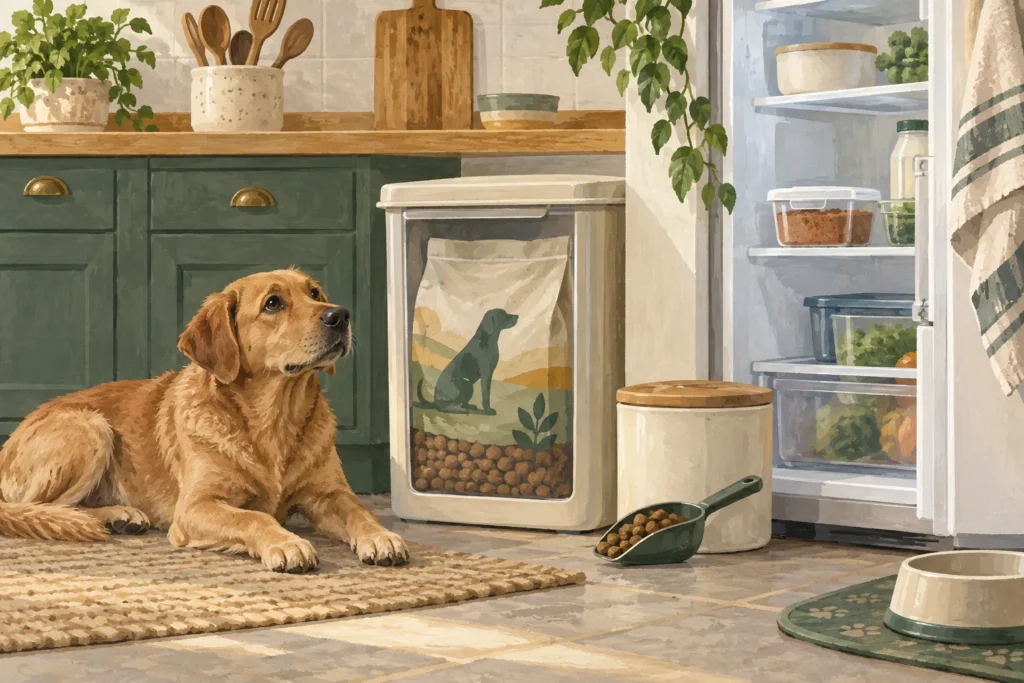
To store dog food safely, follow the instructions for the particular product, keep it away from moisture and contamination, and label anything you open or thaw. Dry kibble, shelf-stable wet food and frozen cooked meals need different arrangements. A large airtight tub does not make those differences disappear.
This article contains Amazon affiliate links. As an Amazon Associate, we earn from qualifying purchases.
Table of Contents
Read the storage panel before buying the bigger pack
Find the best-before date, instructions after opening and any refrigeration or freezing requirements. Check whether the guidance changes once the product is thawed. The longest unopened shelf life is not the time available to use leftovers.
Estimate how quickly your household will finish the pack at the actual daily portion. A bulk bag may be economical for a large dog but awkward for a small dog eating only part of its diet as kibble. Waste, awkward storage and reduced freshness can outweigh a lower shelf price.
| Food | Routine to establish | Common mistake |
|---|---|---|
| Dry food | Reseal the original bag and protect it in a clean, dry place. | Constantly topping up old food with new. |
| Shelf-stable wet food | Store unopened packs as directed; cover and refrigerate leftovers promptly. | Using the unopened date as the opened-food deadline. |
| Frozen cooked food | Freeze on arrival as instructed and thaw planned portions safely. | Defrosting more than you can use. |
| Prepared food toys | Apply both the food’s storage rules and the toy’s cleaning instructions. | Assuming every filling can be frozen or refrozen. |
Keep dry food identifiable and protected
Where practical, keep kibble in its original bag inside a suitable container. This preserves the recipe label, batch details and feeding instructions. If you decant, retain that information and use a clean, completely dry food-storage container.
Do not pour a new bag onto a layer of old crumbs. Finish or appropriately discard the old food, clean the container as directed and allow it to dry before refilling. Keep scoops clean and dry, and avoid storing the bag beside a radiator, in direct sun or somewhere damp.
Food already offered to your dog should not go back into the main bag. Saliva and debris do not belong in the supply for later meals. Use a measured serving rather than filling a bowl repeatedly without knowing how much has been eaten.
Label opened wet food so everyone follows the same rule
Write the opening date on a removable label or on the pack where appropriate. Cover the food and refrigerate according to the manufacturer’s directions. Use its stated after-opening period; do not borrow a timetable from a different brand.
A lid needs to fit the actual tin. A lidded food-safe tub can be more practical for pouches or awkward pack sizes, provided it is washed and dried between uses. Find reusable pet-food tin lids on Amazon UK. Measure the container or tin before ordering a multipack of lids that may not fit.
When dividing portions, use clean utensils and return the remaining food to storage promptly. Avoid leaving an entire opened pack beside the feeding station while deciding whether your dog wants more.
Make frozen deliveries fit your real freezer
Reserve space before the box arrives. Move only the planned quantity into the fridge for thawing, and allow the time recommended for its pack size. Keep track of both thawing and opening where the manufacturer gives separate deadlines.
For example, Butternut Box currently distinguishes unopened refrigerated meals from opened meals and advises against refreezing food thawed at home. That is a product-specific instruction, not permission to use the same schedule for every cooked-food service. Read the guidance in the delivery you receive.
Build cleaning and stock rotation into feeding
Put the oldest appropriate stock at the front and new deliveries behind it. Clean bowls and utensils regularly, wash hands after handling food and keep pet food preparation separate from activities that spread dirt around the kitchen. Inspect packaging for damage and do not serve food that appears spoiled.
Do a quick cupboard and fridge check before the next order: remaining quantity, opening dates, spare freezer space and any changed feeding requirement. Our dog food guide can help with the choice of format; once you have chosen one, a small repeatable storage routine is more valuable than accumulating containers.