
Last updated: 9 September 2026
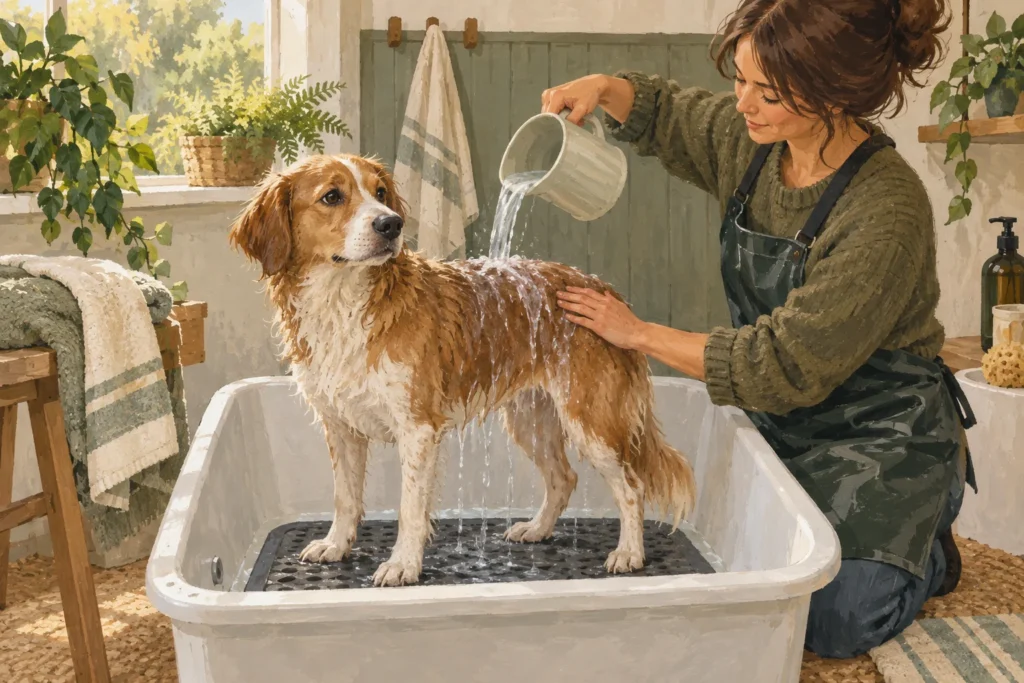
There is no single bathing schedule for every dog. A healthy dog may only need an occasional bath when their coat is dirty, while a dog with a particular coat-care routine or a prescribed skin treatment may need a different schedule. Start with the reason for washing, then choose the least complicated suitable approach.
A muddy foot, a dog who has rolled in something unpleasant and a dog with persistent itchy skin are three different situations. They should not all lead automatically to the same whole-body shampoo.
Table of Contents
Ask what needs cleaning today
| Situation | First consideration |
|---|---|
| Light mud on paws or lower legs | A local rinse and careful drying may be enough |
| Dirt or unpleasant material across the coat | A suitable dog-shampoo bath may be needed |
| Routine grooming appointment | Coordinate home washing with the groomer’s coat plan |
| Persistent smell, itching or redness | Ask the vet rather than repeatedly masking it |
| Prescribed medicated shampoo | Follow the individual treatment schedule and contact time |
VCA’s veterinary guidance explains that age, lifestyle, coat type and health all affect bathing needs. This is more useful than choosing a frequency from a breed label alone. Two spaniels can have very different days: one returns from muddy fields, while the other stays largely clean on short pavement walks.
Separate brushing from bathing
Washing does not remove the need for appropriate brushing and combing. A coat can look clean while tangles build underneath, particularly around friction areas. Ask a reputable groomer to demonstrate how to check your dog’s coat properly, rather than only brushing the visible surface.
Deal with coat preparation before a bath. Severe or tight mats need professional help; do not soak them and then attempt to cut close to the skin with scissors. Our grooming kit guide can help identify tools to discuss with your groomer.
If your dog is clipped professionally, ask whether an extra home bath is useful between appointments and how to dry that coat. Buying shampoo first and working out the coat routine afterwards often creates more work than it saves.
Choose shampoo for the purpose
Use a product formulated for dogs and appropriate for their age and skin. For a skin condition, check the choice with your vet. Fragrance, a “natural” label or an ingredient fashionable in human skincare does not establish that a shampoo will suit your dog.
This article contains Amazon affiliate links. As an Amazon Associate, we earn from qualifying purchases.
Find gentle dog shampoo for routine bathing on Amazon UK. Treat this as a search for a suitable everyday product, then read the complete label. If your dog has previously reacted to a product, keep its ingredient list and discuss alternatives with the veterinary team rather than trying several new formulations at once.
Follow the bottle’s instructions for dilution, application and rinsing. Do not copy a dilution ratio from another brand or assume a stronger mixture cleans better. An everyday cleansing shampoo is not interchangeable with a prescribed medicated wash.
Make the bath comfortable and manageable
Prepare towels, the shampoo and a stable non-slip surface before bringing the dog in. Use comfortably warm water and a gentle method your dog accepts. Avoid spraying directly into the face, eyes or ears. Practise entering and leaving the bathing area separately if that is the part your dog finds difficult.
Work methodically so you know which areas have been washed and rinsed. Dense coats can hold product close to the skin even when the surface water looks clear. Give rinsing enough time, then dry according to the dog’s coat and the groomer’s advice. Keep the dog comfortable while drying and check that damp areas are not left hidden under folds of bedding.
Record a reaction rather than dismissing it. If washing consistently makes the skin worse, or the dog appears painful, stop using the product and contact your vet. Repeating the bath with a different scent is not a reliable way to solve the problem.
Medicated baths follow a separate plan
VCA notes that the frequency of medicated bathing depends on the condition being treated. Your vet may specify how long the product stays on, which areas to cover and when to review progress. Ask for those instructions in writing if they are unclear.
Set a timer for the prescribed contact time instead of guessing, and do not stop or intensify a treatment course merely because a routine grooming article suggests a different interval. If the practical instructions are difficult for your dog, tell the veterinary team so the plan can be adapted.
A short diary of baths, products, muddy outings and skin changes can reveal what your routine is doing. The useful question is whether your dog stays clean and comfortable with manageable care, not whether you have followed a calendar rule perfectly.