
Last updated: 9 September 2026
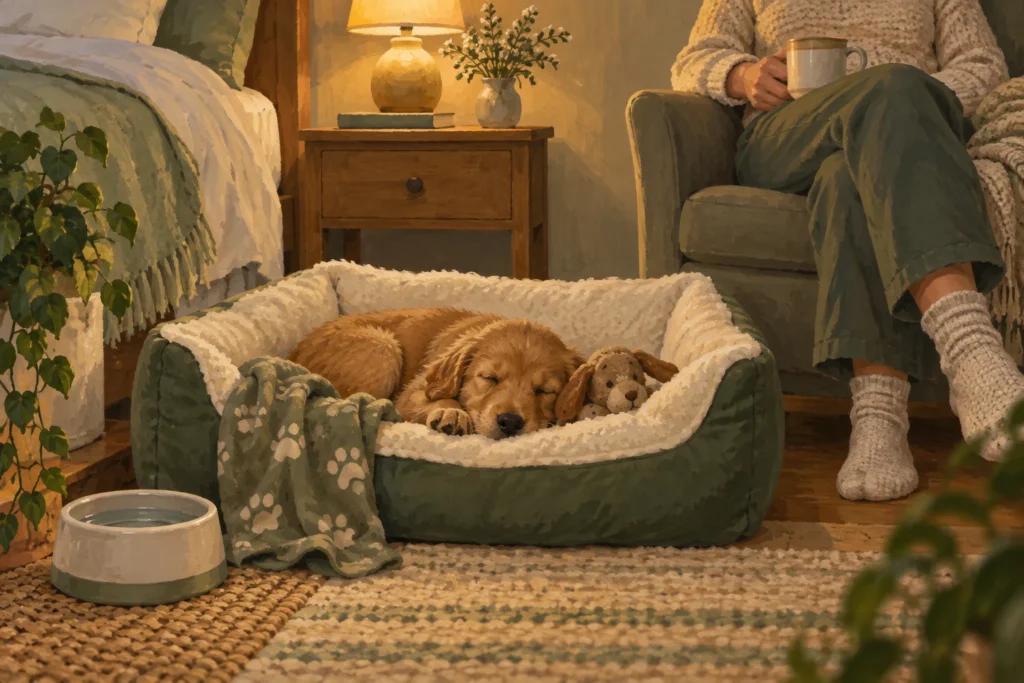
For your puppy’s first night at home, arrange a comfortable sleeping space close enough for you to respond, expect toilet trips and keep the evening quiet. Your puppy is adjusting to unfamiliar people, smells and sounds, often after leaving their mother and littermates. Feeling secure comes before sleeping independently.
You do not need an elaborate bedtime gadget. The most useful preparation is agreeing who is on night duty, clearing a safe route to the toilet area and making sure you can respond without searching for shoes in the dark.
Table of Contents
Choose a sleeping arrangement you can support
Dogs Trust suggests either starting the puppy’s bed near you or sleeping temporarily near their intended sleeping place, then increasing distance gradually as they become comfortable. Choose the option that works in your home and is safe for the puppy. There is no need to reach the final arrangement on night one.
A crate is optional and should already be a comfortable, positively introduced space before you expect the puppy to settle behind a closed door. A safe pen or puppy-proofed area may suit better. Do not assume that being collected with a crate means the puppy has learned to relax in yours.
Check for reachable cables, small objects and anything that can catch on the enclosure. Provide suitable bedding and water. Keep the space comfortable and ventilated, with no direct heat source or loose cover the puppy can drag inside.
Pack a small night-duty kit
| Have ready | Why it helps |
|---|---|
| Easy-to-put-on shoes and a torch | You can escort the puppy promptly |
| Lead and appropriate walking equipment | Useful where the toilet area needs controlled access |
| Spare washable bedding | A quick change after an accident |
| Suitable cleaning supplies | Clean quietly without improvising at 3am |
| A simple note on your phone | Track waking and toilet times without guessing next morning |
This article contains Amazon affiliate links. As an Amazon Associate, we earn from qualifying purchases.
Find washable puppy fleece blanket on Amazon UK. Choose a manageable size and inspect for loose threads or parts the puppy chews. One spare that washes and dries easily is more useful than filling the sleeping area with several unfamiliar soft toys.
Keep the first evening manageable
Ask the breeder or rescue about the puppy’s existing food and meal routine. Keeping familiar food initially makes the change of home less complicated. Save visitors and ambitious training sessions for another day; a little exploration, gentle interaction and rest are enough to begin with.
Let the puppy nap. Trying to keep them awake all evening so they will “crash” later can make settling harder. As bedtime approaches, reduce exciting play and provide a final calm toilet opportunity in the safe area recommended for your puppy’s vaccination status.
Tell everyone the same plan. For example: one adult handles the first waking, the next adult takes over later, and neither starts a game during a toilet trip. Consistency is much easier when it means a few shared actions rather than a complicated timetable.
Respond to waking and crying
If your puppy wakes, check whether they need to toilet and whether they are comfortable. Escort them quietly, give them an opportunity and reward successful toileting once they finish. Return to the sleeping area with little fuss. The exact frequency of trips depends on the individual puppy; a promise of sleeping through at a particular age is not a useful target.
If they remain worried after their needs are met, offer calm company and make the setup easier. Do not punish crying or leave a frightened puppy to become increasingly distressed. Being nearby while they settle does not prevent gradual independence training later.
Keep observations factual: “woke, toileted, settled beside me” is more useful than deciding the puppy is being stubborn. If there is vomiting, diarrhoea, marked lethargy, apparent pain or another sign of illness, contact a vet promptly; not every unsettled night is a training issue.
Use the morning to adjust one thing
Take the puppy to toilet on waking, then follow their normal meal and rest routine. Review what happened with the other adults. Perhaps the toilet route was too slow, the room too busy or the bed too far away. Change the practical problem instead of buying a new device after one difficult night.
As your puppy becomes comfortable, practise very short periods of settling with a little more distance while you are awake and available. Progress at their pace. Our puppy class guide can help you find reward-based support for the weeks ahead. The first night’s job is simply a safe, responsive start.