
Last updated: 9 September 2026
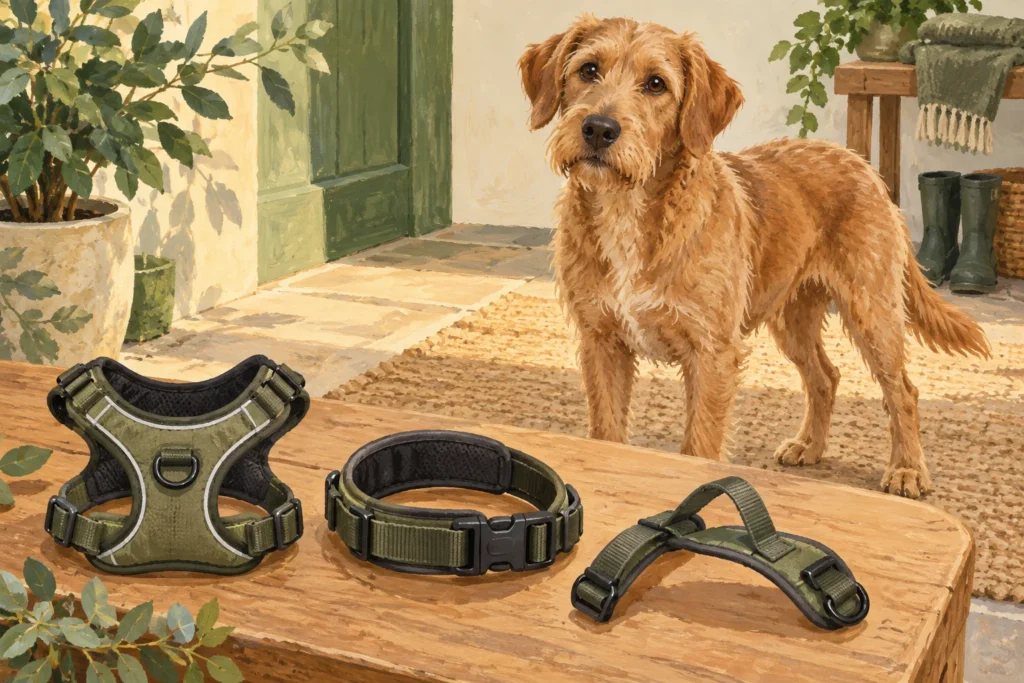
When buying the PerfectFit three-piece harness, choose a compatible top, front and girth combination for your dog’s measurements. Do not assume that three medium pieces are the right set, or that a listing for one piece is a complete harness. The point of the modular design is that different parts can accommodate different proportions.
This guide covers the signature three-piece system. PerfectFit also has other configurations, including two-piece options, so check the product family before following a sizing recommendation or ordering a replacement.
Table of Contents
What each piece does
| Piece | Where it sits | What to inspect when fitted |
|---|---|---|
| Top | Across the upper back and shoulders | Balanced position without the assembly pulling sideways |
| Front | Over the breastbone and down the chest | Clearance from the throat and comfortable movement |
| Girth | Around the ribcage | Secure adjustment without rubbing behind the front legs |
PerfectFit describes the three pieces as individually replaceable and adjustable. This can be useful for a growing dog or one whose chest proportions do not suit fixed-size harnesses. It does not mean a puppy can continue wearing an unsuitable combination indefinitely because some adjustment remains.
Use the maker’s sizing process first
Take the measurements requested by PerfectFit while your dog stands naturally. Use a flexible tape, follow the illustrated measurement position and avoid pulling it into the coat. Record the result rather than choosing a size from breed or weight alone.
Use the manufacturer’s harness calculator or fitting support to identify the relevant width range and component combination. The three-piece range includes different webbing widths; do not mix parts from unrelated ranges on the assumption that the clips will match. Ask for confirmation if buying a single replacement from a marketplace listing.
Keep a written record such as “range: as advised; top: X; front: Y; girth: Z”. That is much clearer than “medium PerfectFit” when ordering a spare. If a retailer recommends a combination, save the recommendation and check the returns terms before fitting the harness on an outdoor walk.
Compare the total price of a complete set
A low headline price may be for the top piece only. Read the contents line and add the cost of all required components before comparing with a one-piece harness. Check whether a bundle lets you select each component size independently or supplies one fixed combination.
This article contains Amazon affiliate links. As an Amazon Associate, we earn from qualifying purchases.
Find PerfectFit three piece dog harness top front girth set on Amazon UK. Confirm all three pieces, their sizes and their width range in the listing. Search results may include individual replacement components, so the photograph of a complete harness should not be your only check.
Replacement flexibility is most valuable when the parts remain identifiable. Keep the packaging or a note of product codes, especially if the harness is shared between family members who may later order the replacement.
Fit the assembled harness indoors
Clip the harness around your dog according to the instructions, keeping hair clear of fastenings. Adjust gradually and check both sides. A loose girth should not be compensated for by overtightening the front, and a tilted top piece may signal an unsuitable combination rather than a minor cosmetic issue.
Let your dog walk in a straight line, turn both ways and sit. Check whether straps migrate into the armpits or the front rides towards the throat. Look again after a few minutes of movement. A harness can look balanced on a standing dog and shift once the lead is attached.
Follow the maker’s fit guidance rather than treating a generic finger rule as a complete test. Coat thickness, body shape and strap position all matter. If you are unsure, send the manufacturer the views they request or arrange an in-person fitting.
Introduce wearing separately from lead training
Dogs Trust recommends a gradual, reward-based harness introduction. Practise handling and fastening while your dog is comfortable, then build towards short periods of wearing it. Being able to clip around the neck may help a dog who dislikes equipment passed over the head, but it does not remove the need to introduce the sound and feel of the clips.
A correctly fitted harness is still not an escape guarantee or an automatic cure for pulling. Avoid situations where a frightened dog can reverse against a tight lead, and seek suitable training support if this is a recurring risk. Our harness versus collar guide explains the different roles of walking equipment.
Recheck fit as your dog grows, changes weight or receives a different haircut. Inspect clips, stitching and adjustment points during cleaning. Replace the component that needs replacing only after confirming that the remaining combination still fits the dog you have today.