
Last updated: 9 September 2026
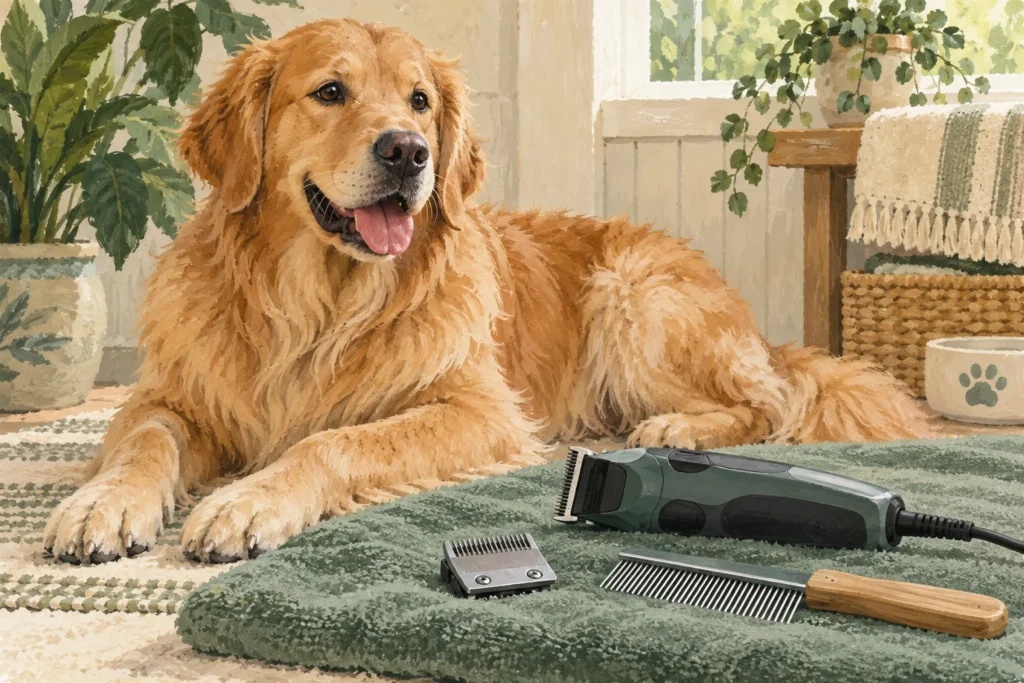
Dog clippers for thick coats need a suitable full-body motor, compatible blades and a coat that has been properly prepared. Buying the most powerful machine does not remove the need for grooming skill. If the coat is tightly matted, the skin is sore or your dog cannot tolerate handling, book a professional assessment before attempting a home clip.
“Thick” can describe a dense shedding undercoat, a long woolly coat or a coat packed with tangles. Those are different jobs. Start by asking a groomer what your dog’s coat needs and whether clipping is appropriate at all.
Table of Contents
Separate clippers from detail trimmers
A small quiet trimmer can look appealing for an anxious dog, but it may be intended for limited tidying rather than a whole dense coat. Check the manufacturer’s stated use. A full-body clipper generally has a different cutting system and duty requirement from a light finishing tool.
| Buying question | Why it matters |
|---|---|
| Is it intended for full-body clipping? | A detail trimmer may struggle with the planned workload |
| Which blade system does it use? | Replacement blades and combs must actually fit |
| Can the blade be removed for cleaning? | Hair and maintenance access affect daily usability |
| How heavy is it in your hand? | Control matters during a longer session |
| What servicing is available? | A blunt blade or worn component can make a good clipper perform badly |
One professional-style option to compare
The Wahl KM10 is a corded, two-speed clipper with a brushless motor, sold for full-body animal clipping. Wahl lists it with a detachable number 10 Competition Series blade. This gives a concrete reference point for comparing a substantial clipper with lighter home trimmers.
This article contains Amazon affiliate links. As an Amazon Associate, we earn from qualifying purchases.
Find Wahl KM10 two speed professional animal clipper on Amazon UK. Check the UK specification and included accessories. A supplied blade is not a recommendation to use that cutting length over your whole dog. Blade choice and technique should suit the coat, skin and intended groom.
Manufacturer language about tackling difficult coats describes the machine’s intended capability. It does not demonstrate that a beginner can safely remove close mats or that the blade will remain cool throughout use. We have not tested this clipper against other models.
Blade compatibility is more useful than a huge accessory count
Before ordering a comb set, confirm which blades it fits. Wahl identifies a detachable Competition Series system across several professional clippers, but that does not mean every Wahl attachment fits every Wahl machine. Similar-looking accessories can belong to different systems.
Ask a groomer to show you the combination appropriate for routine maintenance. A guide comb cannot safely push through tangled hair simply because it leaves a longer finish. Pulling harder or making repeated passes over a resistant area increases the chance of an uncomfortable result.
Price the complete setup: clipper, appropriate blade or comb, recommended oil, cleaning equipment and future sharpening or replacement. Buying several unused combs is less useful than buying one suitable combination and learning to use it well.
Prepare the coat and the dog
Check for tangles with a suitable comb, including the areas behind ears, under legs and where a harness rubs. Surface brushing can leave compacted hair underneath. Do not cut close mats out with scissors: skin can be drawn into a mat and be difficult to see.
Follow a groomer’s advice on washing, drying and preparation for your dog’s coat. Do not assume a wet coat is ready to clip because the top feels dry. The grooming kit guide helps identify supporting tools, but good preparation is a process rather than a collection of products.
Introduce the switched-off tool before the sound and vibration. Practise brief, rewarded handling at a comfortable working height and on a secure surface. Keep sessions short enough for your dog to remain relaxed. Avoid improvised restraints or leaving a dog unattended on a grooming table.
Heat, snagging and maintenance need attention
Follow the manual’s lubrication and cleaning instructions. Check blade temperature frequently during use and stop if it becomes uncomfortably warm; do not use a marketing claim about the motor as a substitute for checking the cutting surface. Keep oils and sprays away from eyes and prevent licking of residues.
If the clipper drags, stop and investigate coat preparation, blade cleanliness, correct assembly and blade condition. Repeatedly increasing pressure is not troubleshooting. Sensitive areas, skin folds and close work are sensible places to leave to a trained groomer, especially while learning.
A worthwhile purchase supports a realistic maintenance plan between professional appointments. If the main problem is recurring matting, spend first on a demonstration of brushing and combing your dog’s exact coat. That can change the clipping job more than another speed setting.