
Last updated: 9 September 2026
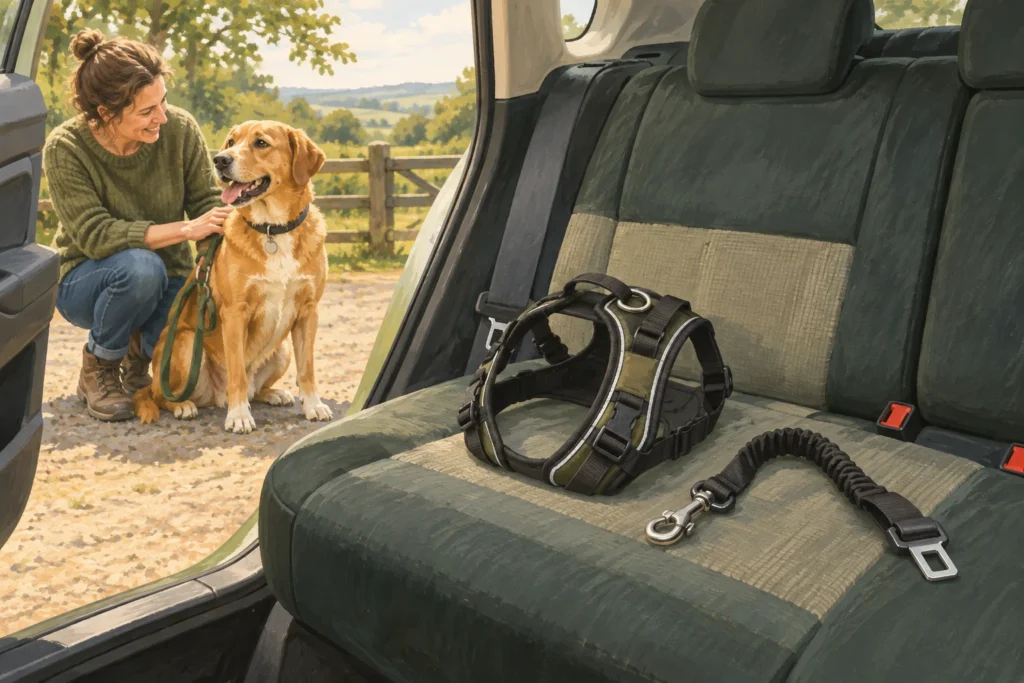
A dog seat-belt tether and a car harness are different components. The tether is a connecting strap or fitting; the harness is worn by the dog. A listing for a “dog seat belt” may include only the connector, so check the package before assuming you have bought a complete restraint system.
The important question is how the whole arrangement works in your vehicle. A strong-looking clip attached to an ordinary walking harness does not automatically reproduce the installation or performance of a tested car harness.
Table of Contents
Read the product description literally
| What is sold | What it normally provides | What you still need to establish |
|---|---|---|
| Buckle-in tether | A strap with a vehicle-style tongue and dog-equipment clip | Vehicle compatibility and permitted dog attachment |
| Seat-belt loop connector | A link using the vehicle’s existing belt | Correct routing, compatible harness and allowed length |
| Car harness | A body-worn restraint with specified connections | Fit, installation and exact-model test evidence |
| Harness-and-tether bundle | Several components packaged together | Whether that precise combination was intended and tested together |
Why “universal” needs checking
A buckle tongue that looks familiar may not be compatible with every vehicle belt socket. Read the explicit exclusions and permitted seating positions. Do not force a connector into a buckle or alter it to make it fit.
Also check what the clip is meant to attach to. For vehicle restraint, a neck collar is not an appropriate substitute for a suitable harness arrangement. The connection method should come from the equipment instructions, not the shortest route between two pieces of metal.
A tested harness can require a particular connection
Kurgo’s Enhanced Strength Tru-Fit instructions distinguish the attachment recommended for maximum crash protection from simply using the included longer tether. That illustrates why a bundle’s contents and its tested configuration are not necessarily the same thing.
Sleepypod Clickit Range likewise has a prescribed vehicle-belt setup and warns against using non-Sleepypod accessories with its car equipment. Adding a generic extension for extra freedom can change the arrangement the evidence refers to.
This article contains Amazon affiliate links. As an Amazon Associate, we earn from qualifying purchases.
Find Sleepypod Clickit Range dog car harness on Amazon UK if you are assessing a complete car-harness purchase. Read the exact manual before choosing additional straps. This search link does not establish the compatibility of any accessory shown alongside the harness.
More movement is not always an improvement
A longer tether may let the dog change position more freely, but it can also allow greater movement during a sudden stop. Do not choose length solely by how far the dog can reach. Use the manufacturer’s allowed setup and assess the dog’s comfort within it.
If the dog cannot settle comfortably in a correct installation, revisit fit, introduction and restraint type. The answer may be another suitable system rather than extending the existing one beyond its instructions.
What the Highway Code does and does not tell you
Great Britain’s Highway Code Rule 57 advises suitable restraint to prevent distraction and injury if you stop quickly. It gives examples of restraint types. It does not supply a product approval list or verify a seller’s crash-test badge.
Look for evidence identifying the exact product, size and connection method. A photograph of testing equipment, a high breaking-strength number or a claim about metal quality cannot by itself tell you how the complete system performed.
Check your setup while parked
- Identify every component by its exact name and version.
- Read the harness and connector instructions together.
- Confirm the permitted seat and vehicle-belt arrangement.
- Fit the dog and check fastening without improvising extra length.
- Keep buckles, webbing and separate luggage clear of interference.
- Practise short comfortable sessions before a long journey.
Our car seat cover guide covers upholstery protection, which is separate from restraint. A hammock-style cover should not be treated as a substitute for the complete system.
When to consider a different restraint type
If no suitable harness fits the dog or the intended seat, investigate a properly installed transport enclosure. Our travel crate size guide explains the space requirement; the crate also needs its own fixing and evidence checks.
Buy a connector only after you know the system it belongs to. A low-cost strap can be useful when it is the correct specified part, but the words “dog seat belt” alone do not tell you that the purchase is complete or suitable.