
Table of Contents
As an Amazon Associate, we earn from qualifying purchases. This means we may receive a small commission at no extra cost to you when you buy through links on this page.
Introduction: Why Puppy Training Pads are Essential
Bringing a new puppy into your home is an exciting time, but it also comes with the responsibility of house training. Puppy training pads are an invaluable tool in this process. They offer a designated, hygienic place for your puppy to relieve themselves, protecting your floors from accidents. They aren’t just about cleanliness; they simplify house training by establishing a clear ‘toilet’ area and offer convenience for busy owners, especially during those early, unpredictable months. Crucially, early and consistent training, aided by pads, contributes to a happy, well-adjusted dog and strengthens the bond between you and your furry friend.
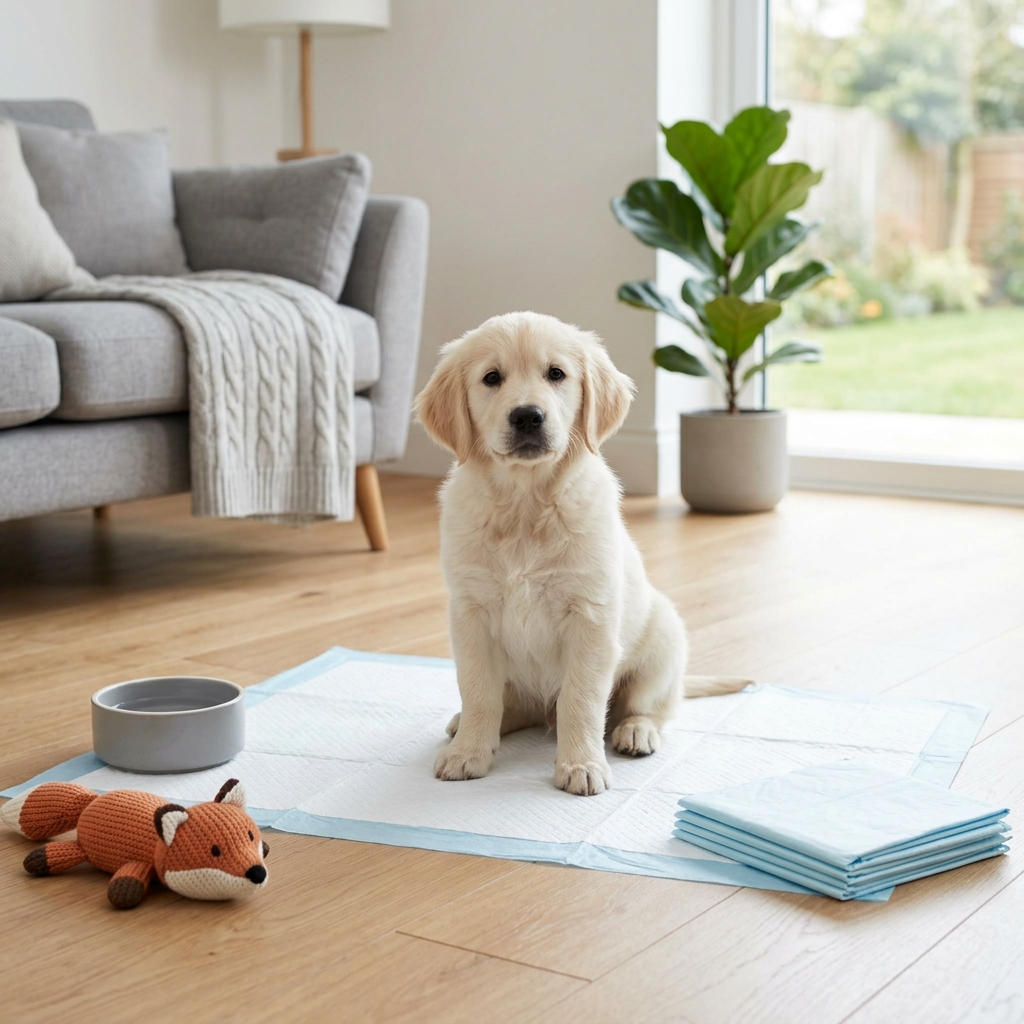
Understanding Puppy Bladder Habits
Puppies have tiny bladders and limited control, meaning frequent potty breaks are essential. Here’s a general guide:
- 8-12 Weeks: Every 2-3 hours, and immediately after waking up, playing, and eating.
- 3-6 Months: Every 3-4 hours. Bladder control is improving, but accidents still happen.
- 6+ Months: Every 4-6 hours, depending on breed and individual puppy.
Recognising the Signs: Look for circling, sniffing intensely at the floor, squatting, whining, or scratching at the door. Positive Reinforcement is Key: When your puppy uses the pad, offer enthusiastic praise, a small treat, or a favourite toy. This reinforces the desired behaviour.
Types of Puppy Training Pads: A Comprehensive Overview
The market offers a variety of puppy training pads, each with its own advantages and disadvantages.
- Disposable Pads: The most common type. Made from absorbent materials like paper and polymer. Convenient and hygienic but generate waste.
- Washable/Reusable Pads: Made from fabric, often with a waterproof backing. Eco-friendly and cost-effective in the long run, but require regular washing.
- Grass Pads (Real or Synthetic): Mimic the feel of real grass, encouraging puppies accustomed to outdoor toileting. Real grass requires replacement, while synthetic options are more durable.
- Scent-Attracting Pads: Contain pheromones or scents designed to attract puppies to use the pad. Can be helpful for puppies struggling with training.
Pros and Cons Comparison
| Type of Pad | Pros | Cons |
|---|---|---|
| Disposable Pads | Convenient, hygienic, readily available, relatively inexpensive initially. | Generate waste, can be costly long-term, some may leak. |
| Washable/Reusable Pads | Eco-friendly, cost-effective long-term, durable. | Require regular washing, may not absorb as much as disposable pads, higher initial cost. |
| Grass Pads | Encourages natural toileting behaviour, appealing to some puppies. | Real grass needs replacing, synthetic can be expensive, may require more cleaning. |
| Scent-Attracting Pads | Can aid training for reluctant puppies, attracts them to the pad. | Scent may fade over time, effectiveness varies between puppies. |
Key Features to Consider When Buying Puppy Training Pads
- Absorbency: Look for pads with a high capacity and leakproof design. Multi-layered pads are generally more absorbent.
- Size: Choose a size appropriate for your puppy’s breed. Small breeds need smaller pads, while larger breeds require larger ones. Consider growth!
- Material: Paper-based pads are common, but polymer-filled pads offer better absorbency. Fabric pads are used for reusable options.
- Odour Control: Pads with carbon technology or scent masking are effective at neutralising odours.
- Grip: A non-slip backing is crucial to prevent the pad from sliding around, especially on hard floors.
Top 5 Puppy Training Pads Available in the UK (2026)
1. Amazon Basics Pet Training and Puppy Pads (100 count)
Price: £18.99
Specifications: 60cm x 90cm, Quick Dry, Leakproof Design.
Pros: Excellent value for money, good absorbency, readily available.
Cons: Can be slightly thin, some users report minor leaks with larger breeds.
User Feedback: “Great for everyday use, especially for smaller puppies. Good value for the price.”
2. Pee Pads by Pawsitive Vibes (50 count)
Price: £15.49
Specifications: 60cm x 60cm, Super Absorbent Core, Odour Control.
Pros: Good odour control, absorbent core.
Cons: Smaller size might not be suitable for larger breeds, packaging can be flimsy.
User Feedback: “Really helped with initial training, kept the house smelling fresh.”
3. Washable Puppy Pads by Pet Parents (3 pack)
Price: £35.99
Specifications: 60cm x 60cm, Four-Layer Protection, Machine Washable.
Pros: Eco-friendly, cost-effective long-term, durable, highly absorbent.
Cons: Requires regular washing, can take time to dry.
User Feedback: “Much better than disposable pads, saves money and is better for the environment.”
4. Teepee Bed with Puppy Pads (Bed & 10 pads included)
Price: £49.99
Specifications: Includes a cosy teepee bed and 10 disposable pads. 60cm x 60cm pads.
Pros: Offers a comfortable and secure space for the puppy, integrated pad system.
Cons: Initial cost is higher, requires purchasing replacement pads.
User Feedback: “My puppy loves her little teepee and uses the pads consistently.”
5. Nature’s Miracle Advanced Stain & Odour Remover (500ml)
Price: £12.79
Specifications: 500ml spray bottle. Enzyme-based formula.
Pros: Excellent for cleaning up accidents outside the pad, eliminates odours effectively, safe for pets and surfaces.
Cons: Not a training pad itself, but an essential companion product.
User Feedback: “A must-have for puppy owners! Gets rid of everything.”
Washable vs. Disposable Puppy Pads: Which is Right for You?
| Feature | Washable Pads | Disposable Pads |
|---|---|---|
| Initial Cost | Higher (£30 – £50 for a 3-pack) | Lower (£15 – £25 for a 50-100 pack) |
| Long-Term Cost | Lower (due to reusability) | Higher (requires frequent repurchase) |
| Environmental Impact | Lower (reduces landfill waste) | Higher (contributes to landfill waste) |
| Convenience | Lower (requires washing) | Higher (simply dispose of used pad) |
| Cleaning | Requires regular machine washing | No washing required |
Placement and Usage: Maximising Training Pad Effectiveness
Strategic Placement: Place the pad near the door your puppy uses to go outside, or in a designated quiet corner.
Introducing the Pad: Lead your puppy to the pad frequently, especially after waking up, eating, and playing.
Rewarding Success: When your puppy uses the pad, immediately offer praise and a treat.
Gradual Movement: Once your puppy consistently uses the pad, gradually move it closer to the door, encouraging outdoor elimination.
Troubleshooting Common Training Pad Issues
Puppy Refusing to Use the Pad: Try a different type of pad (scent-attracting, grass pad). Ensure the pad is in a quiet, accessible location.
Shredding the Pad: Redirect the puppy’s attention to a chew toy. Use a more durable pad.
Accidentally Stepping in It: Ensure the pad is stable and doesn’t slide around. Provide a clear path to the pad.
Cleaning Up Accidents: Best Practices & Products
Accidents happen! Immediate Action: Clean up accidents immediately to prevent re-marking.
Enzyme Cleaners: Use an enzyme cleaner like Nature’s Miracle to break down the odour completely. Avoid ammonia-based cleaners, as they can attract your puppy back to the spot.
Thorough Cleaning: Blot up as much liquid as possible, then saturate the area with the cleaner, following the product instructions.
Conclusion: Choosing the Right Pads for a Successful Potty Training Journey
Selecting the right puppy training pads is a crucial step towards a stress-free potty training experience. Consider your puppy’s age, breed size, and individual needs, as well as your lifestyle and environmental concerns. Whether you opt for the convenience of disposable pads, the eco-friendliness of washable pads, or the natural appeal of grass pads, remember that consistency, positive reinforcement, and patience are key to success. With the right tools and approach, you’ll be well on your way to a happy, house-trained pup!