
Last updated: 9 September 2026
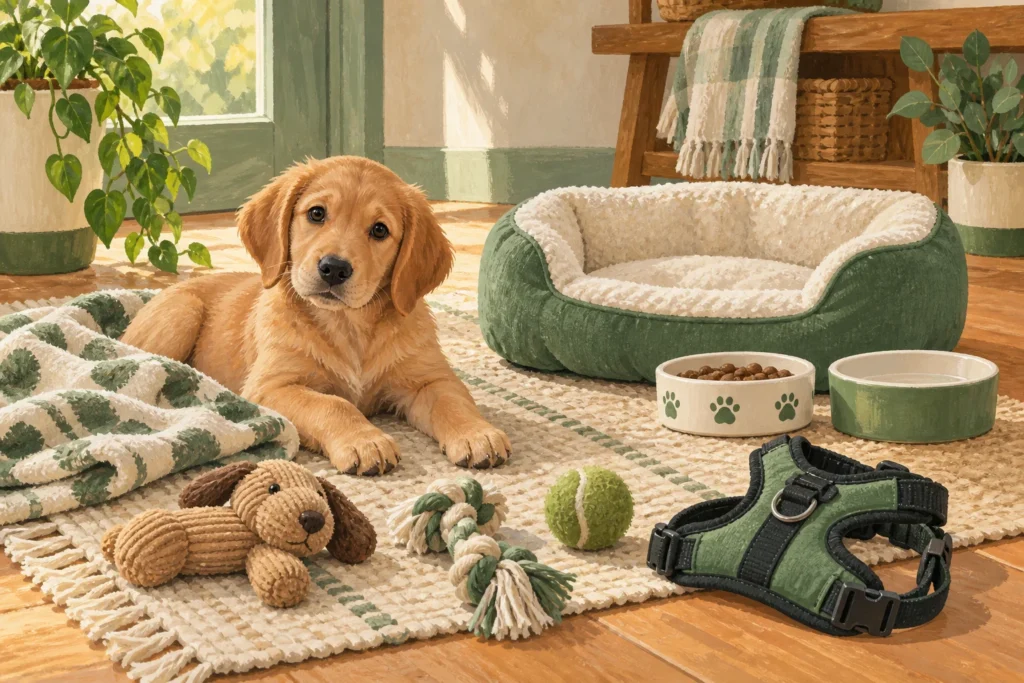
A useful new puppy checklist in the UK starts with the first 48 hours: a safe journey home, familiar food, drinking water, a comfortable sleeping area, toilet arrangements and veterinary contact details. You can build the rest of the equipment gradually. Buying every gadget before the puppy arrives makes it harder to see which items are actually useful.
Ask the breeder or rescue for the current food, routine, health records and familiar comfort items. That information can prevent more disruption than an elaborate starter bundle.
Table of Contents
Arrange these before collection day
| Need | Prepare now | Can usually wait |
|---|---|---|
| Food and water | Current food, simple bowls and a measuring method | Large stock of a different food or several feeding gadgets |
| Rest | Quiet sleeping space and washable bedding | An expensive final-size bed before preferences are clear |
| Travel | A suitable restraint or carrier for the journey | Specialist holiday equipment |
| Toilet routine | Access plan, cleaning supplies and poo bags | Multiple competing toilet systems |
| Handling and play | A few suitable toys and correctly fitted basic equipment | A large toy collection and adult-size accessories |
| Health support | Vet registration and records to discuss | Unprescribed supplements and treatment products |
Keep the first food familiar
Get the exact recipe name and an adequate supply from the breeder or rescue where possible. Record the current feeding times and amounts, then discuss suitability and the ongoing plan with your vet. A puppy’s move is already a major change; there is rarely a practical benefit in changing everything at once without a reason.
Choose bowls the puppy can use comfortably and clean them routinely. A simple scale can help follow gram-based portions. Do not buy a huge bag until you know the correct recipe and likely use rate.
Set up a quiet resting area
Pick a place where the puppy can rest undisturbed while you remain able to notice when help or a toilet trip is needed. Keep bedding washable and inspect it for loose material the puppy might chew. Introduce any crate or pen positively; owning one does not mean the puppy is ready to be shut inside for long periods.
Plan barriers and cable management before arrival. Remove accessible medicines, cleaners, small objects and foods the puppy should not reach. Walk through the room at floor level to notice hazards a standing adult can miss.
This article contains Amazon affiliate links. As an Amazon Associate, we earn from qualifying purchases.
Find washable puppy fleece bedding on Amazon UK if you need a simple washable resting layer. Choose dimensions and construction for the puppy’s current setup, and remove bedding that is being torn or swallowed.
Plan the journey, not just the destination
Arrange appropriate vehicle restraint in advance and check how the puppy will enter and leave the car. Bring a towel, spare bedding and cleanup supplies. Do not leave the person driving to manage an unrestrained puppy on a lap.
Check the fit of a collar or harness rather than buying by breed alone. Puppies change quickly, so plan frequent fit reviews. Identification and microchip details also need to be correct; ask the breeder, rescue and vet what paperwork and updates are required.
Make toilet trips easy to repeat
Decide who will take the puppy out, how to reach the chosen area and what happens overnight. Have shoes, a lead if needed and cleaning materials ready. Calm repetition is easier when the equipment is in one place.
If indoor pads are part of your specific setup, our puppy pad guide explains the buying options. Pads are a tool for some circumstances, not a replacement for deciding where you want the puppy to learn to toilet.
Buy a few suitable toys, then observe
Choose different simple activities rather than many similar toys: one appropriate chew, something for gentle interactive play and an easy food activity if suitable. Check the maker’s age and size guidance, supervise use and remove damaged items.
Find KONG Puppy (medium example) on Amazon UK for a puppy-specific food-stuffing toy to assess. Confirm the size and suitability; the puppy version is not appropriate indefinitely simply because it was the first toy purchased.
Spend on the care plan as well as the kit
PDSA’s ownership-cost guidance makes clear that initial equipment is only part of the budget. Plan for food, veterinary care, preventive advice, training, grooming and unexpected costs. Discuss insurance or another realistic financial plan before relying on it.
Ask about a suitable reward-based puppy class and how to introduce experiences safely alongside the vaccination plan. Our puppy class guide can help you assess providers.
The best-prepared home has a clear routine and a few dependable essentials. Keep a running list during the first week and buy additional items when a specific need appears, rather than letting a starter bundle decide how you care for the puppy.