
Bringing a new puppy into a home with cats can be a wonderfully rewarding experience, but it requires careful planning and a slow, patient approach. A rushed introduction can lead to stress, fear, and even aggression in both animals. This guide, updated for 2026, will walk you through each step of the process, ensuring a harmonious multi-pet household.
As an Amazon Associate, we earn from qualifying purchases. This means we may receive a small commission at no extra cost to you when you buy through links on this page.
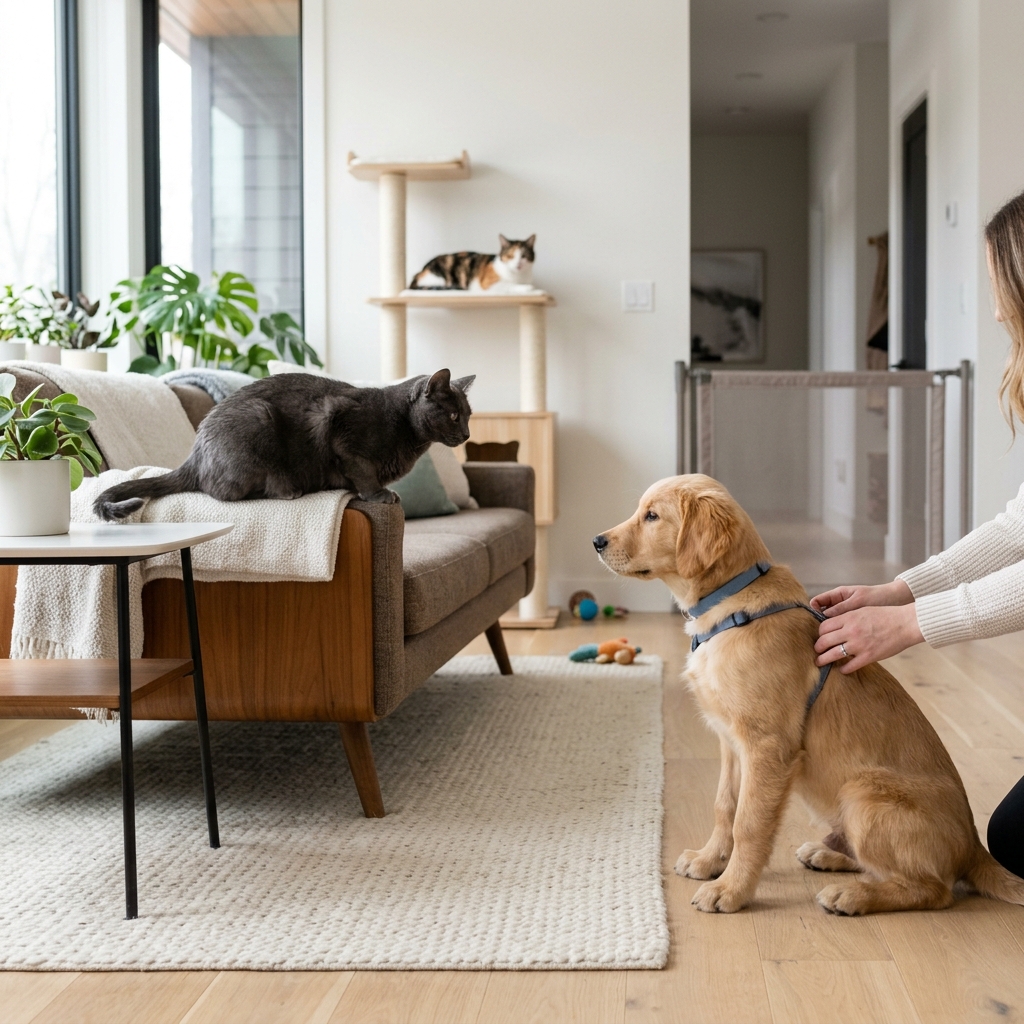
Table of Contents
Preparation is Key: Before Your Puppy Arrives
The groundwork for a successful introduction starts *before* your puppy even sets paw in the house. This is about preparing both your cat(s) and your home for the new arrival. Cats are creatures of habit and territorial, so minimising disruption is crucial.
Creating Safe Spaces
Your cat needs a safe haven – a place where the puppy absolutely cannot reach them. This could be a spare room, a high cat tree like the Trixie Baza Cat Tree (£79.99), or simply a room with plenty of high shelves and furniture where the cat can easily escape. Ensure this space contains everything your cat needs: food, water, litter box, scratching post, and comfortable bedding.
Scent Swapping
Begin scent swapping several days before the puppy arrives. This allows your cat to become accustomed to the puppy’s smell without the added stress of a physical encounter. Take a blanket or toy the puppy has used and place it in your cat’s safe space. Do the same with a blanket or toy from your cat, placing it in the area where the puppy will be spending time. Repeat this daily.
Cat-Only Zones
Designate areas that are exclusively for your cat. This reinforces their sense of security and control. This could be a specific room, high surfaces, or even just a particular corner. The puppy should be actively prevented from entering these zones.
The Initial Scent Introduction (Days 1-3)
Once the puppy arrives, continue the scent swapping process. Focus on gradual familiarisation. Avoid forcing any interaction at this stage. The goal is for both animals to acknowledge each other’s presence through scent alone.
Bedding and Toy Exchange
Continue exchanging bedding and toys daily. Rubbing a cloth on the puppy and then on the cat (and vice versa) can also help transfer scents. Pay close attention to your cat’s behaviour. Signs of stress include flattened ears, dilated pupils, hissing, swatting, or hiding. If you observe these, slow down the process and provide more reassurance to your cat.
Monitoring Cat Behaviour
Carefully monitor your cat’s reaction to the puppy’s scent. A relaxed cat may simply sniff the item and ignore it. An anxious cat might avoid the scented object or show mild signs of stress. If the cat is severely distressed, increase the distance between the puppy and the cat’s safe space.
Controlled Visual Introductions (Days 4-7)
The next stage involves allowing limited visual access, but still preventing direct contact. This helps both animals get used to each other’s appearance.
Baby Gates or Cracked Doors
Use a baby gate or keep a door slightly ajar (just enough for them to see each other, but not pass through) for short, supervised periods. Start with just a few minutes at a time. The PetSafe Come With Me Feeder (£39.99) can be useful to distract the puppy during these initial sights.
Positive Reinforcement
During these visual introductions, reward both the puppy and the cat for calm behaviour. Give the puppy treats and praise when they remain quiet and relaxed. Similarly, offer your cat their favourite treats or gentle petting when they remain calm and don’t show signs of stress. This associates the presence of the other animal with positive experiences.
Keeping the Puppy Calm
A calm puppy is a much less intimidating presence for a cat. Use a harness like the Ancol Reflective Puppy Harness (£19.99) to provide gentle control and prevent the puppy from lunging or chasing. Practice basic obedience commands, such as “sit” and “stay”, to help manage the puppy’s excitement.
Supervised Interactions: Short & Sweet (Week 2)
If the visual introductions have gone well, you can begin to allow brief, supervised interactions in a larger space. This is a critical stage and requires constant vigilance.
Brief, Supervised Sessions
Allow the puppy and cat to be in the same room together for very short periods (a few minutes at a time), under your direct supervision. Keep the puppy on a leash initially. Observe their body language closely.
Intervention and Positive Reinforcement
Intervene immediately if either pet shows signs of stress or aggression. Separate them calmly and redirect their attention. Continue to reward calm behaviour with treats and praise. Remember, the goal is to create positive associations.
Gradually Increasing Interaction Time (Week 3 onwards)
Over the following weeks, slowly increase the duration of supervised interactions. Continue to monitor their behaviour and adjust the pace accordingly.
Play vs. Chasing
Distinguish between playful interaction and chasing. Playful behaviour involves reciprocal actions, such as batting at the same toy or taking turns chasing. Chasing, on the other hand, is one-sided and can be very stressful for the cat. If the puppy starts to chase the cat, immediately redirect their attention to a toy or command them to “sit” or “stay”.
Continued Reinforcement
Don’t stop the positive reinforcement! Continue to reward both animals for calm and friendly interactions. This will help solidify their bond and prevent future conflicts.
Troubleshooting Common Problems
Even with the best planning, you may encounter challenges. Here are some common issues and how to address them:
- Puppy Chasing Cat: Redirect the puppy’s attention immediately. Use a firm “no” and offer a substitute activity.
- Cat Hissing/Swatting: Respect the cat’s boundaries. Separate the animals and give the cat space. Consider using a pheromone diffuser like Feliway Classic Diffuser (£22.99) to help reduce anxiety.
- Withdrawal: If either pet becomes withdrawn, provide them with extra attention and reassurance. Ensure they have a safe space where they can retreat.
If problems persist, don’t hesitate to consult a qualified animal behaviourist. They can provide tailored advice and guidance.
Maintaining a Peaceful Multi-Pet Household
Once the initial introduction phase is complete, ongoing management is essential to maintain a harmonious relationship.
Separate Feeding Areas
Feed your cat and puppy in separate areas to prevent food guarding or competition. The Catit Sentry Food Bowl (£14.99) can slow down feeding and reduce stress.
Litter Box Placement
Ensure the litter box is in a quiet, accessible location where the puppy cannot disturb the cat. Consider a covered litter box for added privacy.
Continued Enrichment
Provide both the puppy and the cat with plenty of enrichment activities, such as toys, scratching posts, and puzzle feeders. This helps prevent boredom and reduces the likelihood of behavioural problems.
Individual Attention
Don’t forget to give each pet individual attention. Spend quality time playing with, grooming, and cuddling both your cat and your puppy.
Comparison of Pheromone Diffusers
| Product | Price (GBP) | Coverage Area | Suitable For |
|---|---|---|---|
| Feliway Classic Diffuser (30 days) | £22.99 | 750 sq ft | Cats |
| Adaptil Diffuser (30 days) | £26.99 | 750 sq ft | Dogs/Puppies |
FAQ
Q: How long does the introduction process usually take?
There’s no set timeline. It can take anywhere from a few days to several weeks, depending on the personalities of the animals involved. Patience is key.
Q: What if my cat completely ignores the puppy?
That’s not necessarily a bad thing! Some cats are more reserved. Continue with scent swapping and gradual visual introductions. Don’t force interaction.
Q: Is it okay to let the puppy and cat play together unsupervised?
Not until you are absolutely confident that they are comfortable and safe together. Even then, it’s best to supervise their interactions for a long time to prevent any incidents.
Q: My puppy is very energetic. How can I manage that during introductions?
Ensure the puppy gets plenty of exercise before each interaction session. Mental stimulation, like puzzle toys, can also help tire them out. Use a harness and leash to maintain control.
Q: When should I seek professional help?
If you’re experiencing significant problems, such as aggression or prolonged stress in either animal, it’s best to consult a qualified animal behaviourist. They can assess the situation and provide tailored guidance.