
Last updated: 9 September 2026
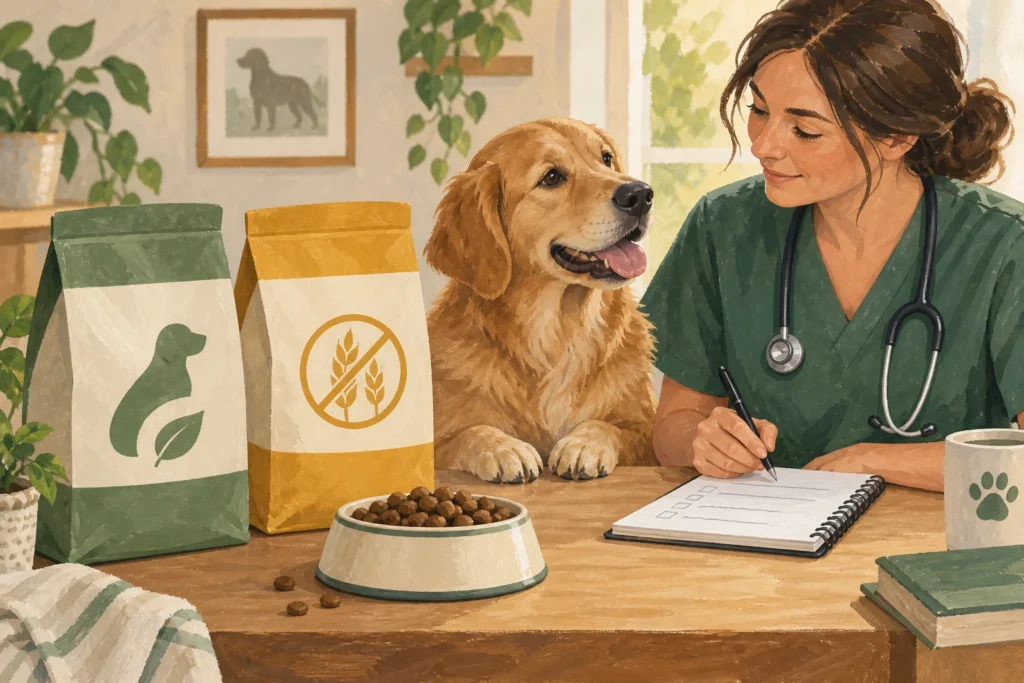
Hypoallergenic and grain-free dog food are not interchangeable. Grain-free describes the exclusion of grains from a recipe. A hypoallergenic claim concerns the likelihood of an adverse reaction, but the word alone does not tell you whether the food is appropriate for your dog or suitable for a veterinary food trial.
If your dog is itchy, has recurring ear problems or digestive upset, ask your vet about the cause before buying a series of different foods. Similar signs can have several explanations, and repeatedly changing bags makes it harder to establish what helped.
Table of Contents
What each label can and cannot tell you
| Term | Useful question | Do not assume |
|---|---|---|
| Grain-free | Which ingredients replace the grains? | It is carbohydrate-free or avoids every possible allergen |
| Hypoallergenic | What formulation or exclusions support the claim? | Every dog will tolerate it |
| Hydrolysed diet | Has your vet selected this exact diet? | Any “sensitive” food is equivalent |
| Novel protein | Is this protein new to this individual dog? | An unusual-sounding meat is always novel |
| Complete food | Is it intended for the right life stage? | Every product from that brand is a complete main diet |
The table is a reading aid. It cannot identify an allergy or choose a clinical diet. Keep the entire label available rather than relying on the front-of-pack wording.
Why removing grain may miss the relevant ingredient
UK Pet Food explains that grain-free recipes can still contain carbohydrates from ingredients such as potato. Its guidance also emphasises the overall nutrient balance and appropriate complete-food status rather than treating one ingredient group as the measure of quality.
A hypothetical chicken-and-rice recipe and a chicken-and-potato recipe both contain chicken. If a veterinarian has established that chicken is unsuitable for a particular dog, changing between those two recipes would not remove it. This example illustrates ingredient matching; it does not suggest that chicken is a problem for dogs generally.
Conversely, the presence of rice does not by itself tell you whether a carefully selected diet will suit a dog. Start with the ingredient or formulation your vet wants you to use or avoid, then inspect the exact recipe.
Hydrolysed and novel-protein diets use different approaches
UK Pet Food describes hydrolysed diets as using proteins broken into small components to reduce immune recognition. Novel-protein diets use a protein the individual animal has not eaten before. Your dog’s previous meals, treats and chews therefore matter when assessing what is actually new.
Bring a food history to the consultation. Include recipes rather than just brand names: “Brand X adult food” is less informative than the exact chicken variety, plus a fish chew and a cheese training treat. Photos of packaging can help when ingredient names are difficult to remember.
Do not turn this distinction into a homemade elimination menu. Nutritional suitability and the design of the trial need professional attention, especially for a growing puppy or a dog with another health condition.
A food trial is a controlled process
PDSA says a vet may recommend a specific diet for a food trial, commonly lasting 6–12 weeks according to the individual plan. Other foods, treats and dental sticks can interfere with interpreting the result. Ask the veterinary team exactly what is allowed, including anything normally used to give medication; do not stop prescribed medication yourself.
Agree how to record changes and when to report back. UK Pet Food describes reintroducing an ingredient under veterinary direction as part of confirming the cause. Improvement alone is a reason to discuss the next step, not to start independent challenges with foods that may provoke symptoms.
Give everyone who feeds the dog the same written instructions. A calendar note for the dog walker and a labelled daily food container may solve a practical problem more effectively than another premium bag.
Compare costs after the suitable choices are clear
Once your vet has identified acceptable products, compare the exact recipe, pack size, feeding allowance and reliable supply. Calculate daily cost using the recommended grams, not just price per kilogram. A larger bag is worthwhile only if it will be used within its storage guidance.
Ask before substituting an apparently similar product if the recommended one is unavailable. Keep the bag and batch details in case you need to ask the manufacturer about a formulation change. No food-shopping link belongs in the middle of deciding whether a dog needs a clinical assessment.
Our grain-free food guide covers that recipe category, while the general food guide considers everyday choices. Neither replaces the exact diet and follow-up plan for a suspected food allergy.