
Table of Contents
As an Amazon Associate, we earn from qualifying purchases. This means we may receive a small commission at no extra cost to you when you buy through links on this page.
Introduction: The Importance of Leash Training
Leash training is arguably one of the most important things you can do for your dog. It’s not just about making walks more pleasant – though that’s a huge benefit! – it’s about your dog’s safety, wellbeing, and your ability to enjoy quality time together. A well-trained dog on a leash is less likely to bolt into traffic, get into trouble with other animals, or become overwhelmed in busy environments. For you, a relaxed walk means a less stressful experience and a stronger bond with your furry friend. Common issues like pulling, lunging, and reactivity can make walks a chore, but with consistent, positive training, these can be overcome. This guide will provide a step-by-step approach to achieving a peaceful and enjoyable walking experience for both of you.
Understanding Your Dog’s Walking Style
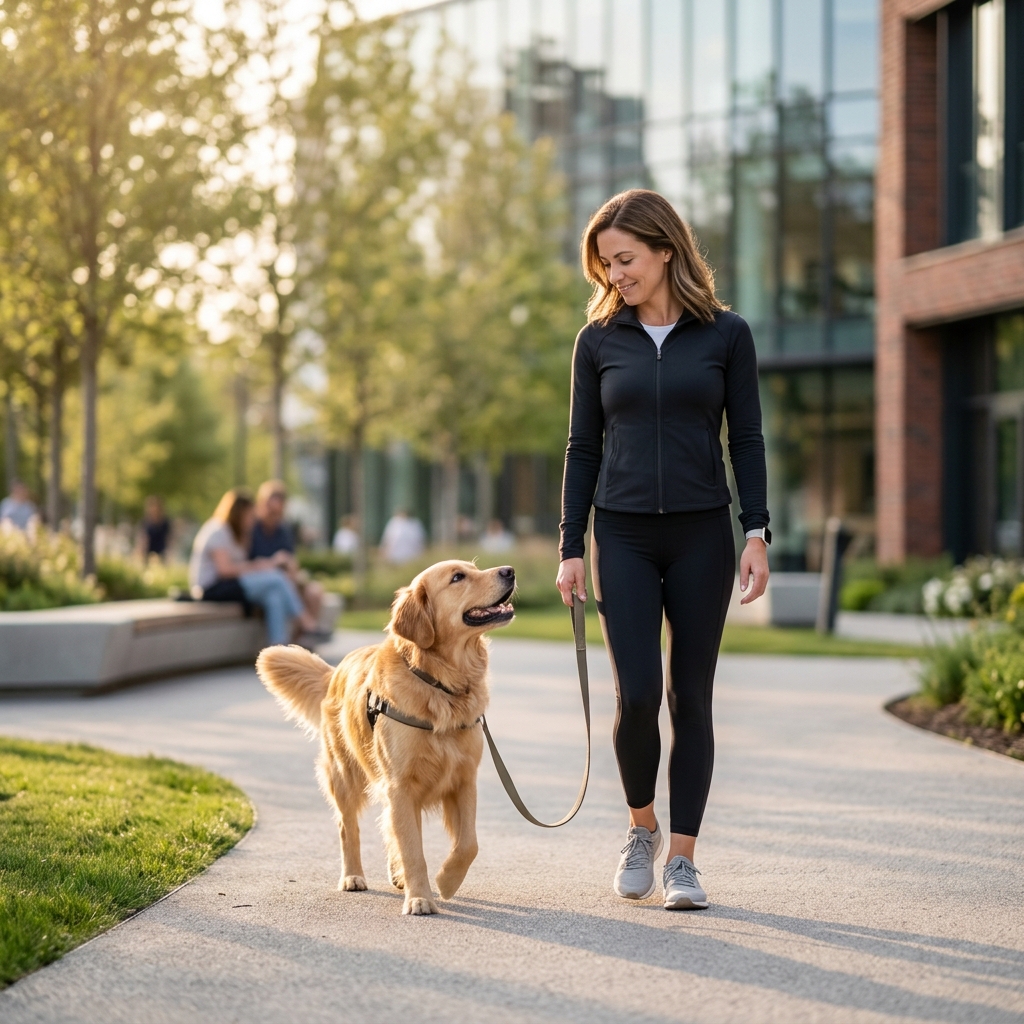
Every dog is an individual, and their personality will heavily influence their approach to walks. Energetic breeds like Border Collies, Labradors, and Huskies are naturally driven to explore and often pull on the leash, fueled by an abundance of energy. More laid-back breeds, such as Greyhounds or Basset Hounds, may be less inclined to pull but still need guidance and motivation. Understanding what *motivates* your dog during a walk is key. For many, it’s the sheer joy of sniffing – a dog’s nose is their primary way of experiencing the world. Others are motivated by exploring new environments and socialising with other dogs or people. Tailoring your training to accommodate these natural instincts will lead to better results.
Essential Equipment for Successful Dog Walking (2026)
The right equipment can make a significant difference in your training success. Here’s a breakdown of popular options available in the UK as of 2026:
Collars, Harnesses & Leashes: A Comparison
| Equipment Type | Pros | Cons | Approximate Price (GBP) | Recommended Product |
|---|---|---|---|---|
| Flat Collar | Simple, lightweight, good for ID tags. | Can put pressure on the trachea if a dog pulls. | £8.99 – £20.00 | Ancol Reflective Dog Collar – £8.99 |
| Harness (Front-Clip) | Distributes pressure across the chest, reducing strain on the neck. Helps discourage pulling. | May require a good fit to prevent chafing. | £30.00 – £60.00 | Ruffwear Front Range Harness – £55.99 |
| Harness (Back-Clip) | Comfortable for many dogs, good for dogs with neck sensitivities. | Doesn’t offer as much control for pulling. | £25.00 – £45.00 | PetSafe Easy Walk Harness – £39.99 |
| Head Halter/Gentle Leader | Provides maximum control over the head, discouraging pulling and improving steering. | Requires careful introduction and positive reinforcement to avoid discomfort. | £30.00 – £50.00 | Gentle Leader Head Collar – £32.50 |
| Fixed Leash | Simple, durable, provides good control. | Can be less convenient for varying distances. | £10.00 – £25.00 | Kong Classic Leash – £14.99 |
| Retractable Leash | Allows for variable leash length, giving the dog more freedom. | Can encourage pulling and doesn’t provide consistent communication. Not ideal for training. | £25.00 – £40.00 | Flexi New Classic Retractable Leash – £29.99 |
Recommendation: For most training scenarios, a front-clip harness paired with a fixed leash is an excellent starting point. The harness distributes pressure safely, and the fixed leash offers clear communication.
Phase 1: Indoor Leash Introduction
Before venturing outdoors, get your dog comfortable with the equipment indoors. Start by simply letting your dog wear the collar or harness for short periods, gradually increasing the duration. Associate the experience with positive reinforcement – offer Lily’s Kitchen Training Treats (£6.00) and plenty of praise. Next, attach the leash and let your dog drag it around the house under supervision. Don’t pull on the leash at this stage; just allow them to get used to the feeling of having it attached. Reward calm behaviour with treats and praise. The goal is for your dog to associate the leash with positive experiences.
Phase 2: The ‘Loose-Leash’ Concept
The core principle of loose-leash walking is rewarding your dog for walking with a slack leash. Start in a quiet indoor space. Hold the leash loosely, allowing it to form a ‘J’ shape. Whenever your dog walks with a slack leash, mark the behaviour with a verbal cue like “Yes!” and immediately reward them with a treat. Introduce ‘check-ins’ – periodically turn towards your dog and say their name. When they look at you, reward them with a treat and praise. This encourages them to pay attention to you on the walk.
Phase 3: First Steps Outdoors – Low Distraction Environments
Transition to outdoor training in a quiet area like your garden or an empty park. Be prepared for a burst of excitement! Initially, keep the sessions short and focus on reinforcing the loose-leash walking principles established indoors. If your dog starts to pull, stop walking immediately. Wait for them to return to a slack leash before continuing. Reward frequently for good behaviour. Avoid overwhelming your dog with too much freedom too soon.
Phase 4: Dealing with Distractions – Increasing Difficulty
As your dog progresses, gradually introduce distractions. Start with low-level distractions, such as people walking by at a distance. If your dog focuses on the distraction, say “Look at me” and reward them when they make eye contact. You can also use a treat to redirect their attention. Impulse control exercises, such as asking your dog to ‘wait’ before crossing the road or entering a doorway, can also be helpful. Remember to increase the difficulty of distractions gradually.
Addressing Common Leash Walking Problems
- Pulling: As mentioned, stop walking whenever your dog pulls. Change direction frequently to keep them guessing.
- Reactivity (Barking/Lunging): Create distance from the trigger (another dog, person, etc.). Redirect your dog’s attention with a high-value treat or a favourite toy. Consider consulting a qualified dog trainer or behaviourist.
- Fearfulness: Avoid forcing your dog into situations that scare them. Gradually expose them to fearful stimuli at a safe distance, pairing the experience with positive reinforcement.
Maintaining Good Walking Habits
Consistency is key to maintaining good walking habits. Continue to reinforce loose-leash walking principles on every walk, even after your dog has mastered the basics. Keep walks engaging and enriching by varying the route, allowing for sniffing breaks, and incorporating training exercises. A tired dog is a well-behaved dog – ensure your dog gets enough physical and mental stimulation.
Conclusion: Enjoying Walks with Your Well-Trained Dog
Training your dog to walk nicely on a leash takes time, patience, and consistency, but the rewards are well worth the effort. A relaxed and enjoyable walking experience strengthens the bond between you and your dog, promotes their wellbeing, and allows you to explore the world together safely. Remember to always use positive reinforcement and celebrate your dog’s successes. With dedication and a little bit of effort, you’ll be enjoying peaceful walks with your well-trained companion in no time.
FAQ
- How long will it take to train my dog to walk on a loose leash?
- My dog gets overly excited when we go outside. How can I manage this?
- What should I do if my dog is reactive on walks?
- Is it okay to use punishment during leash training?
- Does my dog need to be walked on a leash at all times?
It varies depending on the dog’s breed, personality, and your consistency. Some dogs may learn quickly, while others may require several weeks or months of consistent training.
Start with short outdoor sessions in a quiet area. Use a calm voice and reward your dog for calm behaviour. You can also try doing some indoor exercises to tire them out before the walk.
Create distance from the trigger and redirect your dog’s attention. Consider consulting a qualified dog trainer or behaviourist for personalised guidance.
No. Punishment can create fear and anxiety, damaging your relationship with your dog and potentially making the problem worse. Positive reinforcement is the most effective and humane training method.
Not necessarily, but it’s important for safety and legal reasons in many areas. If you have a reliably recalled dog and are in a safe, enclosed area, off-leash walking may be appropriate. Always check local regulations.