
Last updated: 9 September 2026
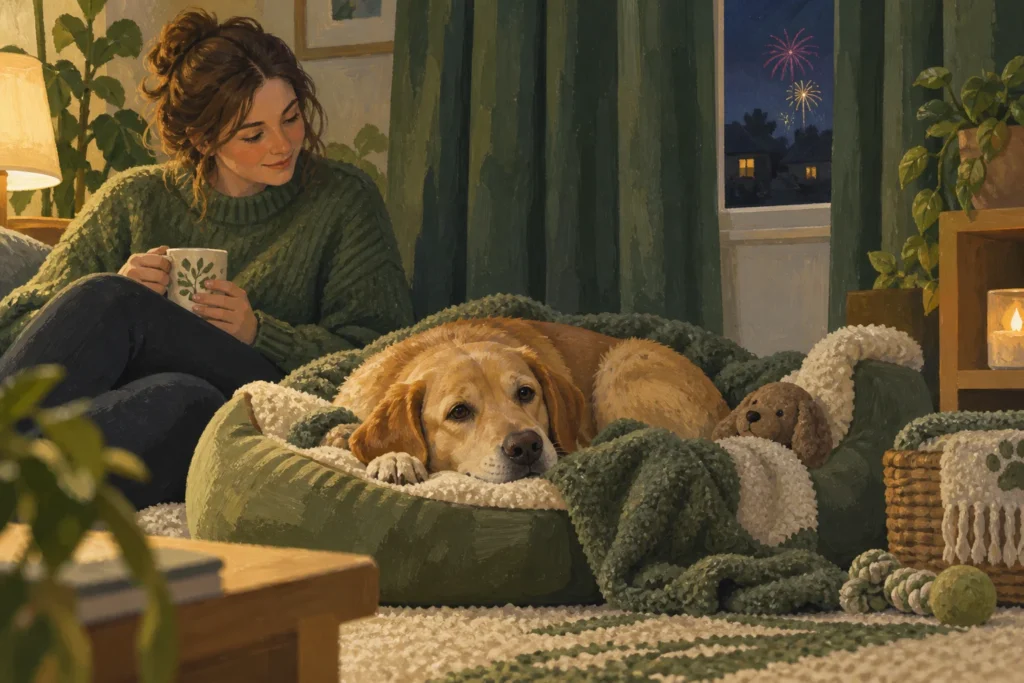
Dogs scared of fireworks need preparation before the loud evenings arrive. The most useful starting points are a familiar place to retreat, fewer reasons to go outside after dark and early veterinary advice if your dog has struggled before. A new bed bought on Bonfire Night cannot substitute for those arrangements.
This article contains Amazon affiliate links. As an Amazon Associate, we earn from qualifying purchases.
Table of Contents
Work backwards from the likely noisy evenings
Check local displays, but allow for private fireworks on surrounding weekends and other celebrations. Write down what happened previously: hiding, pacing, refusing food, trying to escape or taking a long time to recover. This gives your vet more useful information than simply saying your dog dislikes bangs.
If past reactions were substantial, book an appointment well ahead. Your vet can consider your dog’s health and an individual management plan, including whether further behaviour support is appropriate. Do not wait until your dog is panicking to investigate medication, and do not give human medicines or another animal’s prescription.
| When | Useful preparation |
|---|---|
| Before the season | Arrange professional support where needed; introduce the retreat during ordinary quiet days. |
| Several days beforehand | Check doors, fences, identification and the household’s evening arrangements. |
| On an expected noisy day | Bring walks, meals and outdoor toilet opportunities forward where practical. |
| Afterwards | Allow recovery and record what helped for the next event. |
Make a retreat your dog actually chooses
Start with where your dog already rests. This might be behind the sofa, an open crate they enjoy or a quieter room away from the front windows. Put familiar bedding there and make access easy. Avoid shutting a dog into an unfamiliar crate or covering it so heavily that ventilation suffers.
Practise using the space while nothing frightening is happening. Sit nearby if your dog finds that reassuring. Offer a familiar activity without insisting they participate. A washable blanket can protect existing bedding; Find a washable dog blanket on Amazon UK. There is no requirement to replace a bed your dog already likes.
Sound recordings can form part of gradual training, but loud exposure is not a shortcut. A dog who freezes, flees or stops taking normally welcome food is not being helped by pushing through. Ask a qualified professional about a carefully managed programme, particularly with established fear.
Keep the evening predictable
Walk in daylight where you can, allowing time to be home before displays begin. Keep dogs indoors during fireworks. Close curtains and use familiar background television or music if it helps soften the contrast between quiet and sudden noise. Turning the volume very high can add another uncomfortable sound.
Agree who handles the front door. A frightened dog may rush past a visitor, even if they normally wait politely. Keep the retreat away from arrivals, secure external doors and check that microchip contact details are current. Offer toilet trips carefully, with suitable lead control where escape is possible.
Stay calm and available. You can comfort a dog who seeks contact; you do not need to ignore them to avoid rewarding fear. Equally, let a dog hide if that is their choice. Do not pull them out to show them there is nothing to worry about.
Use food and toys as options, not a test
A familiar food toy may suit a dog who is still comfortable eating. Prepare it with an appropriate part of their usual allowance and supervise its use. If they decline, remove the pressure. Their willingness to eat is useful information about how they feel, not a reason to keep offering richer and richer treats.
Do not introduce an unfamiliar chew, complicated puzzle or strong-smelling product during the event. You want predictable comfort, not another thing to investigate. Products marketed as calming should not be treated as guaranteed treatment for noise fear.
Review the whole night, including recovery
Once the bangs stop, your dog may still need quiet. Note how long it takes them to resume resting, eating and toileting normally. If fear is worsening, causes escape attempts or repeatedly disrupts daily life, return to your vet rather than relying on the same plan next year. Keep emergency contact details with your dog first-aid supplies, so they are easy to find when you need them.