
Table of Contents
As an Amazon Associate, we earn from qualifying purchases. This means we may receive a small commission at no extra cost to you when you buy through links on this page.
Introduction: Why Nail Clipping is Crucial for Your Dog’s Health
Regular nail clipping is an essential part of responsible dog ownership. It’s not just about aesthetics; overgrown nails can cause significant discomfort and lead to serious health problems. Long nails interfere with a dog’s natural gait, causing them to alter their posture and potentially leading to joint pain, arthritis, and even spinal issues. They can also become cracked and infected, or snag on carpets and furniture, resulting in painful tears. Keeping your dog’s nails trimmed to the correct length ensures their comfort, mobility, and overall well-being. Ignoring nail care can lead to a life of discomfort for your furry friend.
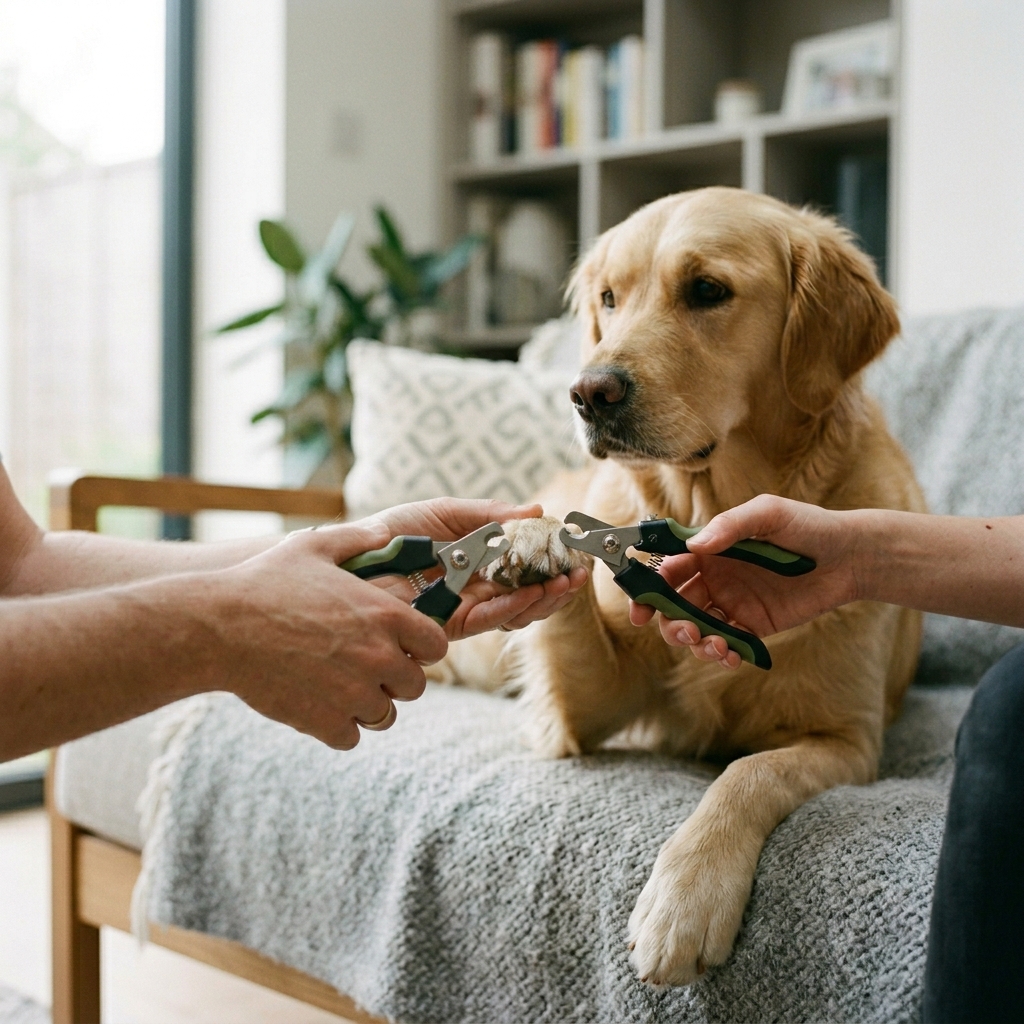
Understanding Dog Nail Anatomy
A dog’s nail is composed of two primary parts: the shell and the quick. The shell is the hard, outer layer of the nail – the part you trim. It’s primarily made of keratin, the same protein that makes up our own nails. The quick, however, is the sensitive inner part of the nail containing blood vessels and nerves.
Identifying the quick is crucial to avoid causing pain and bleeding. In dogs with white nails, the quick is usually visible as a pink triangle within the nail. Identifying it is much more challenging in dogs with black nails. In these cases, trim small amounts at a time, observing the cut surface of the nail. As you get closer to the quick, you’ll see a small, dark circle appearing in the centre of the cut surface. Stop trimming when you see this. Always err on the side of caution – it’s better to trim too little than too much.
Types of Dog Nail Clippers: Which is Best for You?
There are three main types of dog nail clippers available in the UK:
Scissor Clippers
These resemble small scissors and are ideal for smaller to medium-sized dogs. They offer good control and precision.
- Good control and precision
- Suitable for smaller breeds
- Can require more strength to operate
- Not ideal for very thick nails
Guillotine Clippers
These clippers have a hole into which you insert the nail, and a blade then slices across. They are quick and efficient, but require careful use.
- Quick and efficient
- Good for smaller to medium breeds
- Can be difficult to see exactly where you’re cutting
- Increased risk of cutting the quick if not used carefully
Grinders (Rotary Tools)
These use a rotating abrasive drum to file down the nail. They are a gentler alternative to clippers, and particularly useful for dogs with dark nails or those who are anxious about clipping.
- Gentle and less likely to cut the quick
- Ideal for dark nails
- Good for anxious dogs
- Can be time-consuming
- Can be noisy, which some dogs dislike
Choosing the Right Dog Nail Clippers: A Buying Guide
When choosing dog nail clippers, consider these factors:
- Dog Size and Breed: Larger breeds with thick nails require more robust clippers.
- Nail Thickness: Thicker nails need stronger blades.
- Your Comfort Level: If you’re a beginner, a grinder might be a better option than clippers.
- Budget: Clippers range in price from around £10 to £50+, grinders typically from £25 to £80+.
Important Features to Look For:
- Safety Lock: Prevents accidental activation.
- Comfortable Grip: Essential for control and preventing hand fatigue.
- Blade Quality: Sharp, durable blades ensure clean cuts.
Step-by-Step Guide to Clipping Your Dog’s Nails
- Prepare Your Dog: Get your dog comfortable with having their paws handled. Reward them with treats.
- Hold the Paw: Gently but firmly hold your dog’s paw.
- Clipping Angle: Clip the nail at a 45-degree angle, following the natural curve.
- Trim Small Amounts: Take small, incremental cuts to avoid hitting the quick.
- Dewclaws: Don’t forget the dewclaws (if present) – these don’t touch the ground and can easily overgrow.
- If You Cut the Quick: Don’t panic! Apply styptic powder or cornstarch immediately to stop the bleeding.
Dealing with a Dog Who Hates Nail Clipping
Many dogs are fearful of nail clipping. Here are some tips:
- Desensitisation: Start by simply touching your dog’s paws, rewarding them for calm behaviour. Gradually introduce the clippers or grinder, letting them sniff it and associate it with positive experiences.
- Positive Reinforcement: Reward your dog with treats, praise, or a favourite toy throughout the process.
- Counter-Conditioning: Give your dog a high-value treat while the clippers are being used.
- Professional Help: If your dog is extremely anxious or aggressive, consult a professional groomer or vet.
Aftercare: What to Do After Clipping
If you accidentally cut the quick, apply styptic powder (£5-£10) or cornstarch to the bleeding nail. Apply firm pressure for a few minutes. Monitor the nail for signs of infection (redness, swelling, discharge). Ensure your dog is comfortable and doesn’t lick the area excessively.
Best Dog Nail Clippers Available in the UK (2026)
Here’s a comparison of some top-rated dog nail clippers available in the UK in 2026:
| Product | Type | Price (Approx.) | Best For | Pros | Cons |
|---|---|---|---|---|---|
| Safari Professional Nail Trimmer (Large) | Scissor | £25 | Large breeds | Durable, strong blades | Can require significant hand strength |
| Resco Original Dog Nail Clippers | Scissor | £35 | Medium breeds | Excellent control, lifetime guarantee | More expensive than some options |
| Dremel 7760-PD Pet Nail Grinder | Grinder | £60 | All breeds | Gentle, safe, good for dark nails | Can be noisy, takes time |
| Wahl Professional Animal Nail Grinder | Grinder | £45 | Medium to Large breeds | Powerful, variable speed | Can vibrate |
| Groomers Pro Nail Clippers for Dogs (Small/Medium) | Scissor | £15 | Small/Medium breeds | Affordable, good for beginners | Not ideal for thick nails |
| Bonsenhome Dog Nail Clippers and LED Light | Scissor | £20 | Small/Medium breeds | LED light helps see the quick | Light can be unnecessary for some |
| Pawsitive Vibes Dog Nail Clippers | Guillotine | £18 | Small breeds | Quick and easy to use | Can be difficult to see the cutting line |
| Millers Dog Nail Clippers | Scissor | £22 | Small/Medium breeds | Comfortable grip, sharp blades | Not suitable for very large breeds |
| Pet Union Professional Dog Nail Clippers | Scissor | £30 | All breeds | Versatile, safety lock | Can be bulky |
When to See a Professional Groomer or Vet
If you’re uncomfortable clipping your dog’s nails, or if your dog is extremely anxious, seek professional help. You should also consult a vet if you notice any of the following:
- Cracked or broken nails
- Signs of infection (redness, swelling, discharge)
- Nails that are growing abnormally
- Your dog is exhibiting lameness or changes in gait
Frequently Asked Questions (FAQs)
How often should I clip my dog’s nails?
Generally, every 2-4 weeks. However, this depends on your dog’s breed, activity level, and the surfaces they walk on. If you can hear their nails clicking on hard floors, it’s time for a trim.
What should I do if I cut the quick?
Apply styptic powder or cornstarch immediately to stop the bleeding. Apply firm pressure for a few minutes. If the bleeding doesn’t stop, contact your vet.
Is it better to clip or grind my dog’s nails?
Both are effective. Grinding is generally gentler and safer, especially for dark nails. Clipping is quicker but requires more precision.
Can I use human nail clippers on my dog?
No. Human nail clippers are not designed for the shape or thickness of a dog’s nails and can cause splintering or injury.
My dog is terrified of nail clipping. What can I do?
Start with desensitization and positive reinforcement. Gradually introduce the clippers or grinder, rewarding your dog for calm behaviour. If the fear is severe, consult a professional groomer or vet.