
Table of Contents
As an Amazon Associate, we earn from qualifying purchases. This means we may receive a small commission at no extra cost to you when you buy through links on this page.
Introduction: The Collar vs. Harness Debate
For generations, the dog collar has been a staple for our canine companions here in the UK. But in recent years, a challenger has emerged: the dog harness. More and more dog owners are questioning the traditional collar, seeking alternatives that offer greater comfort, safety, and control. This shift is partly due to a better understanding of canine anatomy and behaviour, and partly due to the increasing popularity of specific breeds – like brachycephalic (short-nosed) dogs – and active lifestyles like canicross. Walking habits in the UK, from city pavements to countryside trails, also influence the best choice for your dog. This article will comprehensively compare dog collars and harnesses, helping you make the best decision for your furry friend in 2026.
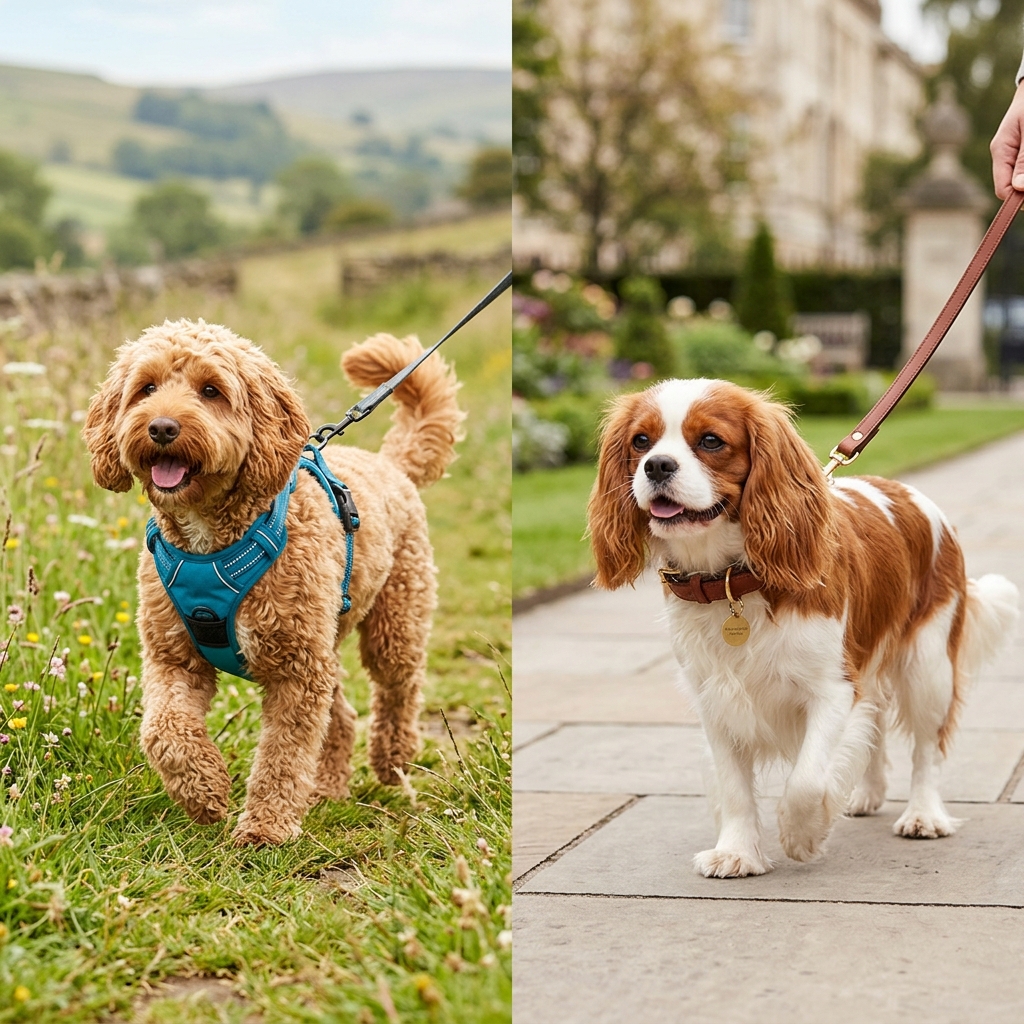
Understanding Dog Collars: Pros & Cons
The dog collar remains a familiar sight on walks across the UK. Traditionally, collars have served several essential purposes: holding identification tags as legally required, providing a point of attachment for a lead, and offering basic control during walks. However, collars aren’t without their drawbacks.
Pros of Dog Collars:
- Identification: Essential for displaying ID tags, fulfilling legal requirements in the UK (Control of Dogs Order 1992).
- Simplicity: Easy to put on and take off.
- Cost-Effective: Generally less expensive than harnesses.
Cons of Dog Collars:
- Pressure on the Neck: A pulling dog can experience significant pressure on the trachea and neck vertebrae, potentially leading to injury.
- Potential for Injury: Sudden jerks or strong pulling can cause whiplash or exacerbate existing neck conditions.
- Limited Control: Less effective for controlling strong pullers, particularly larger breeds.
- Escape Risk: Some dogs can slip out of collars, especially those with narrow heads.
Legal Requirements: It’s a legal requirement in the UK for dogs to wear a collar with an ID tag displaying the owner’s name and address when in public. Microchipping is also mandatory, but a collar with a visible tag remains crucial for quick identification.
Exploring Dog Harnesses: Types & Benefits
Dog harnesses distribute pressure across the dog’s chest and shoulders, rather than concentrating it on the neck. This makes them a more comfortable and safer option for many dogs. There are several types of harnesses available in the UK:
Types of Dog Harnesses:
- Front-Clip Harnesses: Lead attachment point is on the front of the chest. These discourage pulling by redirecting the dog’s momentum.
- Back-Clip Harnesses: Lead attachment point is on the back. Suitable for dogs that don’t pull excessively and for general walking.
- Step-In Harnesses: The dog steps into the harness, and it’s secured around the body. Easy to put on, especially for dogs who dislike things going over their head.
- Multi-Functional Harnesses: Offer both front and back clip options, providing versatility.
Benefits of Dog Harnesses:
- Reduced Pressure on the Neck: Minimizes the risk of injury and discomfort, especially for dogs with tracheal issues.
- Better Control: Front-clip harnesses provide superior control, particularly for strong pullers.
- Suitable for Medical Conditions: Ideal for dogs with breathing problems (brachycephalic breeds), spinal problems, or recovering from neck surgery.
- Discourages Pulling: Redirects momentum, making walking more enjoyable for both dog and owner.
Harness vs. Collar: A Breed-Specific Guide
The best choice between a harness and a collar often depends on the dog’s breed.
| Breed | Recommended Option | Reason |
|---|---|---|
| Pugs, Bulldogs (Brachycephalic) | Harness | Prone to breathing difficulties; harness avoids pressure on the trachea. |
| Labradors, German Shepherds (Large Breeds) | Harness (Front-Clip) | Strong pullers; harness offers better control and reduces strain on the neck. |
| Chihuahuas, Yorkshire Terriers (Small Breeds) | Collar (with careful fit) or Harness | Collar is suitable if well-fitted. A harness can be used for extra security or if the dog is a puller. |
| Greyhounds, Whippets (Sighthounds) | Harness | Narrow heads; prone to slipping collars. |
| Boxers, Dalmatians (Breeds Prone to Tracheal Collapse) | Harness | Minimises risk of exacerbating tracheal issues. |
Fitting a Collar and Harness Correctly: A Step-by-Step Guide
Collar Fitting: You should be able to comfortably fit two fingers between the collar and your dog’s neck. Ensure the collar isn’t too loose (allowing escape) or too tight (restricting breathing).
Harness Fitting: Follow the manufacturer’s instructions carefully. Generally, the harness should fit snugly but allow a full range of motion. Check for chafing under the armpits. Ensure straps don’t restrict breathing or movement.
Important Note: Regularly check the fit, especially for puppies who are growing rapidly. A poorly fitted collar or harness can cause discomfort, injury, or allow your dog to escape.
Safety Considerations: When to Choose a Harness Over a Collar
In certain circumstances, a harness is unequivocally the safer option:
- Reactive Dogs: A harness provides more control if your dog is prone to reacting to other dogs or stimuli.
- Dogs with Neck Injuries: Avoids putting any strain on a healing or compromised neck.
- Dogs Recovering from Surgery: Protects the surgical site and prevents discomfort.
- Dogs Prone to Slipping Their Collar: Ensures a secure fit and prevents escape.
- Canicross/Pulling Activities: Distributes pressure evenly across the body, allowing for safe and effective pulling.
Top Dog Harnesses & Collars Available in the UK (2026)
| Product Name | Type | Price (GBP) | Pros | Cons |
|---|---|---|---|---|
| Ruffwear Front Range Harness | Multi-Functional | 79.99 | Durable, comfortable, adjustable, front & back clip options. | Higher price point. |
| PetSafe Easy Walk Harness | Front-Clip | 34.99 | Effective at discouraging pulling, affordable. | May not be suitable for very small breeds. |
| Pupreme Dog Harness (Adjustable) | Back-Clip | 45.0 | Highly adjustable for a perfect fit, padded for comfort. | Limited control for strong pullers. |
| Kong Classic Collar | Standard Collar | 15.0 | Durable, reliable, affordable, recognisable brand. | Offers limited control, potential for neck strain. |
| Flexi Classic Retractable Lead with Collar | Retractable Lead & Collar Combo | 22.5 | Convenient retractable lead, integrated collar. | Not ideal for strong pullers, can encourage pulling. |
Training with a Harness or Collar: Leash Manners & Control
Regardless of whether you choose a collar or harness, consistent training is crucial. Focus on positive reinforcement techniques, rewarding your dog for walking politely on a loose leash.
- Start Indoors: Get your dog accustomed to wearing the collar or harness indoors before venturing outside.
- Reward Loose Leash Walking: Reward your dog whenever the lead is loose.
- Change Direction: If your dog starts to pull, change direction to redirect their attention.
- Keep Sessions Short & Fun: Maintain your dog’s engagement with short, positive training sessions.
Frequently Asked Questions (FAQ)
- Can a harness ruin my dog’s gait? A poorly fitted harness *can* restrict movement and affect gait. Ensure the harness fits correctly and allows a full range of motion.
- Is it okay to use both a collar and a harness? Yes, you can. The collar can hold ID tags, while the harness provides more secure control during walks.
- How often should I replace my dog’s collar/harness? Inspect regularly for wear and tear. Replace the collar/harness every 1-2 years, or sooner if damaged.
- My dog hates having things put over their head. What should I do? A step-in harness is a great option for dogs who dislike this.
- Are retractable leads safe to use with a harness? While possible, they can encourage pulling. A fixed-length lead offers more control, especially with a front-clip harness.
Conclusion: Making the Right Choice for Your Dog
The debate between dog collars and harnesses isn’t about which is “better,” but which is best for *your* individual dog. Collars remain a practical choice for displaying ID tags and basic control, but harnesses offer superior comfort, safety, and control, especially for dogs with specific needs or those prone to pulling. Consider your dog’s breed, size, temperament, and lifestyle when making your decision. If you’re unsure, consult with your veterinarian or a qualified professional dog trainer for personalised advice.